
Tooth extraction versus wisdom tooth extraction: a practical comparison
Tooth extraction versus wisdom tooth extraction: a practical comparison
[3]The short answer
Comfort cannot be ranked from the names Tooth extraction and Wisdom tooth extraction alone; anaesthetic, tissue condition and procedure complexity matter Local anaesthetic is normally used so the area is numb during removal Sedation may be considered to help a person relax, and general anaesthetic may be considered for a more difficult procedure or significant anxiety The choice changes preparation, escort and driving instructions, and sometimes where the procedure is performed Follow the treating service's fasting, medicine and transport instructions rather than using a general online rule
[3]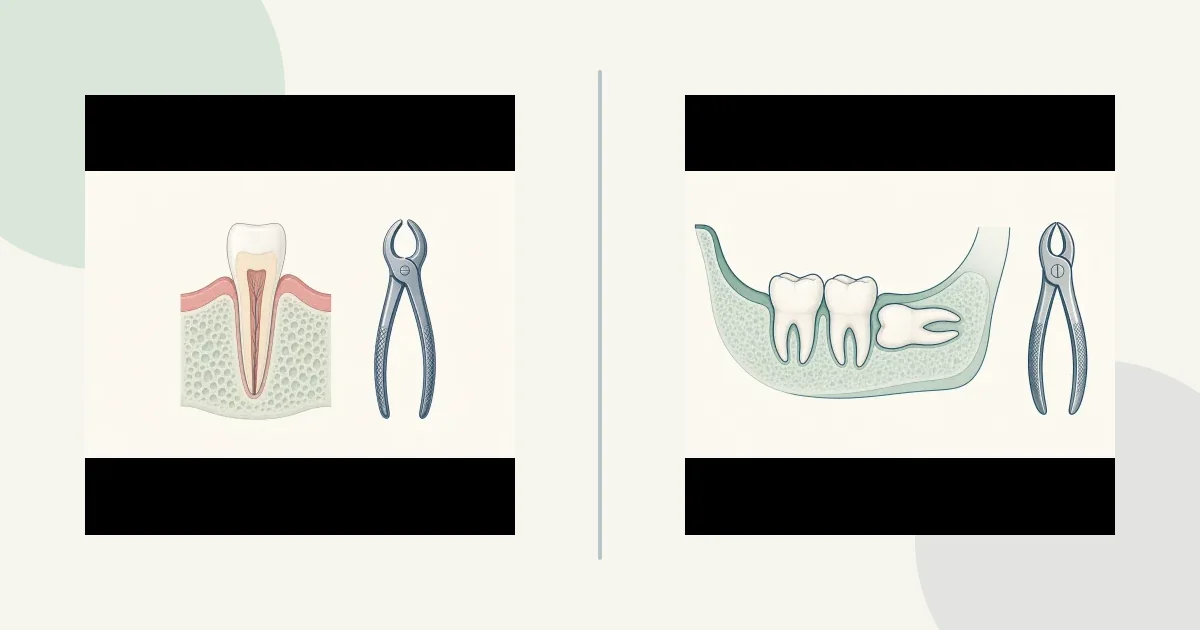
How do the options compare?
Pain, swelling, bruising and jaw stiffness can occur after wisdom-tooth removal They should follow the course explained by the treating team and begin to improve rather than become progressively worse Contact the team when pain or swelling is severe or worsening, when permitted pain relief is not helping, or when symptoms come with a bad taste, high temperature or feeling unwell These changes need assessment rather than a home diagnosis
[3]Nerves close to a wisdom tooth can be affected during removal, causing numbness or tingling of the tongue, lip or chin NHS guidance notes this usually improves, although it can last for weeks or months The treating clinician should explain the tooth-specific risk before consent Call UAE ambulance services on 998 for breathing, swallowing or speaking difficulty, rapidly spreading mouth or neck swelling, major facial injury or uncontrolled oral bleeding
[3][2][4]| Decision point | What the research shows |
|---|---|
| How do the options compare? | Comfort cannot be ranked from the names Tooth extraction and Wisdom tooth extraction alone; anaesthetic, tissue condition and procedure complexity matter. Local anaesthetic is normally used so the area is numb during removal. Sedation may be considered to help a person relax, and general anaesthetic may be considered for a more difficult procedure or significant anxiety. The choice changes preparation, escort and driving instructions, and sometimes where the procedure is performed. Follow the treating service's fasting, medicine and transport instructions rather than using a general online rule.[3] |
| When might option A fit? | Pain, swelling, bruising and jaw stiffness can occur after wisdom-tooth removal. They should follow the course explained by the treating team and begin to improve rather than become progressively worse. Contact the team when pain or swelling is severe or worsening, when permitted pain relief is not helping, or when symptoms come with a bad taste, high temperature or feeling unwell. These changes need assessment rather than a home diagnosis.[3] |
When might option A fit?
Tooth extraction may fit instead of Wisdom tooth extraction when its clinical purpose matches the examined problem and its maintenance is acceptable Choose routine monitoring when a wisdom tooth has no problems, as it is usually left in place and checked at dental appointments Choose this option when the tooth is linked with disease or recurring symptoms and the expected benefit of removal outweighs the risks that surgery carries Standard tooth extraction may be the appropriate first option when the problem, examination findings, or X-ray results indicate removal is needed without requiring observation or monitoring for further change
[3]| Topic | Source-backed detail |
|---|---|
| How do the options compare? | Ask for urgent advice when bleeding does not stop, pain or swelling is severe or worsening, pain relief is not helping, or pain occurs with a bad taste, high temperature or feeling unwell. A clinician needs to examine the area to distinguish expected healing, dry socket and infection. Do not start leftover antibiotics or assume that a bad taste alone identifies the cause.[3][2] |
| When might option A fit? | The Tooth extraction versus Wisdom tooth extraction choice may also depend on restoration, extraction, maintenance and replacement decisions. When weighing related decisions, a symptom-free wisdom tooth is generally left in place and kept under observation at routine dental appointments. When making related decisions, extraction becomes a consideration if the tooth is associated with disease or recurring symptoms, with the likely benefit weighed against the surgical risks. Related choices often depend on what the examination or X-ray reveals about the tooth's current state, what a period of observation would involve and which symptom changes should prompt an earlier appointment.[3] |
When might option B fit?
Wisdom tooth extraction may fit when its clinical purpose matches the examined problem and its maintenance is acceptable Choose the second option when a wisdom tooth is causing problems; an unaffected one is usually monitored at routine dental checks Choose wisdom-tooth extraction when disease or recurring symptoms are linked to that tooth and the likely benefit outweighs the surgical risks Choose the second option when the assessment clarifies the current problem, examination or X-ray findings, what observation would involve, and changes that warrant an earlier appointment
[3]How do longevity and maintenance compare?
Tooth extraction and Wisdom tooth extraction differ in purpose, preparation, support, removability or surgical access A wisdom tooth that is not causing problems is usually left in place and monitored at routine dental checks Removal is considered when the tooth is linked with disease or recurring symptoms, and the potential benefit is weighed against the risks of surgery The decision should identify the current problem, what the examination or X-ray shows, what observation would involve and which change should prompt an earlier appointment
[3]The dentist asks about symptoms and medical history, examines the wisdom-tooth area and may take an X-ray to check how the tooth is positioned Those findings help decide whether the tooth can be monitored, removed by a dentist or referred for specialist care The assessment is also the time to discuss medicines, allergies, pregnancy, previous anaesthetic experiences, the proposed procedure, alternatives and the risks that apply to the tooth's position
[3]What are the risks?
A fair Tooth extraction versus Wisdom tooth extraction comparison starts with the same diagnosis and treatment goal Wisdom teeth usually begin to emerge in the late teens or early twenties, although they can cause problems at any age A tooth is impacted when another tooth or a lack of space blocks full eruption; it may also remain partly payer-reviewed by gum Possible consequences include pain, swelling, gum infection around the tooth, trapped food, decay, gum disease, a cyst or an abscess The word impacted describes position, not an automatic reason for surgery
[3]Wisdom-tooth removal normally starts with local anaesthetic to numb the gum The clinician may open the gum when it covers the tooth, widen the socket and remove the tooth whole or in sections Stitches are placed when needed and may be dissolvable The exact steps and appointment length depend on the tooth's position and difficulty Ask which steps are expected in this case and whether referral is recommended
[3]NHS guidance notes many people can return to normal activities the day after wisdom-tooth removal A difficult removal or general anaesthetic may require 1 to 3 days off work Pain and swelling should start to improve after 1 or 2 days, although pain, swelling, bruising, jaw stiffness and uncomfortable chewing can continue for up to 2 weeks Stitches usually dissolve on their own, and the blood clot over the wound supports healing The treating team's instructions take priority when the procedure or anaesthetic changes the plan
[3]When might neither option fit?
Tooth extraction and Wisdom tooth extraction carry different limitations, so consent should cover each option separately Contact the treating team urgently if bleeding does not stop, pain or swelling is severe or worsening, pain relief is not helping, or symptoms come with a bad taste, fever or feeling unwell Call UAE ambulance services on 998 when swelling affects breathing, swallowing or speaking, spreads toward the eye or neck, follows major facial injury or comes with uncontrolled oral bleeding Do not wait for a routine follow-up when symptoms meet an emergency threshold
[3][2][4]Because tooth extraction and wisdom tooth extraction have distinct limitations, consent should address the risks and limits of each option separately One risk is that nerves lying close to a wisdom tooth may be disturbed during extraction, causing numbness or tingling in the tongue, lip, or chin As a recognised risk of both procedures, the NHS notes that while this typically improves, it can persist for weeks or months Before consent, the clinician should outline the risks that apply to that particular tooth Recognised serious risks; breathing, swallowing or speaking difficulty, rapidly spreading mouth or neck swelling, major facial injury and uncontrolled oral bleeding; each require calling UAE ambulance services on 998
[3][2][4]How does a dentist frame the recommendation?
Ask the dentist which finding favours Tooth extraction or Wisdom tooth extraction, what the fallback is and how each option affects future care Ask whether the timing of wisdom-tooth emergence, usually in the late teens or early twenties, affects the extraction decision, since problems can arise at any age Ask your dentist whether the tooth is impacted; meaning another tooth or insufficient space is preventing full eruption, or gum still partially covers it Ask the dentist whether the tooth could lead to pain, swelling, gum infection around it, trapped food, decay, gum disease, a cyst or an abscess Ask whether 'impacted' describes position only, since that alone does not make surgery automatic
[3]Frequently asked questions
What is the first useful question about tooth extraction versus wisdom tooth extraction,?
Ask which diagnosis or treatment goal tooth extraction versus wisdom tooth extraction addresses in this case, then ask which finding supports the recommendation The answer should identify the next step, reasonable alternatives and the final restoration or appliance when one is required
[3]What information should I take to a dental appointment about tooth extraction versus wisdom tooth extraction,?
Note when the issue began, what changes it, previous treatment, relevant health conditions, allergies and medicines Bringing a summary of your symptoms and a full medical history will allow the dentist to examine the wisdom-tooth area and, where needed, take an X-ray to confirm how the tooth is positioned Bring any records you have and ask what the examination still needs to establish
[3]When should I seek faster care for tooth extraction versus wisdom tooth extraction,?
Whether after a standard extraction or a wisdom tooth removal, contact your dentist urgently if bleeding does not stop, pain or swelling worsens rather than eases, pain relief gives no benefit, or you develop a bad taste, high temperature or feel generally unwell To decide whether this is normal healing, dry socket or infection, arrange prompt clinical examination Contact a dental team sooner when pain, swelling, fever, trauma or bleeding is severe, worsening or disrupting normal function
[3][2]Who wrote this page
This library is published by Dental Nation, a licensed dental group practising in the United Arab Emirates. Pages are written and overseen by the same clinical team that treats patients in our clinics, and are held to a fixed editorial standard for safety and accuracy.
This page is patient education, not medical advice, and cannot replace an examination. Anything urgent — facial swelling, trauma, uncontrolled bleeding or severe pain — needs a dentist or emergency care now.