
Dentures versus partial dentures: a practical comparison
Dentures versus partial dentures: a practical comparison
[2][1][3][5][4]The short answer
Dentures and Partial dentures should be compared against the same diagnosed problem Some options restore different amounts of tooth structure, while others replace missing teeth with different support, removability and cleaning requirements The choice depends on the examined tooth or space, maintenance, repair and the intended functional result
[2][1][3][5][4]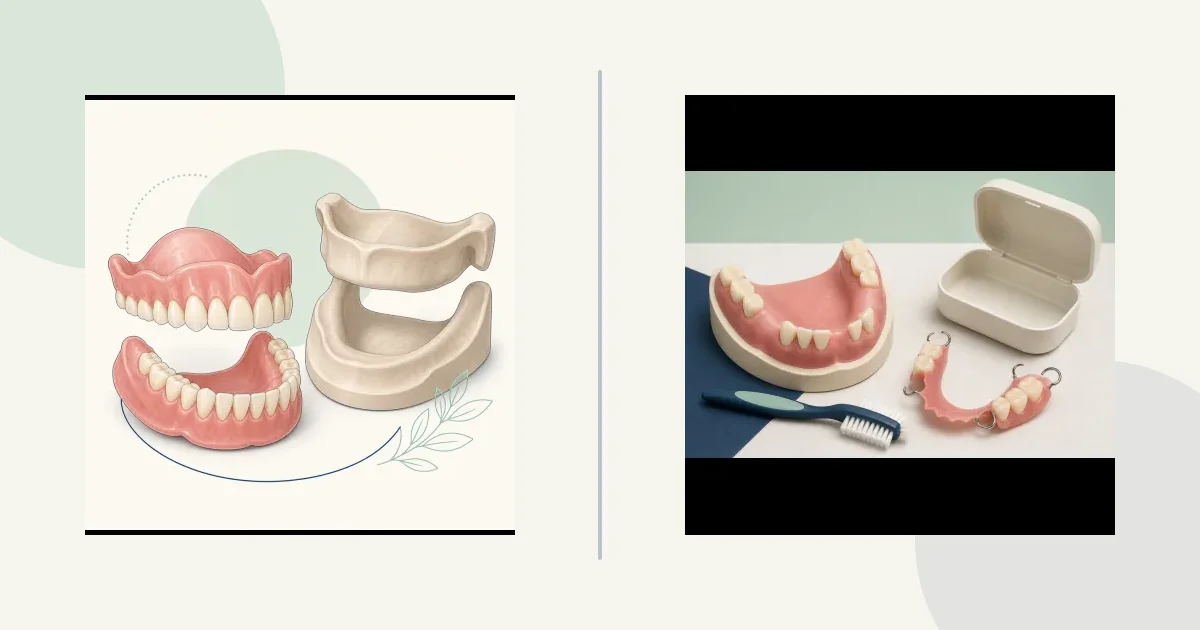
How do the options compare?
| Decision point | What the research shows |
|---|---|
| How do the options compare? | Dentures and Partial dentures should be compared against the same diagnosed problem. Some options restore different amounts of tooth structure, while others replace missing teeth with different support, removability and cleaning requirements. The choice depends on the examined tooth or space, maintenance, repair and the intended functional result.[2][1][3][5][4] |
| When might option A fit? | Dentures may fit instead of Partial dentures when its clinical purpose matches the examined problem and its maintenance is acceptable. Choose full dentures when all teeth in an upper or lower arch are absent. Choose a conventional full denture when remaining teeth will be removed and the tissues can heal first, which may take several months before placement. Choose an immediate denture when teeth are being removed and a denture is needed that day, while recognising it may require relining or remaking once the jaw heals. A full denture suits cases where no remaining teeth or implants are available to support an overdenture. Whichever design you choose, daily cleaning, care of the underlying tissues and regular checks of fit and oral health remain necessary.[3] |
When might option A fit?
Dentures may fit instead of Partial dentures when its clinical purpose matches the examined problem and its maintenance is acceptable Choose full dentures when all teeth in an upper or lower arch are absent Choose a conventional full denture when remaining teeth will be removed and the tissues can heal first, which may take several months before placement Choose an immediate denture when teeth are being removed and a denture is needed that day, while recognising it may require relining or remaking once the jaw heals A full denture suits cases where no remaining teeth or implants are available to support an overdenture Whichever design you choose, daily cleaning, care of the underlying tissues and regular checks of fit and oral health remain necessary
[3]| Topic | Source-backed detail |
|---|---|
| How do the options compare? | Comfort cannot be ranked from the names Dentures and Partial dentures alone; anaesthetic, tissue condition and procedure complexity matter. New dentures may feel awkward or loose for a few weeks while the cheeks and tongue learn to control them. Minor irritation or soreness can occur, and follow-up appointments allow the dentist to check and adjust the fit. A partial denture may also take practice to insert and remove. Start with soft food cut into small pieces and chew on both sides to balance pressure. Reading aloud can help when speech feels different. Persistent soreness, poor fit or difficulty using the appliance deserves an appointment rather than an attempt to trim or reshape it at home.[3][5] |
| When might option A fit? | The Dentures versus Partial dentures choice may also depend on restoration, extraction, maintenance and replacement decisions. A missing tooth may affect chewing or speech, allow neighbouring teeth to shift, and cause bone loss; considerations that matter when deciding between these options. When weighing related replacement decisions, ADA patient guidance includes bridges, dentures and implants as options for missing teeth. Related options; such as implants, bridges, or a full denture; differ along the same dimensions: whether they are fixed or removable, the support structure required, the cleaning routine, and the clinical procedures involved. When considering related options, discuss how many teeth are missing, where they are positioned, and the condition of the remaining mouth. When weighing related choices, ask how monitoring the space compares with each replacement and how later repairs or further tooth loss would be managed.[4][1][5] |
When might option B fit?
Partial dentures may fit when its clinical purpose matches the examined problem and its maintenance is acceptable Choose a partial denture when natural teeth still present in the arch can support and anchor the appliance The second option replaces missing teeth with teeth set in a gum-coloured base, usually using a metal framework that clasps to remaining teeth for stability Choose the second option when preventing drift matters, because neighbouring teeth can shift toward a lost tooth’s gap and the opposing tooth may move into that space over time A partial slows or prevents movement A partial denture may still suit you when clasp visibility at the gumline is acceptable; ask your dentist about design options for your particular gaps Choose a partial denture if you can clean both the removable partial and your remaining natural teeth every day
[5][4]How do longevity and maintenance compare?
Dentures and Partial dentures differ in purpose, preparation, support, removability or surgical access Full dentures replace all teeth in an upper or lower arch A conventional full denture is made and placed after the remaining teeth are removed and the tissues have healed, a process that may take several months An immediate denture is prepared before extraction and inserted on the same day the teeth are removed, but it may need relining or remaking after the jaw has healed An overdenture fits over prepared remaining teeth, and implants can also provide support Every design needs daily cleaning, attention to the tissues underneath and regular dental checks for fit and oral health
[3]A partial denture is used when some natural teeth remain in the arch It consists of replacement teeth attached to a gum-colored base, usually supported by a metal framework that clasps onto existing teeth for stability One benefit worth knowing is drift prevention: when a tooth is lost, neighboring teeth begin shifting toward the gap and the opposing tooth can move into the space over time A partial slows or stops that movement Clasps may be visible at the gumline depending on where the missing teeth are located, so discuss design options with your dentist Because partials are removable, cleaning is straightforward, but the partial itself and your remaining natural teeth both need cleaning every day
[5][4]What are the risks?
Recovery after Dentures or Partial dentures follows the procedure performed and the clinician's instructions During recovery, new dentures commonly feel loose or unfamiliar for several weeks as the cheeks and tongue gradually learn to manage them During recovery, minor irritation or soreness may occur, and follow-up appointments let the dentist check and adjust the fit During recovery, you may need time and practice to insert and remove a partial denture comfortably As the gums recover, eat soft food cut into small pieces and chew on both sides equally to avoid placing uneven pressure on the denture During recovery, reading aloud may help if your speech feels different If soreness, poor fit or difficulty using the appliance persists during the recovery period, book an appointment rather than attempting to trim or reshape it yourself
[3][5]New dentures feel bulky and foreign at first Sore spots develop where the denture presses harder on specific areas of gum tissue, and this is a normal part of the adjustment period The ADA recommends scheduling a follow-up appointment so the dentist can pinpoint the pressure areas and make precise adjustments Do not try to trim or modify the denture yourself For eating, start with soft foods cut into small pieces and place food on both sides of the mouth simultaneously so the denture stays balanced and does not tip to one side Speech often sounds different initially because the tongue and lips are working around a changed shape inside the mouth Reading aloud for a few minutes each day helps speed up that adaptation
[3][5]When might neither option fit?
Dentures and Partial dentures carry different limitations, so consent should cover each option separately A loose or broken crown, bridge or denture needs dental advice, particularly when it causes pain, a sharp edge, oral injury or loss of function NHS urgent-care guidance includes displaced crowns and bridges and fractured or ill-fitting dentures among problems that may need unscheduled care The ADA advises calling a dentist if a partial denture breaks, cracks, chips or becomes loose and warns against home adjustment, repair kits and household glue Keep any detached piece safely, avoid forcing a damaged appliance into place and ask the dental team how quickly it should be assessed
[5][7]Each carries distinct limitations, so the consent discussion should cover full and partial denture risks separately Full dentures replace every tooth in an arch, leaving no remaining roots for anchorage One limitation of conventional full dentures is that they are fitted only after the remaining teeth are removed and tissues heal, which may take several months A notable risk with an immediate denture; prepared before extraction and fitted on the same day the teeth are removed; is that jaw changes during healing may mean the appliance needs relining or remaking once the bone has settled Overdentures fit over prepared remaining teeth, and implants can also be used for support A key limit of either denture design is the need for daily cleaning, care of the supporting tissues and regular fit and oral-health checks
[3]How does a dentist frame the recommendation?
Ask the dentist which finding favours Dentures or Partial dentures, what the fallback is and how each option affects future care A missing tooth can affect chewing or speech, and remaining teeth may shift; bone loss may also occur around the space ADA patient guidance sets out bridges, dentures and implants among the replacement options These choices differ in whether they are fixed or removable, what supports them, how they are cleaned and what procedures are required The right discussion starts with the number and position of missing teeth and the condition of the rest of the mouth Ask what happens if the space is monitored, what each replacement requires and how future repair or additional tooth loss would be handled
[4][1][5]Frequently asked questions
What is the first useful question about dentures versus partial dentures,?
Ask which diagnosis or treatment goal dentures versus partial dentures addresses in this case, then ask which finding supports the recommendation The answer should identify the next step, reasonable alternatives and the final restoration or appliance when one is required
[2][1][3][5][4]What information should I take to a dental appointment about dentures versus partial dentures,?
Note when the issue began, what changes it, previous treatment, relevant health conditions, allergies and medicines Tell the dentist whether all teeth in either the upper or lower arch are missing, as full dentures replace every tooth in one arch Bring any records you have and ask what the examination still needs to establish
[3]When should I seek faster care for dentures versus partial dentures,?
Full dentures are used to replace every tooth in either the upper or lower arch With a conventional full denture, remaining teeth are removed first, then the denture is placed after the tissues heal, which may take several months Contact a dental team sooner when pain, swelling, fever, trauma or bleeding is severe, worsening or disrupting normal function
[3]Who wrote this page
This library is published by Dental Nation, a licensed dental group practising in the United Arab Emirates. Pages are written and overseen by the same clinical team that treats patients in our clinics, and are held to a fixed editorial standard for safety and accuracy.
This page is patient education, not medical advice, and cannot replace an examination. Anything urgent — facial swelling, trauma, uncontrolled bleeding or severe pain — needs a dentist or emergency care now.