Dental Nation
Treatment comparison

Straighten vs mask crooked teeth

Clear aligners gradually reposition teeth, while veneers cover the front surface to mask crooked, stained, chipped, or misshapen teeth.

[1][2]

The short answer

Clear aligners gradually reposition teeth, whereas veneers cover their front surfaces to mask crooked, stained, chipped, broken, or misshapen teeth.

[1][2]
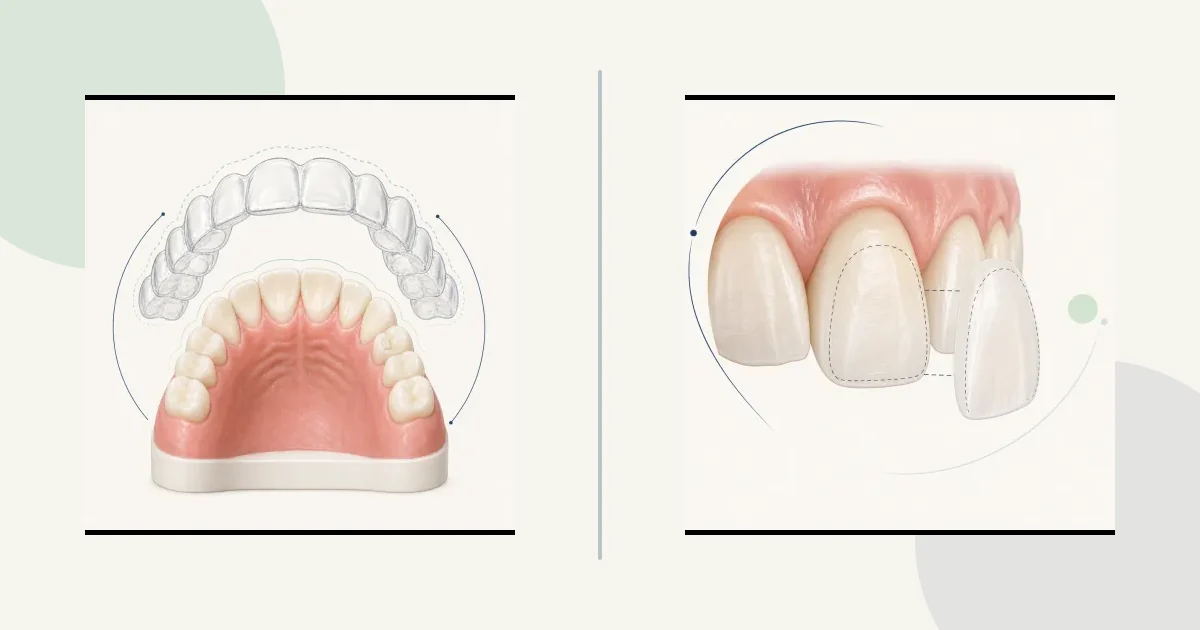
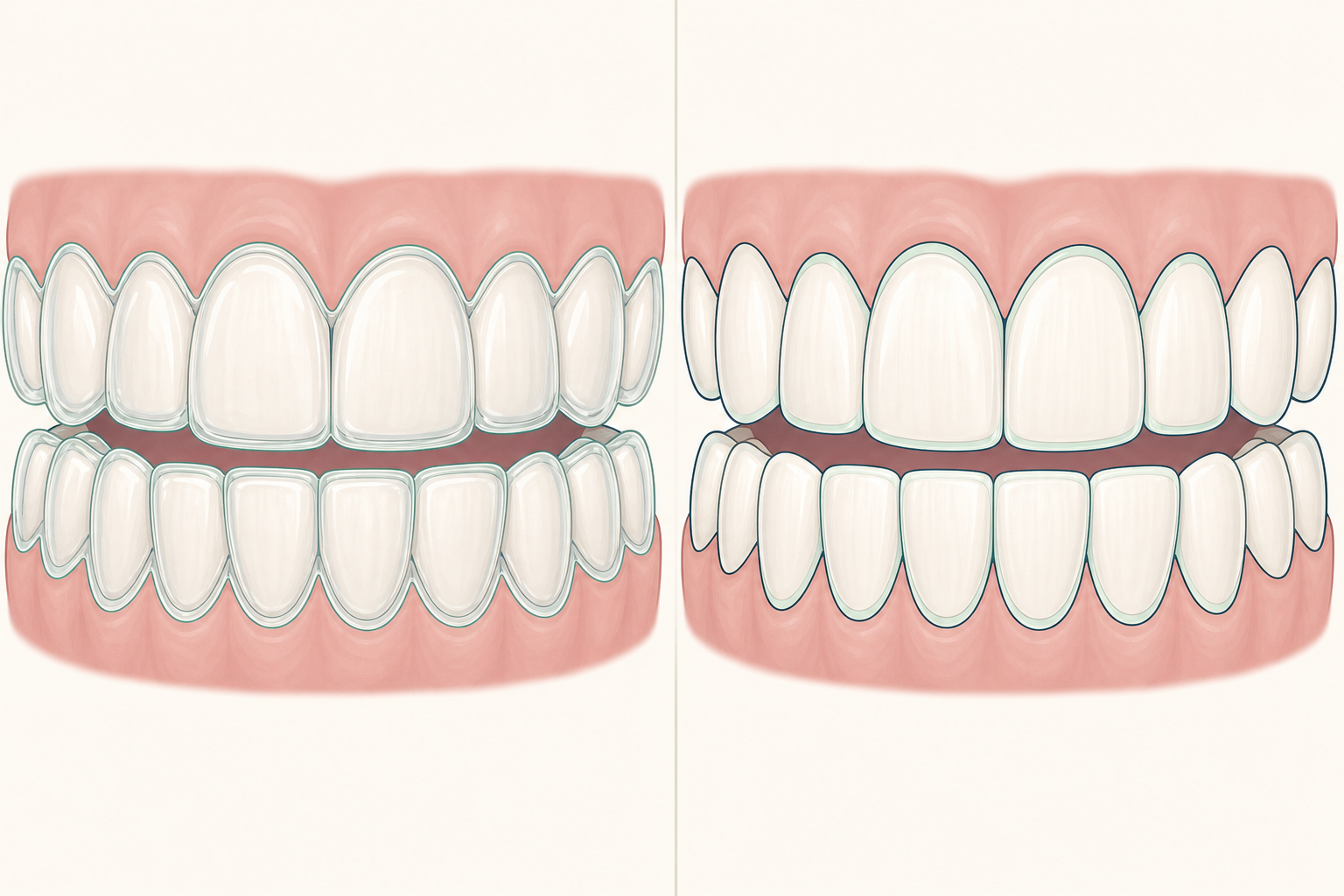
Straighten vs mask crooked teeth comparison graphic

The two options, side by side

Illustrative diagram: invisalign vs veneers
Illustration — a representative diagram, not a patient photo.
The DN Glow Up1,699 AED
Book The DN Glow Up

Do you want teeth moved or their front surfaces covered?

The different purpose of each choice
OptionWhat it does
Clear alignersPlastic shells snap over the teeth and apply gentle pressure to reposition them.[1][2]
VeneersThey cover the front surface of a tooth and can mask gaps in a smile.[1][2]

[1][2]

When do clear aligners answer the goal?

Clear aligners are a less visible option for people seeking straighter teeth. The shells apply gentle pressure over time to change tooth position.

[1][2]

When do veneers answer the goal?

Veneers can mask a tooth that is chipped, broken, stained, crooked, or misshapen. They can also mask gaps, without covering the entire tooth as a crown does.

[1][2]

How do porcelain and composite veneers differ?

Porcelain veneers are custom-made thin shells and tend to cost more. Composite veneers use tooth-coloured filling material, may need fewer visits, and may require less enamel removal.

[1][2]
Material differences for veneers
MaterialRecorded distinction
PorcelainStrong, long-lasting, natural-looking, and usually the more expensive option.[1][2]
CompositeEasier to fix when damaged, but less stain- and wear-resistant.[1][2]

[1][2]

What lasts differently?

Porcelain veneers are strong and long-lasting. Composite veneers are easier to repair if damaged, but do not resist staining or wear as well.

[1][2]

What happens when a veneer is placed?

For a porcelain veneer, a small amount of enamel is removed from the front and sides, an impression or scan is made, and the veneer is checked for fit before bonding.

[1][2]

What should not be confused with a veneer?

A veneer covers only the front surface of a tooth. A crown covers the entire tooth structure, so these treatments do not do the same job.

[1][2]

Which visible change are you trying to make?

A positioning goal points to aligners; a goal of masking colour, shape, chips, breaks, gaps, or the visible front surface points to veneers.

[1][2]

Frequently asked questions

Can veneers close a gap without moving teeth?

Veneers can mask gaps in a smile because they cover the front of the tooth.

[1][2]