Dental Nation
Treatment comparison

Braces or Invisalign

Clear aligners are removable plastic shells for light to moderate alignment issues; braces treat a wider range and tend to work faster.

[2][1][3]

The short answer

Braces treat a wider range of bite and alignment problems and tend to work faster, while clear aligners are removable and usually suit light to moderate alignment issues.

[2][1][3]
The #1 ortho decision comparison graphic

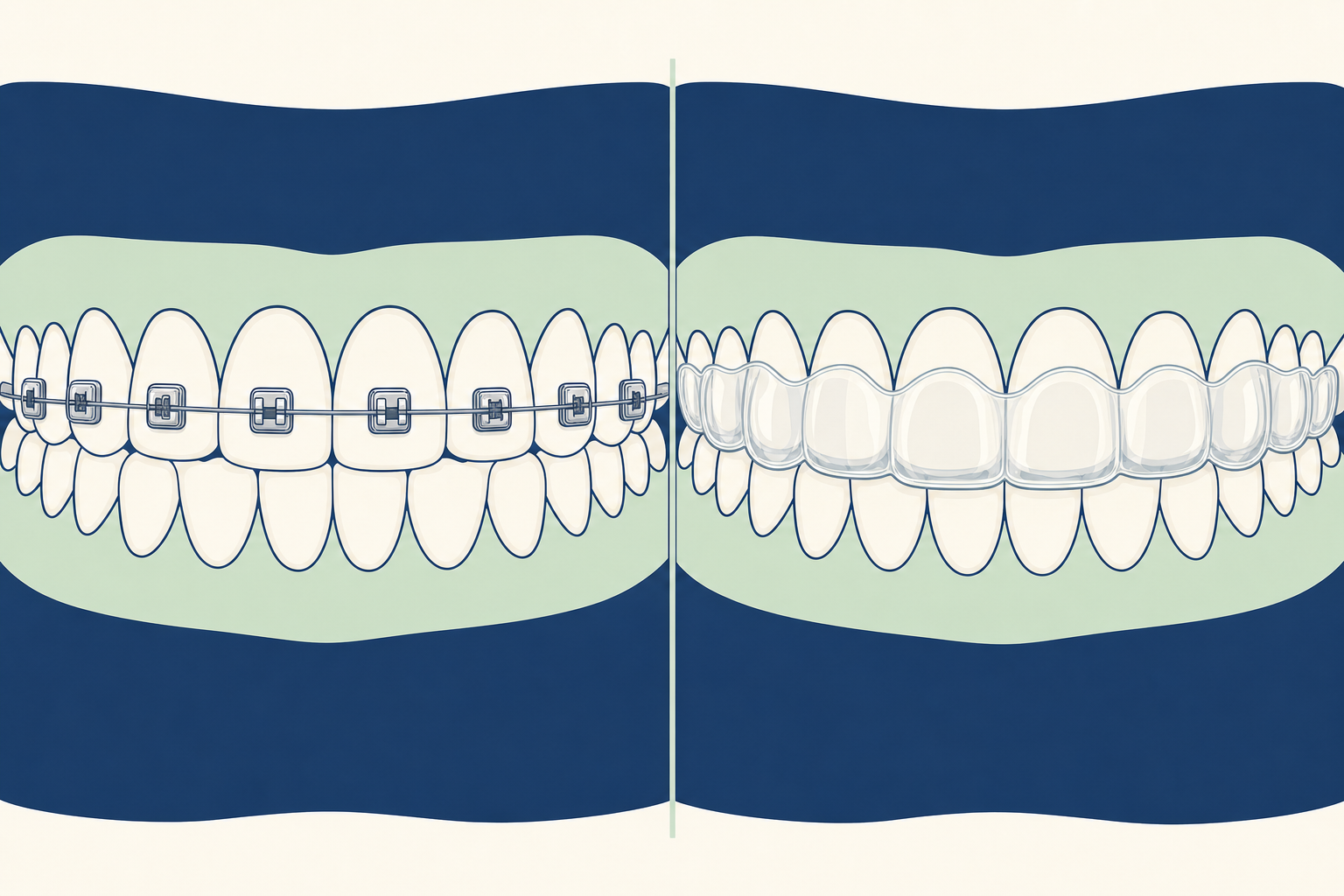
The two options, side by side

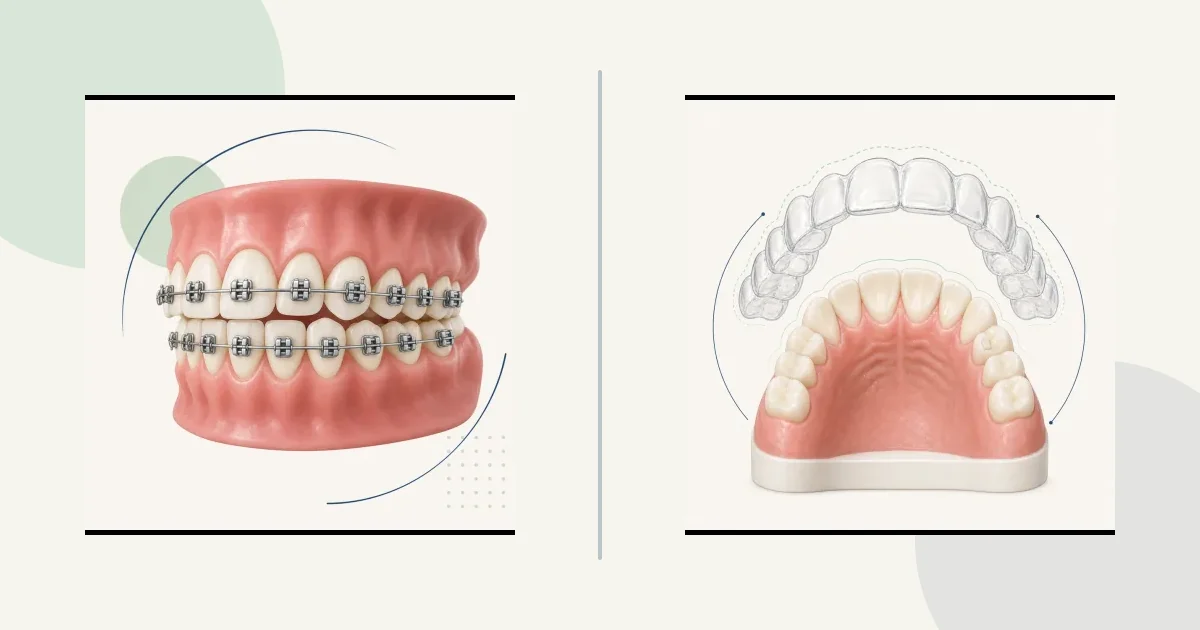
Illustration comparing fixed metal braces with clear aligners
Illustration — a representative diagram, not a patient photo.
The DN Scan499 AED · fully deducted if treatment starts within 30 days
Book The DN Scan

Which straightens the wider range of problems?

How the two orthodontic options differ
OptionPractical difference
BracesThey stay attached for treatment and can address very bad bites or crooked teeth.[2][1][3]
Clear alignersNearly invisible plastic shells can be removed to eat, brush teeth, and for occasional social events.[2][1]

[2][1][3]

When do braces fit the decision?

Fixed braces apply pressure through brackets and wires. They are used across a broad range of malocclusions, including severe bite or crowding problems.

[2][1][3]

When do clear aligners fit the decision?

Clear aligners snap over the teeth and gradually reposition them with gentle pressure. They are a viable alternative for mild to moderate malocclusions in non-growing patients who do not need extraction.

[3][4]

What practical commitment differs?

Braces cannot be removed during treatment. Aligners can be taken out daily, but because they are removable they can also be lost.

[2][1][3]
Daily use and care
TreatmentWhat to plan for
BracesHard and sticky foods can damage them, and cleaning around hard-to-reach areas needs care.[2][3]
AlignersThey can be removed for eating and brushing, but may be lost.[2][1][3]

[2][3][1]

What does each option need during treatment?

Braces remain fixed and use brackets and wires to keep pressure on the teeth. Aligners depend on being worn after they are removed for meals and cleaning.

[2][1][3]

What can go wrong with braces?

Hard or sticky foods can damage braces. A broken wire or bracket can leave a sharp edge, which can be covered temporarily with orthodontic wax.

[2][3]

When may aligners be the wrong tool?

Clear aligners have limited effectiveness for bodily arch expansion, closing extraction spaces, correcting occlusal contacts, and larger front-to-back or vertical discrepancies.

[3][4]

What separates a mild case from a complex one?

The useful distinction is the movement needed: aligners can predictably level, tip, and derotate many teeth, whereas complex discrepancies may need another orthodontic approach.

[3][4]

Frequently asked questions

Can I take clear aligners out to eat?

Yes. They can be removed daily to eat and brush teeth, unlike braces, which stay attached during treatment.

[2][1][3]