
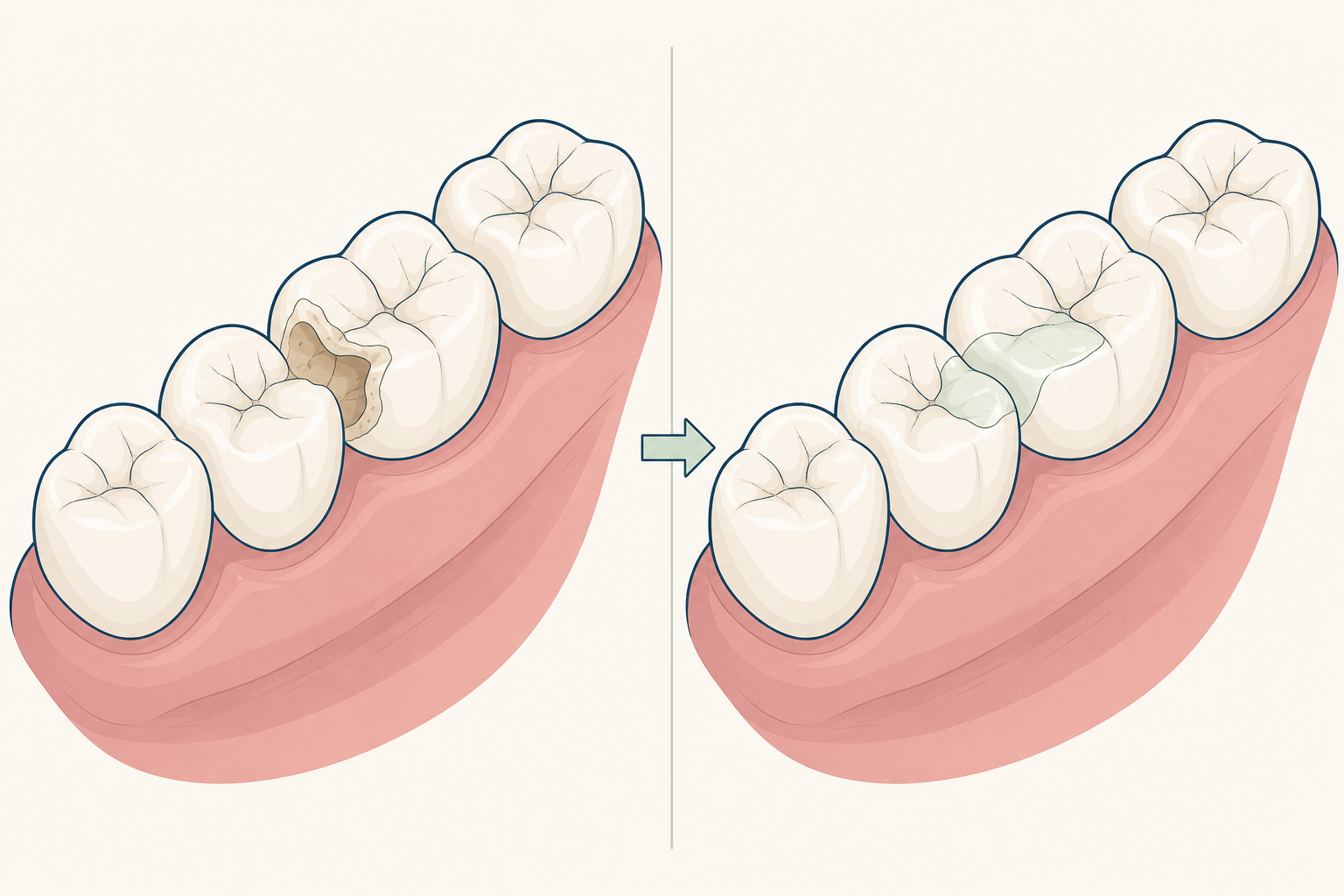
What the change looks like
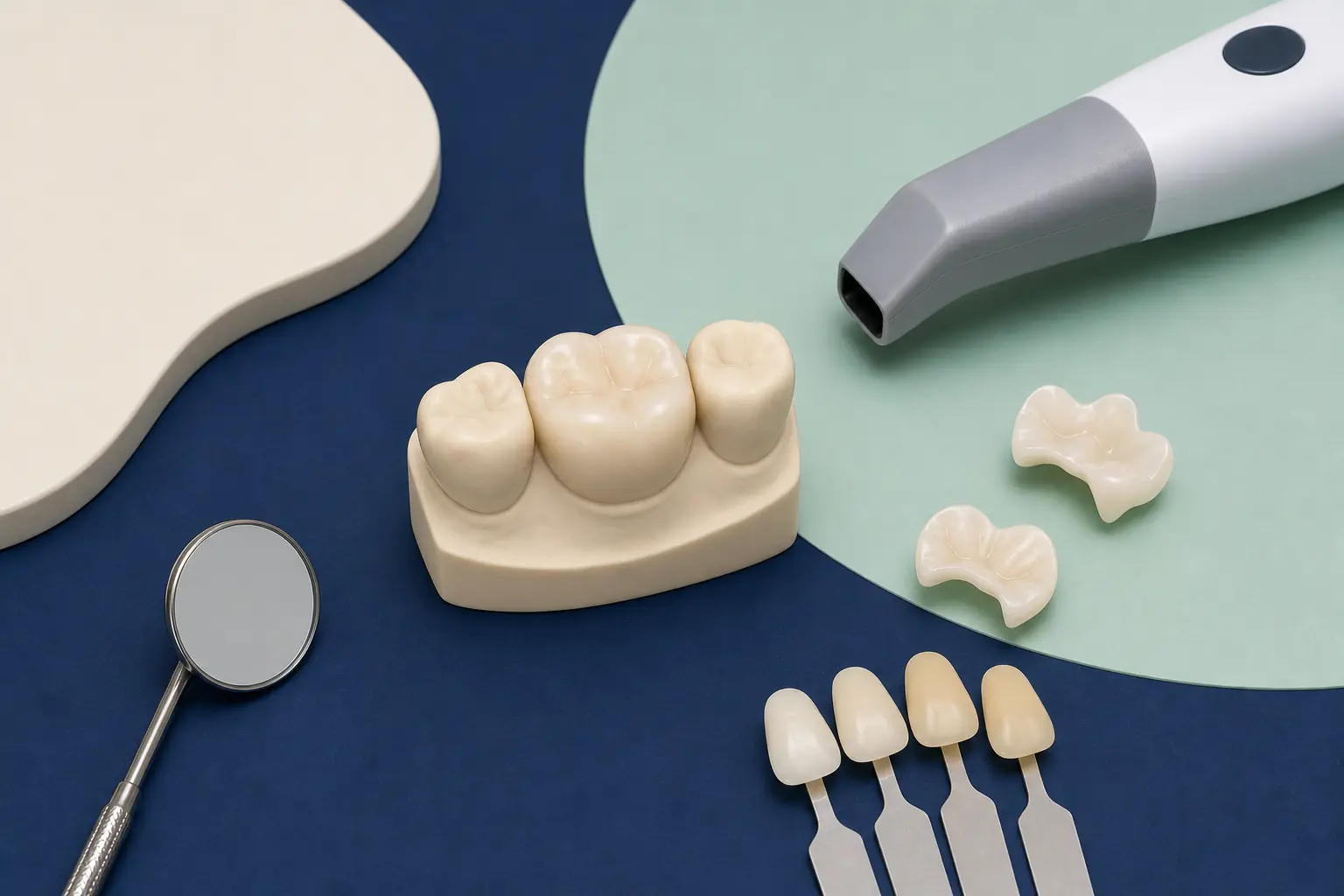
What are inlays and onlays?
Who may need an inlay or onlay?
They are used when a tooth needs an indirect restoration rather than material placed directly into it. The listed clinical indications vary with the restoration material and its intended use.
[1]Does it hurt?
The treatment sources explain material indications and restorative use, but they do not state a universal pain or sensitivity experience for inlays and onlays.
[2]Is it safe?
Ceramics are chemically inert and wear-resistant, but their brittle nature means they may fracture when flexed excessively. Ceramic hardness may also cause wear to opposing teeth.
[1]How long does it last?
Longevity depends on the restoration material and clinical use. Ceramic is wear-resistant but brittle under excessive flexing, while composite is more flexible under chewing stress.
[2]What happens during treatment?
What is recovery like?
After an inlay or onlay is fitted, its later performance is shaped by the material: ceramic resists wear but can fracture, while composite is more flexible.
[2]What alternatives are there?
Direct fillings place restorative material in the tooth, while inlays and onlays are made indirectly. Crowns and bridges are other indirect restoration categories listed for particular material indications.
[1]What should I expect?
Is it covered by insurance in the UAE?
Inlays and onlays are restorative procedures, and UAE payment depends on the cover available for the policyholder and the service provided.
[1]Frequently asked questions
What is the main difference between an inlay and a direct filling?
A direct filling is placed in the tooth, while an inlay is made outside the tooth before it is fitted as an indirect restoration.
[1]