
Indirect Pulp Capping
Indirect pulp capping preserves pulp tissue beneath remaining dentine in selected deep-caries cases, with success compared across vital pulp therapies.
[1]The short answer
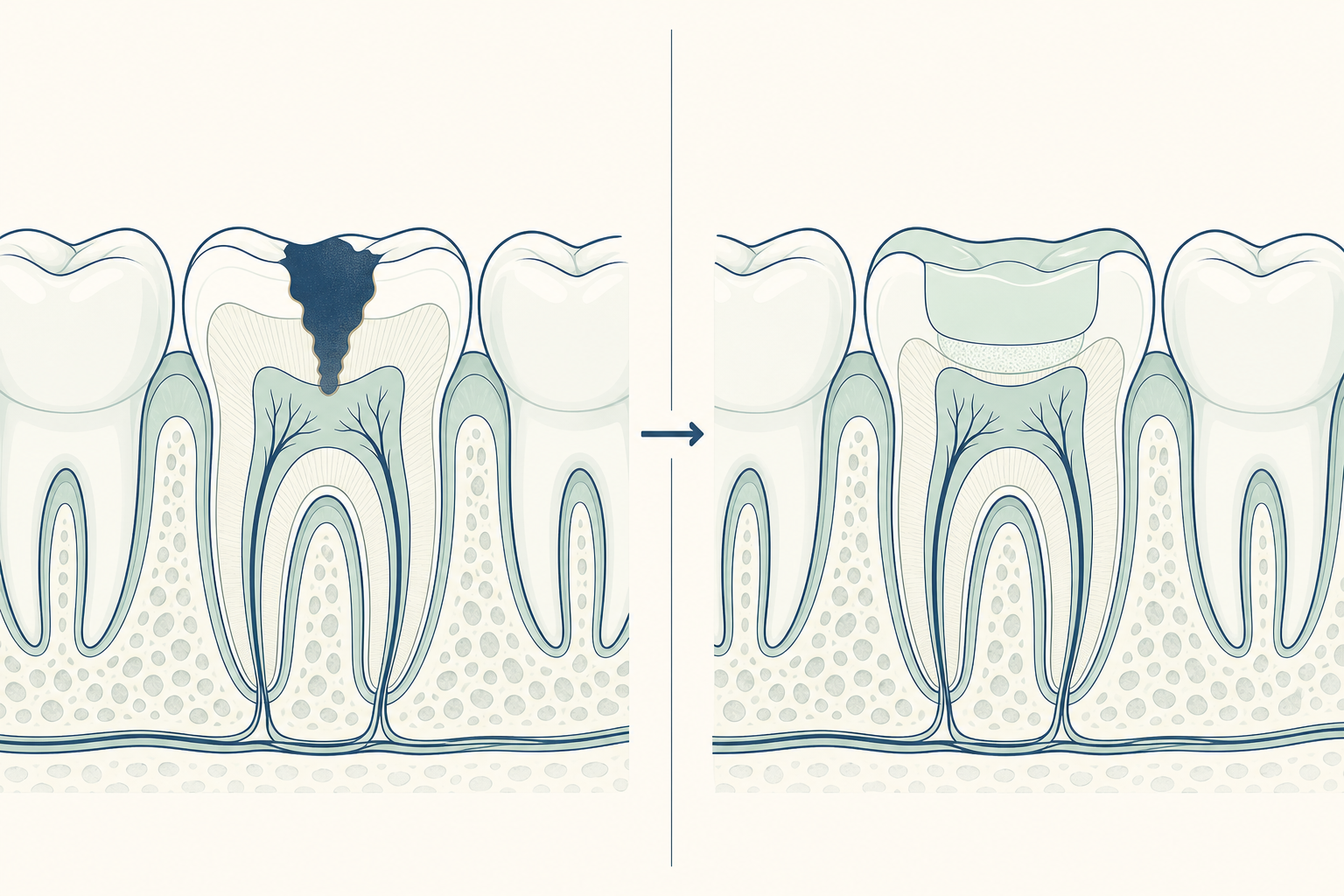
Indirect pulp capping treats deep caries while leaving a dentine barrier between the decay and the pulp. The approach keeps the pulp tissue covered rather than exposing it during removal of the deep lesion.
[1]
What the change looks like
What is indirect pulp capping?
Who may need it?
Does it hurt?
The procedure manages deep caries while a dentine barrier remains between the decay and pulp. Clinical signs, symptoms and appropriate pulp tests establish whether that protective approach is suitable.
[1]Is it safe?
How long does it last?
The outcome comparisons report follow-up at 24 and 36 months. These time points show when success was measured, not a guaranteed lifespan for one treated tooth or restoration.
[2]What happens during the procedure?
What is recovery like?
Follow-up evidence for vital pulp therapy includes 24-month and 36-month results. The comparison found no statistically significant difference in success among the listed permanent-tooth therapies in the cited question. The reported success range across the therapies is 91 to 97 percent.
[2]What are the alternatives?
What should I expect from the decision?
The choice rests on the depth of caries, the dentine barrier and the pulp diagnosis. The treatment family is designed to preserve vital pulp tissue when the diagnostic conditions fit. Direct capping, indirect treatment and partial or full pulpotomy are the named vital pulp options for comparison. Each option is assessed against the same aim of retaining vital pulp tissue.
[1][2]Will insurance cover it in the UAE?
Indirect pulp capping is a clinical restorative procedure, so a treatment quote relates to caries management, pulp assessment and the restoration that seals the remaining dentine barrier.
[1]