
Direct Pulp Capping
Direct pulp capping covers an exposed pulp in selected teeth, with calcium silicate cement recommended for permanent teeth in the stated situation.
[2]The short answer
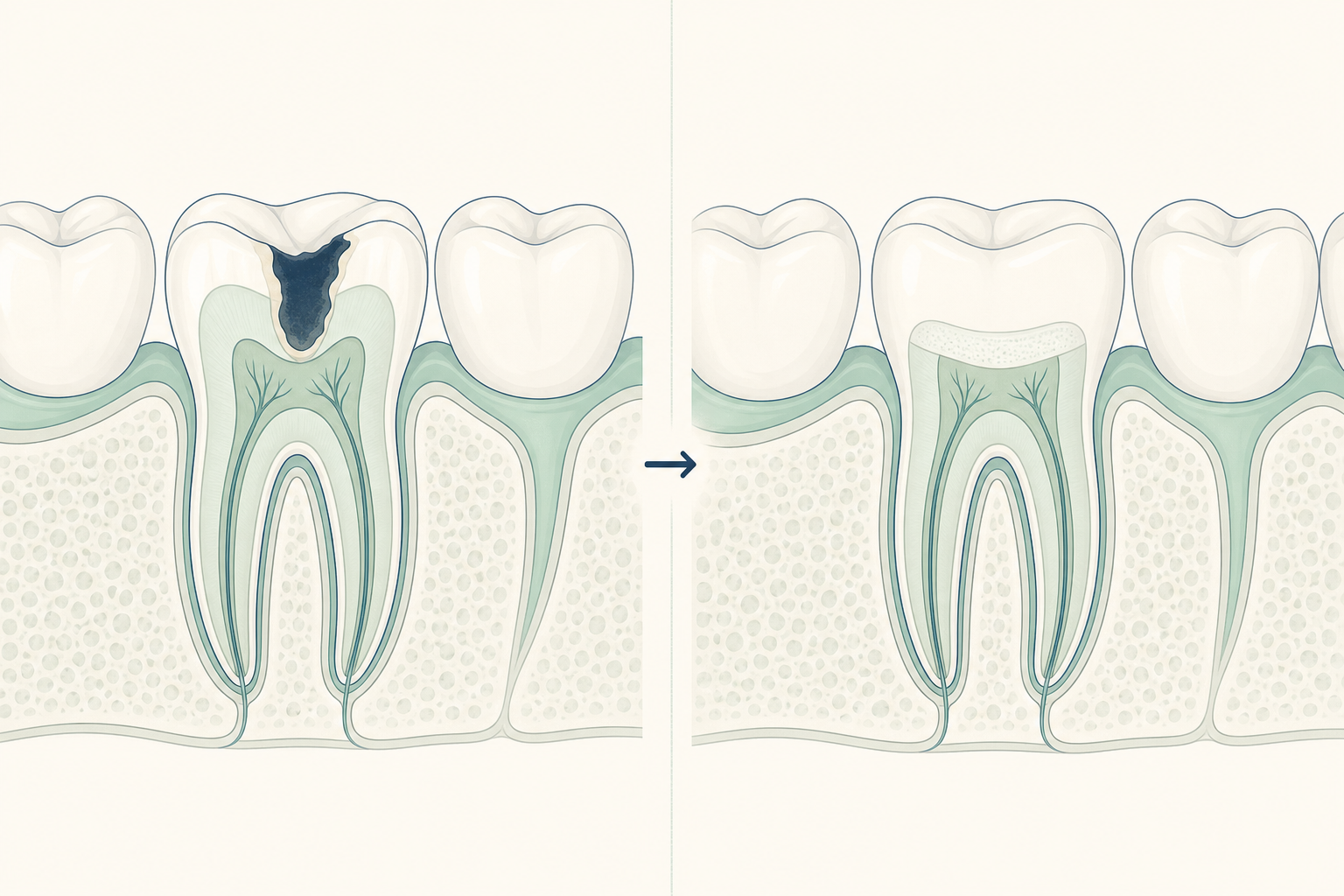
Direct pulp capping places a capping material over an exposed pulp when the tooth has normal pulp or reversible pulpitis. It is a vital pulp therapy intended for a tooth whose pulp can remain alive.
[2]
What the change looks like
What is direct pulp capping?
Who may need it?
Does it hurt?
Comfort comes after the tooth's pulp status has been assessed with clinical signs and symptoms, testing and radiographs when appropriate. The procedure then places the capping material directly over the exposed pulp.
[2]Is it safe?
How long does it last?
The permanent-tooth comparison follows patients for 36 months, while the wider vital pulp therapy comparisons report outcomes at 24 and 36 months. Those are study follow-up points, not a guaranteed lifetime for one tooth.
[2]What happens during the procedure?
What is recovery like?
Reported vital pulp therapy success ranges from 91 to 97 percent in the comparison. The evidence includes recommendations with different strengths and levels of certainty, so the result should be read alongside the pulp diagnosis. Direct capping, indirect pulp treatment, partial pulpotomy and full pulpotomy are compared as ways to retain vital pulp tissue.
[2]What are the alternatives?
What should I expect from the decision?
The decision turns first on pulp status and caries depth, then on the selected vital pulp therapy and capping material. Calcium silicate cement is the preferred material in the specified permanent-tooth setting. The assessment uses clinical findings, symptoms, pulp tests and radiographs when appropriate before the material is placed.
[2][1]Will insurance cover it in the UAE?
Direct pulp capping is a clinical vital-pulp procedure, so a treatment quote relates to the pulp assessment, caries management, capping material and restoration needed to seal the tooth.
[2]Frequently asked questions
Who wrote this page
This library is published by Dental Nation, a licensed dental group practising in the United Arab Emirates. Pages are written and overseen by the same clinical team that treats patients in our clinics, and are held to a fixed editorial standard for safety and accuracy.
This page is patient education, not medical advice, and cannot replace an examination. Anything urgent — facial swelling, trauma, uncontrolled bleeding or severe pain — needs a dentist or emergency care now.