
Dental Nation
Treatment guide

Partial Dentures

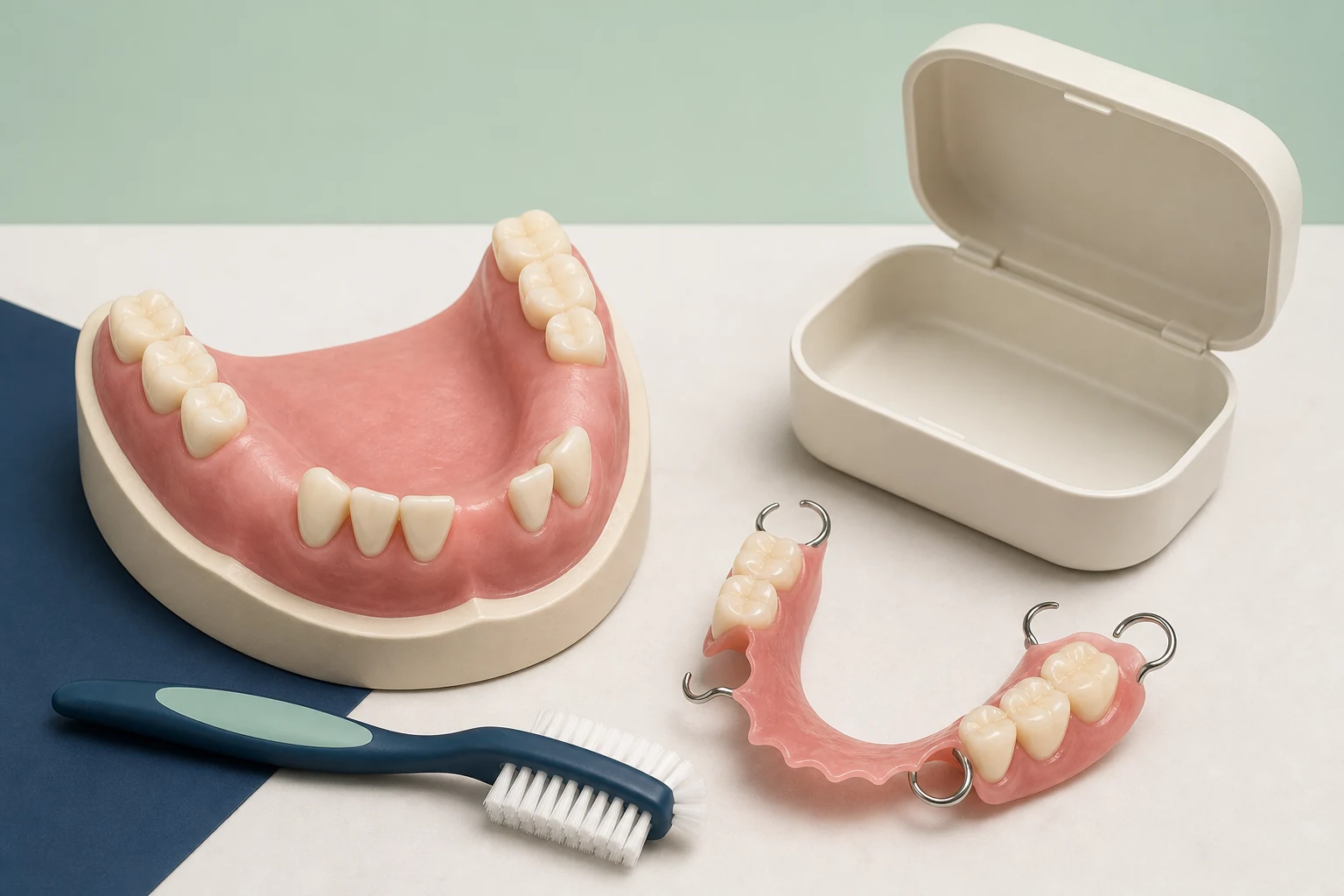
Partial dentures replace one or more missing teeth with removable acrylic or metal plates that fit over the gum.

[1][2]
Partial Dentures dental educational illustration

What the change looks like
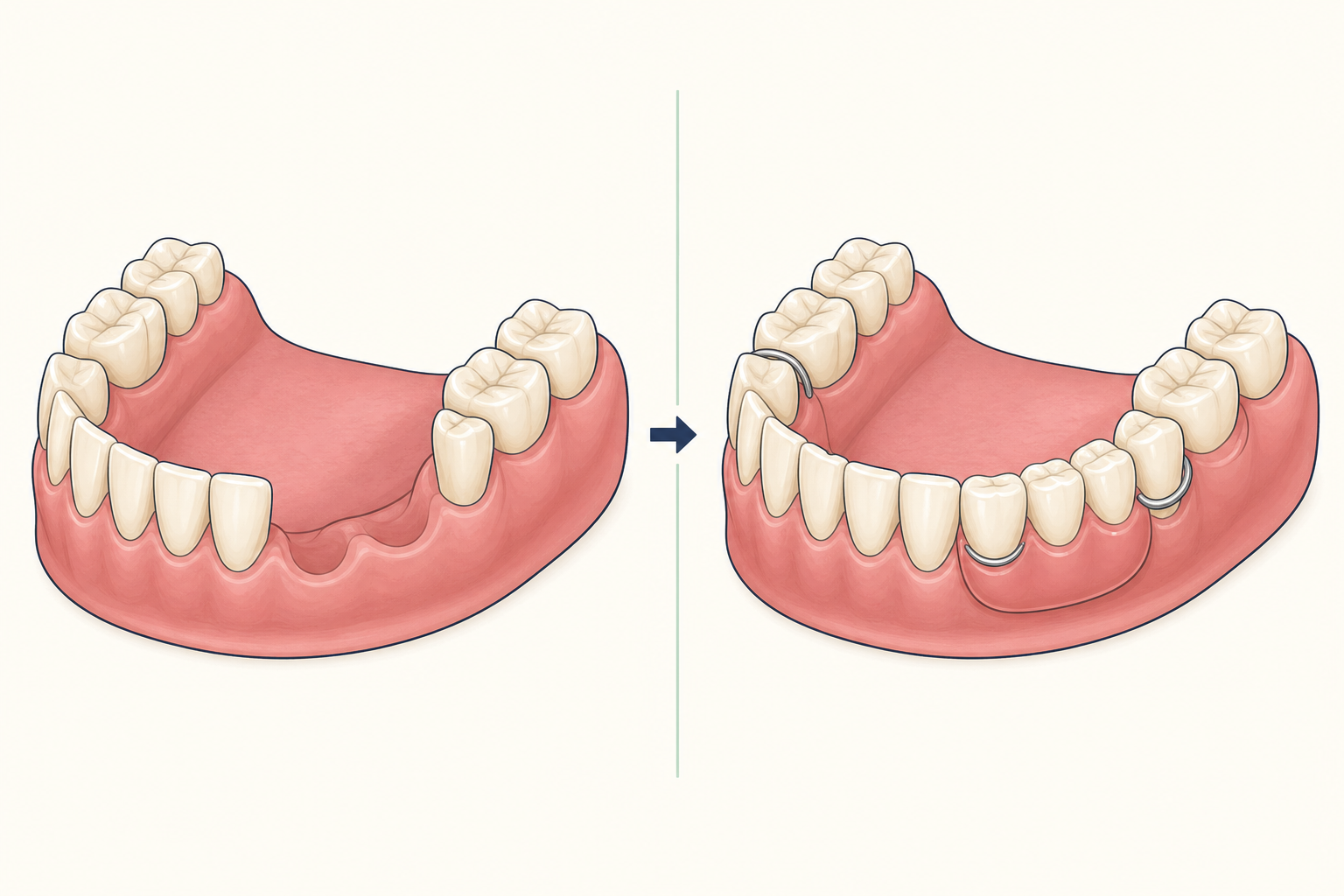
Illustrative diagram: Partial Dentures
Illustration — a representative diagram, not a patient photo.
The DN First Look799 AED
Book The DN First Look

What are partial dentures?

Partial dentures replace one or more missing teeth with removable acrylic or metal plates that fit over the gum.

[1][2]
Partial denture materials
MaterialDescription
AcrylicA plastic plate with possible metal clasps.[1][2]
MetalA cobalt and chromium alloy covered with gum-coloured plastic and fitted with plastic teeth.[1][2]

[1][2]

Who may need partial dentures?

Someone with one or more missing teeth may use a partial denture to help with eating or speaking and to replace missing gum or bone contours.

[1][2]

Does it hurt?

New partial dentures can create pressure spots. Mild soreness may be managed by continuing to wear the denture, while severe soreness may require leaving it out until review.

[1][2]

Is it safe?

A slipping or clicking denture, pain, damage, very red or bleeding gums, or bad breath can signal a problem that needs attention.

[1][2]

How long does it last?

A standard denture usually takes a few weeks to make and fit. An immediate denture may become loose as gums and bone change during healing and may need relining or remaking.

[1][2]

How are partial dentures made?

The mouth is measured, a putty mould or scan is made, and the denture is fitted at a later appointment. Metal-based dentures are thinner and stronger than acrylic dentures.

[1][2]

What is recovery like?

Sore areas are often checked at a review one to two weeks after fitting. Brush the teeth, gums, tongue, and palate twice daily with a soft brush.

[1][2]
Early adjustment
TimeWhat may happen
First 24 to 48 hoursSore spots may appear with a new denture.[1][2]
One to two weeksA review can address pressure areas and discomfort.[2][1]

[1][2]

What are the alternatives?

Bridges are fixed to other teeth and implants are fixed to the jawbone; both are alternatives for replacing missing teeth.

[1][2]

What should I expect?

Clasps may show when you smile or open your mouth. An immediate partial denture is inserted after extraction and may loosen as healing changes the gums and bone.

[1][2]

Is it covered by insurance?

The described NHS system applies dental charges when dentures are made and fitted.

[1][2]

Frequently asked questions

What is the difference between acrylic and metal partial dentures?

Metal dentures use a cobalt and chromium alloy and are thinner and stronger than acrylic dentures made purely from plastic.

[1][2]