Dental Nation
Treatment guide

Night Guard

Separating the teeth during grinding can limit damage, and a night guard fits over them without changing the bite.

[1][2]

The short answer

A night guard is an intraoral appliance that fits over the teeth to separate them and help prevent damage from grinding and clenching.

[1][2]
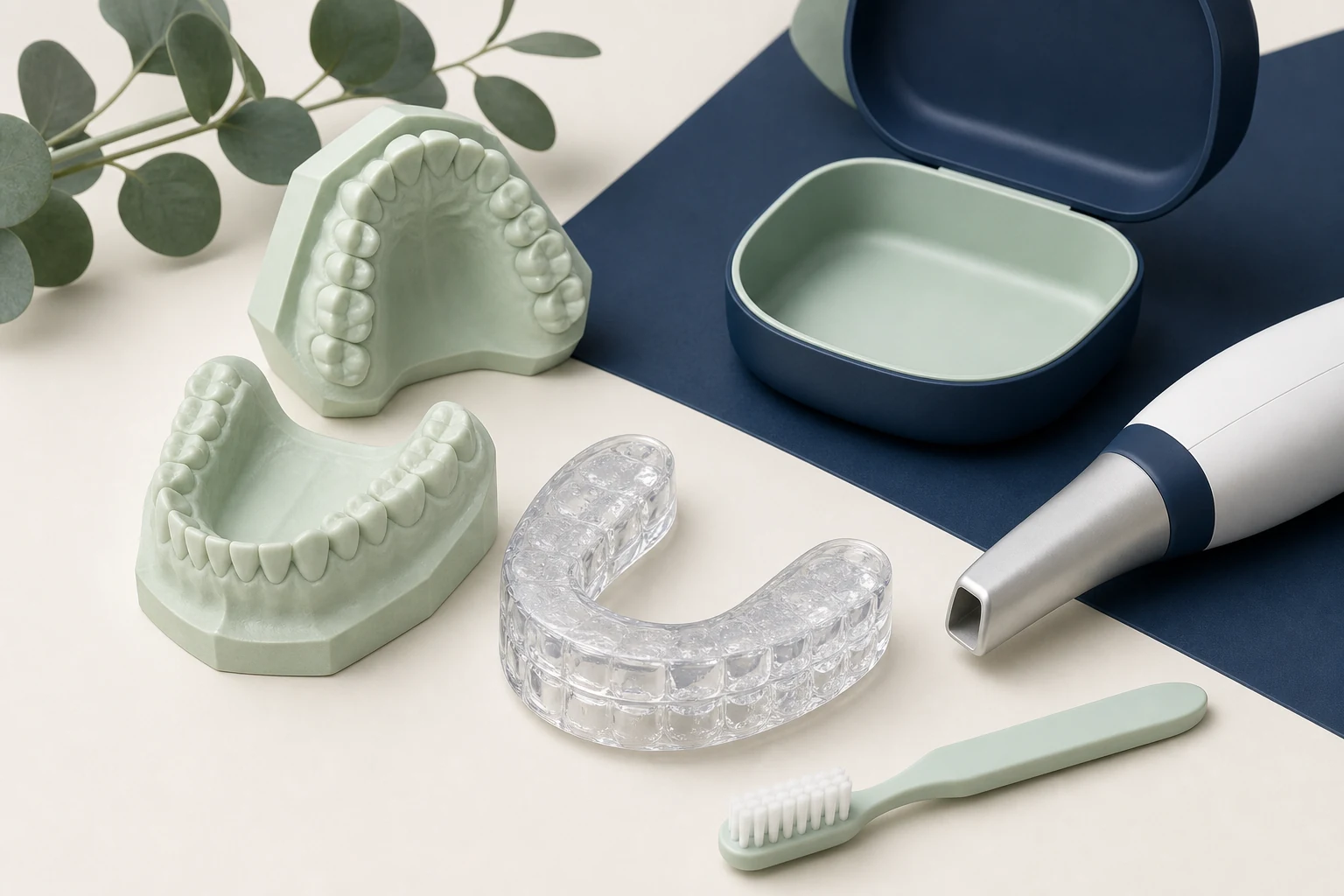
Night Guard dental educational illustration

What the change looks like

Illustrative diagram: Night Guard
Illustration — a representative diagram, not a patient photo.
The DN First Look799 AED
Book The DN First Look

What is a night guard?

What a night guard is used for
UsePatient-facing purpose
Tooth separationCreates space between the teeth during use.[1][2]
Bite positionFits over the teeth without changing the teeth or bite.[1][2]

[1][2]

Who may need one?

A night guard may be considered when grinding or clenching is causing tooth damage, jaw-muscle soreness or tiredness, facial pain, headaches, or tooth sensitivity. It is also used when the aim is to separate teeth and protect them from grinding damage.

[1][2]

Does it hurt?

The appliance is worn over the teeth. If it causes pain, it should be stopped and the problem checked rather than continued through discomfort.

[1][2]

Is it safe?

A night guard can prevent tooth damage from grinding and may reduce grinding-related muscle activity. It should not be designed to permanently change the bite, and pain while wearing it is a reason to stop using it.

[1][2]

How long does it last?

A night guard separates the teeth while it is worn. Ongoing grinding can still leave teeth or restorations damaged, so those changes are checked at dental examinations.

[1]

What happens during the process?

Assessment starts with questions about when grinding or clenching happens, related jaw pain or tiredness, symptoms and stressors. The teeth, jaw and face are then checked for damage, pain or tenderness. A sleep study may use sensors, audio and video to monitor bodily functions and muscle activity during sleep.

[1][2]

What is recovery like?

Wearing a night guard is ongoing care rather than a recovery period. Stop using it if it causes pain, and watch for jaw soreness, tooth damage, or damage to restorations.

[1]
What to watch during use
ObservationWhat it may show
Jaw muscle tiredness or sorenessA symptom associated with grinding or clenching.[1]
Pain caused by the applianceStop using it and seek clinical advice.[1][2]

[1][2]

What are the alternatives?

Other approaches include changing the resting mouth and jaw position, increasing awareness of clenching, managing stress, and repairing chipped or worn teeth with dental treatment such as crowns when needed.

[1][2]

What should I expect?

Expect questions about day or night grinding, a check for flattened, chipped, cracked or loose teeth, and examination of jaw and facial tenderness. A sleeping partner’s observations may also help identify night-time grinding.

[1][2]

Is it covered by insurance in the UAE?

A night guard is an intraoral appliance used to separate teeth and help prevent grinding damage. Its use is linked to bruxism care rather than a cosmetic change to the teeth.

[1][2]

Frequently asked questions

Can a night guard change my bite?

An intraoral appliance fits over the teeth and does not change the teeth or bite; it should not be designed to permanently change the bite.

[1][2]

Keep reading