
Implant-Supported Dentures
Implant-supported dentures use jawbone implants to support a removable denture when missing teeth need replacement.
[1][2]The short answer
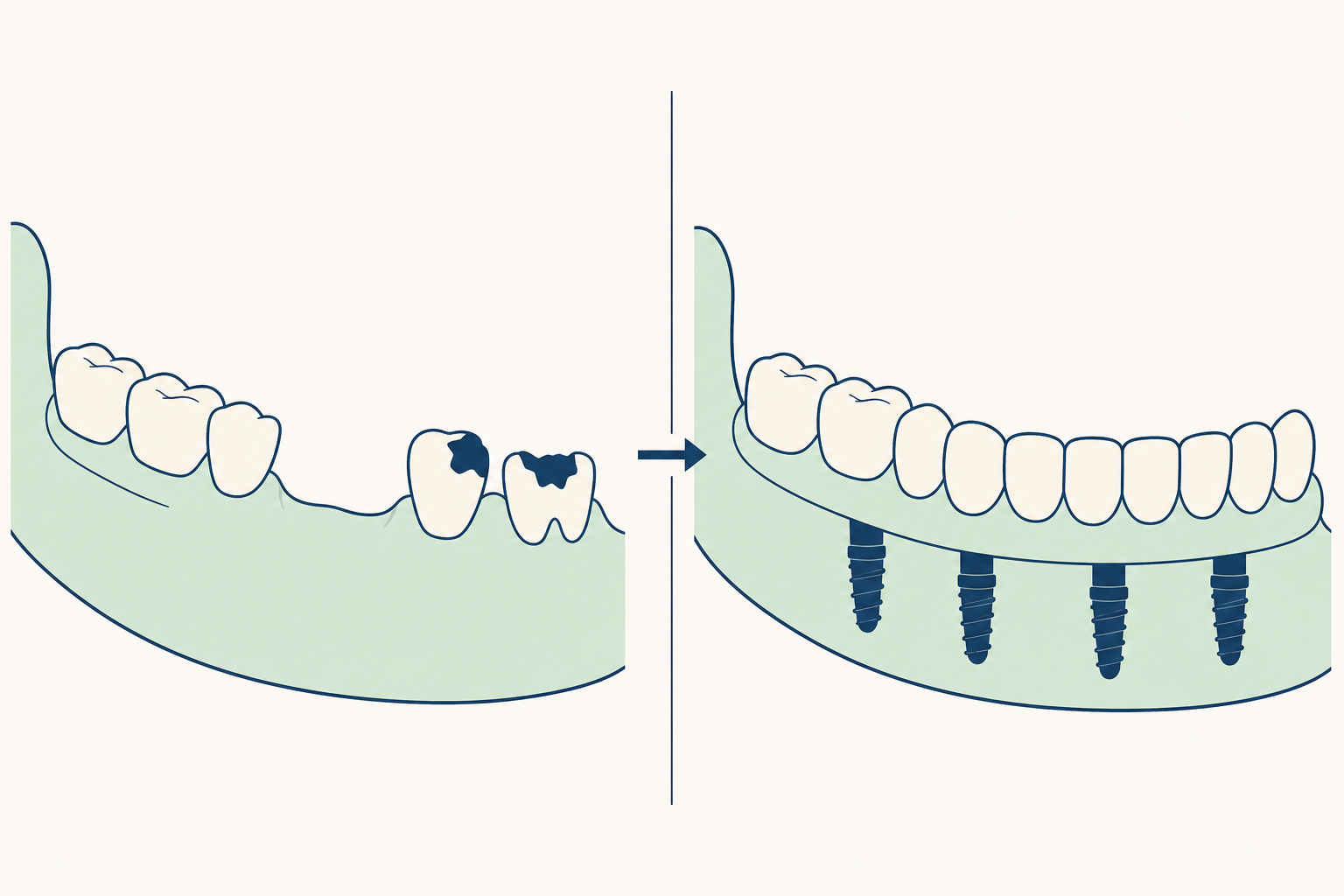
Implant-supported dentures use titanium screws placed in the jawbone to support a denture. They provide a fixed implant base for a replacement that can still be removed for care.
[1][2]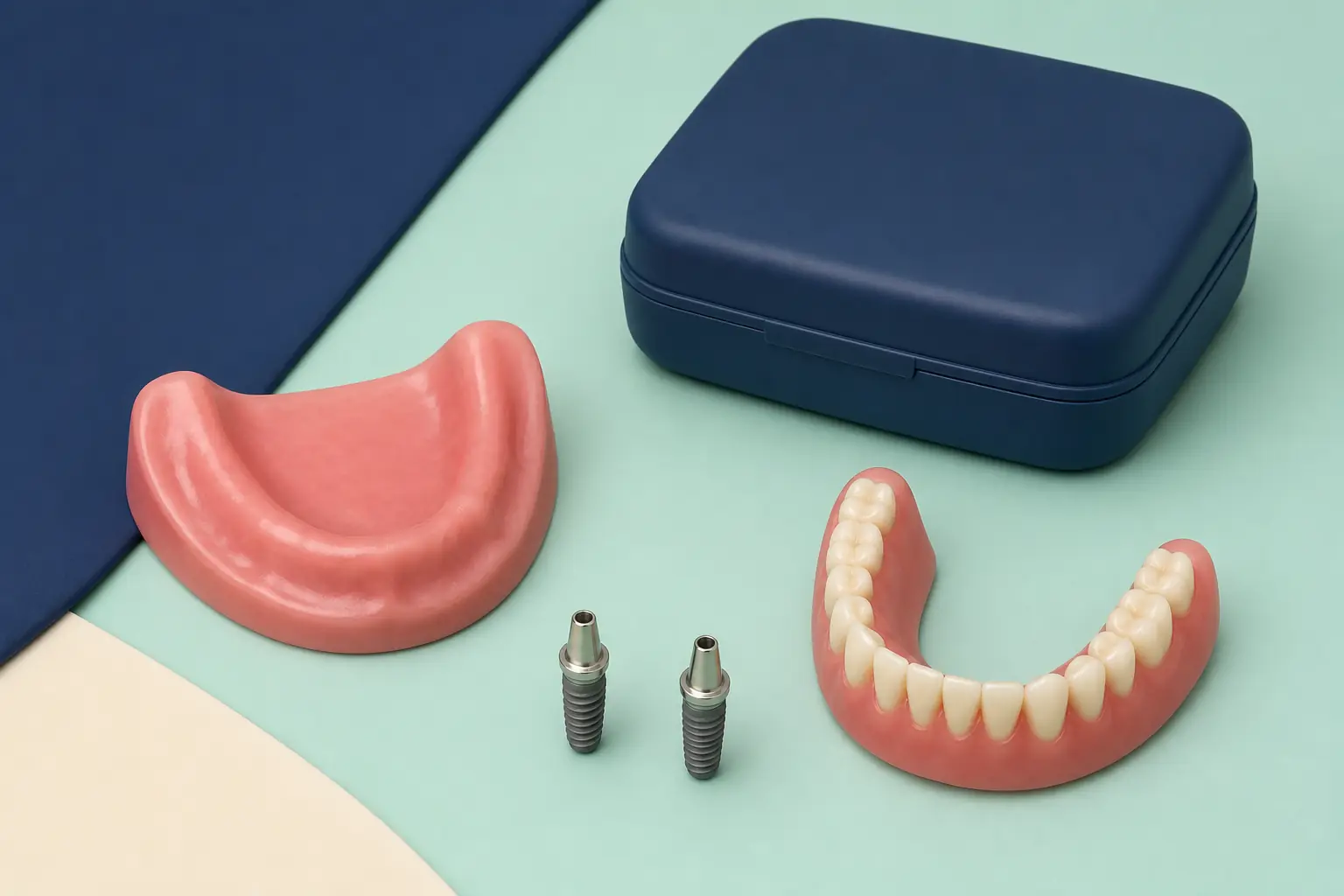
What the change looks like
What is it?
Who needs it?
Does it hurt?
The implant is placed in the jawbone and the denture is prepared to fit the mouth and neighbouring teeth. Replacement parts may take time, so they may not be ready at the first visit.
[2]Is it safe?
A denture that clicks, slips, causes pain, or no longer fits needs attention. Worn or damaged dentures, very red or bleeding gums, and bad breath can also signal a problem such as gum disease, fungal infection, or decay.
[2]How long does it last?
Implant-supported dentures require replacement parts made to fit the mouth and other teeth properly. Preparation can therefore continue after the first visit, rather than ending with same-day delivery.
[1]How is it provided?
What is recovery like?
The denture is removable, even though the implants are fixed in the jawbone. Replacement parts are made for the mouth, so the fitting stage follows their preparation rather than necessarily occurring at the first appointment.
[1]| Treatment question | What the appointment considers | Useful patient question |
|---|---|---|
| At fitting | Comfort, stability, and practical use are checked | What should feel different after fitting?[1] |
| Follow-up | Adjustments and cleaning advice are discussed | When should the dental team review the fit?[1] |
What are the alternatives?
What should you expect at appointments?
What should you ask about payment?
Frequently asked questions
Who wrote this page
This library is published by Dental Nation, a licensed dental group practising in the United Arab Emirates. Pages are written and overseen by the same clinical team that treats patients in our clinics, and are held to a fixed editorial standard for safety and accuracy.
This page is patient education, not medical advice, and cannot replace an examination. Anything urgent — facial swelling, trauma, uncontrolled bleeding or severe pain — needs a dentist or emergency care now.