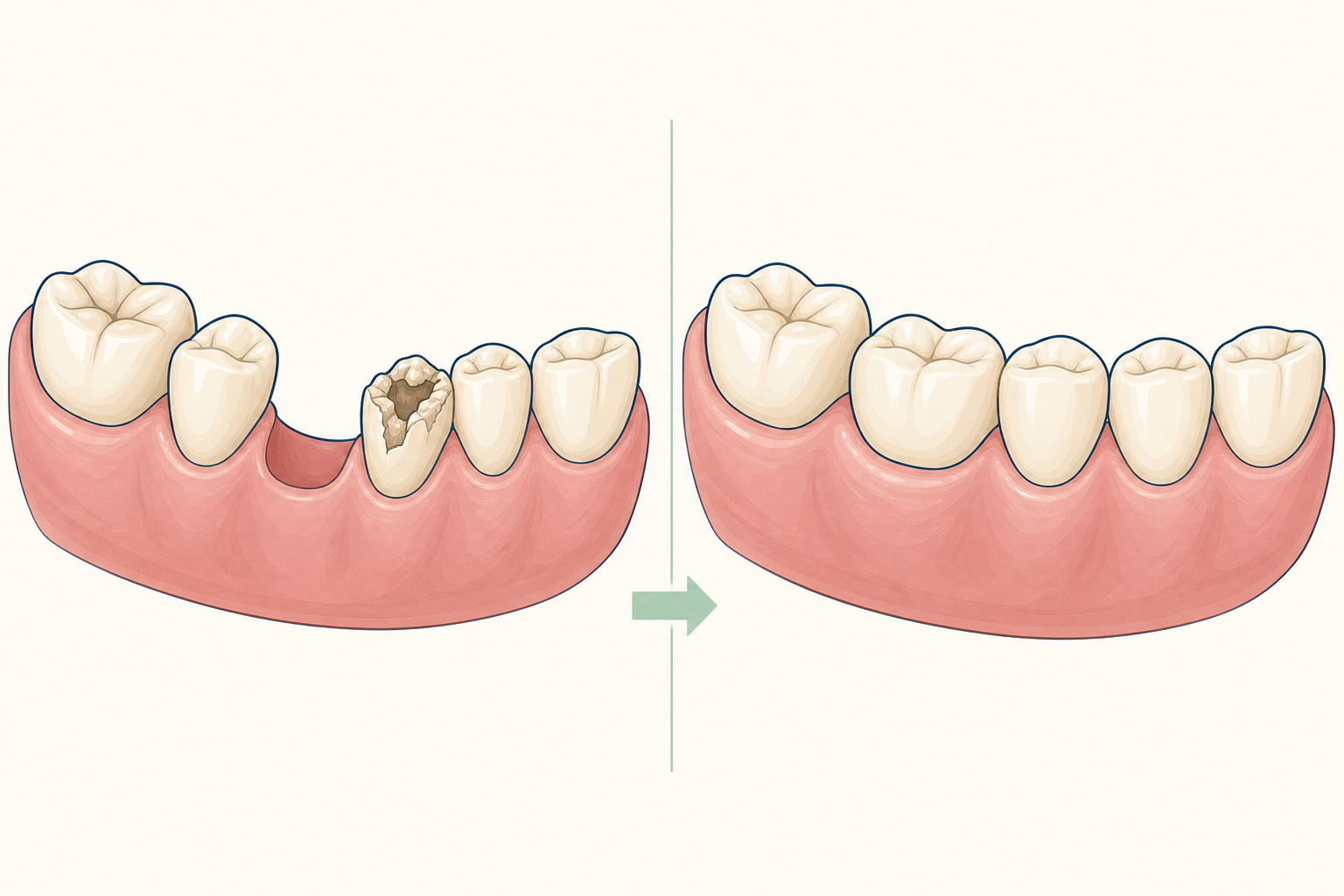
It is used by a person with a missing tooth who needs a removable partial prosthesis while a longer-term replacement is being considered. Acrylic resin partial dentures are generally treated as interim appliances.
A flipper is removable, so it can be taken out if it causes pressure or irritation. Wearing a removable partial denture also requires attention to comfort and fit.
Removable partial dentures can develop technical complications, including loss of retention, fractures, repairs, and a need for relining. The reported problems vary with prosthesis type and observation time.
A flipper is usually an interim appliance rather than the long-term category used for metal removable partial dentures. Its service life depends on technical complications and repairs.
The missing-tooth space is restored with an acrylic removable partial prosthesis. The appliance is then inserted and adjusted so it can be removed by the wearer.
After insertion, the appliance may need adjustment, repair, or relining if retention changes or the acrylic base, denture tooth, or framework is damaged.
A metal removable partial denture is generally considered a longer-term option, while an acrylic resin partial denture is generally considered interim. A fixed dental prosthesis is another category of replacement.
Expect a removable acrylic appliance that restores the visible gap but may require maintenance. Retention, repairs, relining, and the condition of supporting teeth are practical concerns.
A flipper is a removable partial denture used for tooth replacement. Insurance cover depends on whether the plan includes removable prosthetic treatment.
Acrylic resin removable partial dentures are generally considered interim treatments, while metal removable partial dentures are often considered longer-term options.