
Flexible Dentures (Valplast)
Flexible dentures replace missing teeth with a removable appliance; daily cleaning helps prevent stains, odour, irritation, and infection.
[1]The short answer
Flexible dentures are removable replacements for missing teeth. They fit over the gums and need careful handling and regular cleaning to keep food debris, stains, and plaque from building up.
[1]
What the change looks like
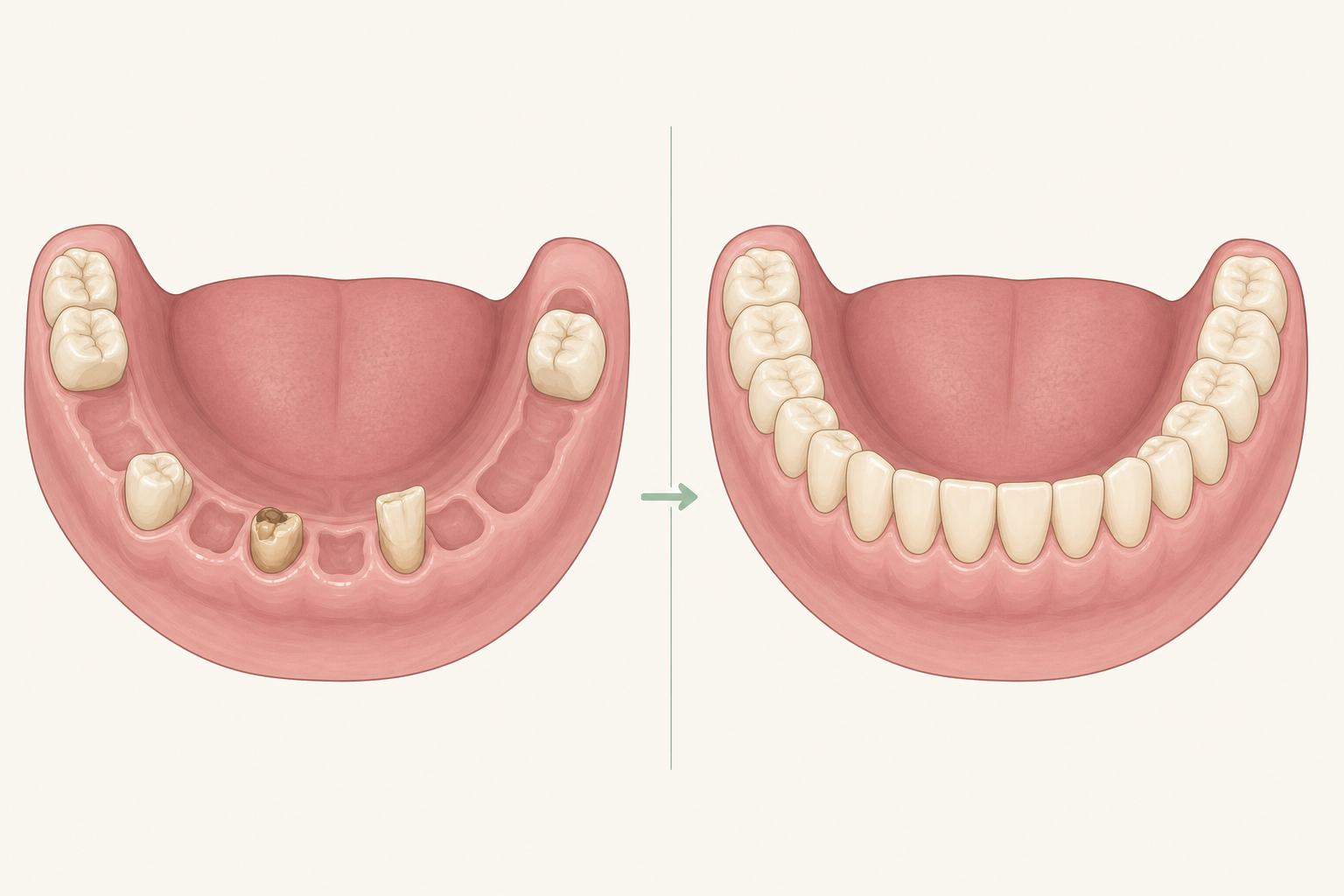
What is it?
Who needs it?
They may suit someone who needs a removable replacement for missing teeth and wants the appliance cleaned outside the mouth. Bridges are fixed to other teeth, while implants are fixed to the jawbone.
[1]Does it hurt?
Is it safe?
How long does it last?
How is it provided?
The mouth is measured with putty or a scan to make the mould. Dentures usually take a few weeks to make, then are fitted at another appointment; an immediate set can usually be made within a few days.
[1]What is recovery like?
Clean the denture with a soft brush or denture brush, soap, and warm water. Avoid hot water, toothpaste, and abrasive pastes because they can scratch the surface and make debris and stains more likely.
[1][2]| Treatment question | What the appointment considers | Useful patient question |
|---|---|---|
| At fitting | Comfort, stability, and practical use are checked | What should feel different after fitting?[1][2] |
| Follow-up | Adjustments and cleaning advice are discussed | When should the dental team review the fit?[1][2] |
What are the alternatives?
A bridge is fixed to other teeth and cannot be removed. An implant is fixed to the jawbone and can support a crown, bridge, or some dentures, giving alternatives to a removable denture.
[1]What should you expect at appointments?
The price discussion should separate making the removable appliance, the fitting appointment, and any later adjustment. The appliance also needs regular cleaning and careful handling after it is provided.
[1]What should you ask about payment?
Flexible dentures are removable replacements that need a mould or scan, a fitting appointment, and daily cleaning with warm water and a soft brush.
[1]Frequently asked questions
Is Flexible Dentures (Valplast) suitable for everyone?
Clean flexible dentures with a soft brush, soap, and warm water; avoid hot water and abrasive toothpaste because scratches collect debris and stains.
[1]