
Denture Reline & Repair
Relining or repairing dentures can restore fit, while worn or loose dentures may need rebasing or replacement.
[1][2]The short answer
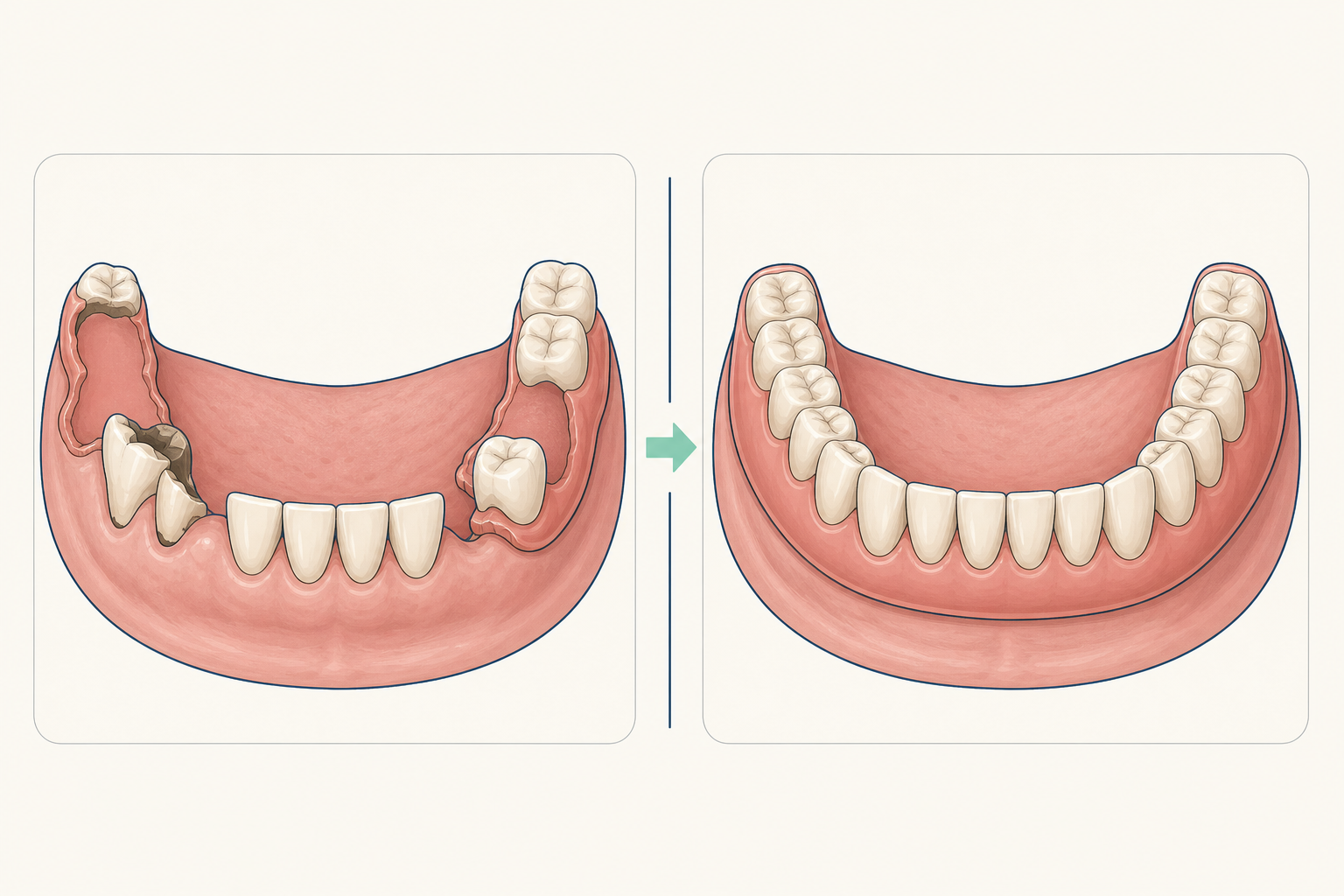
Relining or rebasing uses the existing dentures to improve their fit. Dentures become loose as the gums and underlying bone shrink with age, or when supporting teeth are lost.
[1][2]
What the change looks like
What is it?
Who needs it?
Does it hurt?
New or adjusted dentures can cause sore spots 24 to 48 hours after first wear. A fitting review can identify the sore areas, which may take up to a week to heal.
[1]Is it safe?
Poorly fitting or worn dentures can cause problems, while unclean dentures allow food debris, stains, and plaque to build up. That can lead to mouth odour, gum irritation, infection, and problems around nearby teeth.
[1]How long does it last?
A relined, rebased, or repaired denture still needs a fitting check. Sore areas may take up to a week to heal; extreme soreness may mean reducing or stopping wear until the review.
[1]How is it provided?
What is recovery like?
Clean dentures with a soft brush, soap, and warm water. Avoid hot water and abrasive toothpaste because scratches make debris and stains collect more easily; clean over a sink or bowl to reduce breakage risk.
[1]| Treatment question | What the appointment considers | Useful patient question |
|---|---|---|
| At fitting | Comfort, stability, and practical use are checked | What should feel different after fitting?[1] |
| Follow-up | Adjustments and cleaning advice are discussed | When should the dental team review the fit?[1] |
What are the alternatives?
A replacement set may be needed when teeth show significant wear or the denture is too loose to correct. A repair preserves sound portions when only one area has failed; a full remake removes and replaces the whole set.
[1]