
Dental Nation
Treatment guide

Dental Bridges

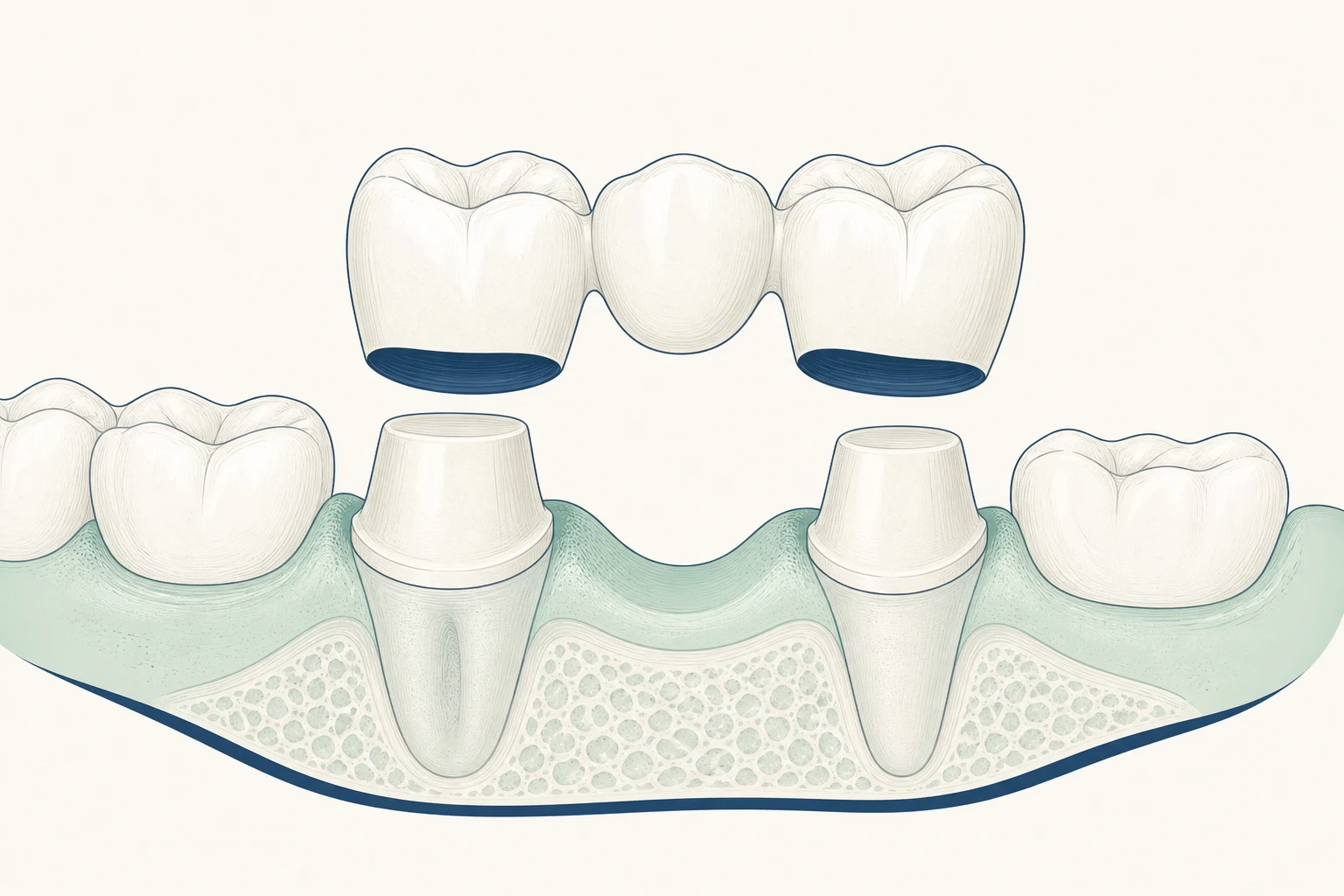
Dental bridges replace one or more missing teeth with artificial teeth fixed to surrounding teeth or supported by implants.

[3][1]
Dental Bridges dental educational illustration

What the change looks like
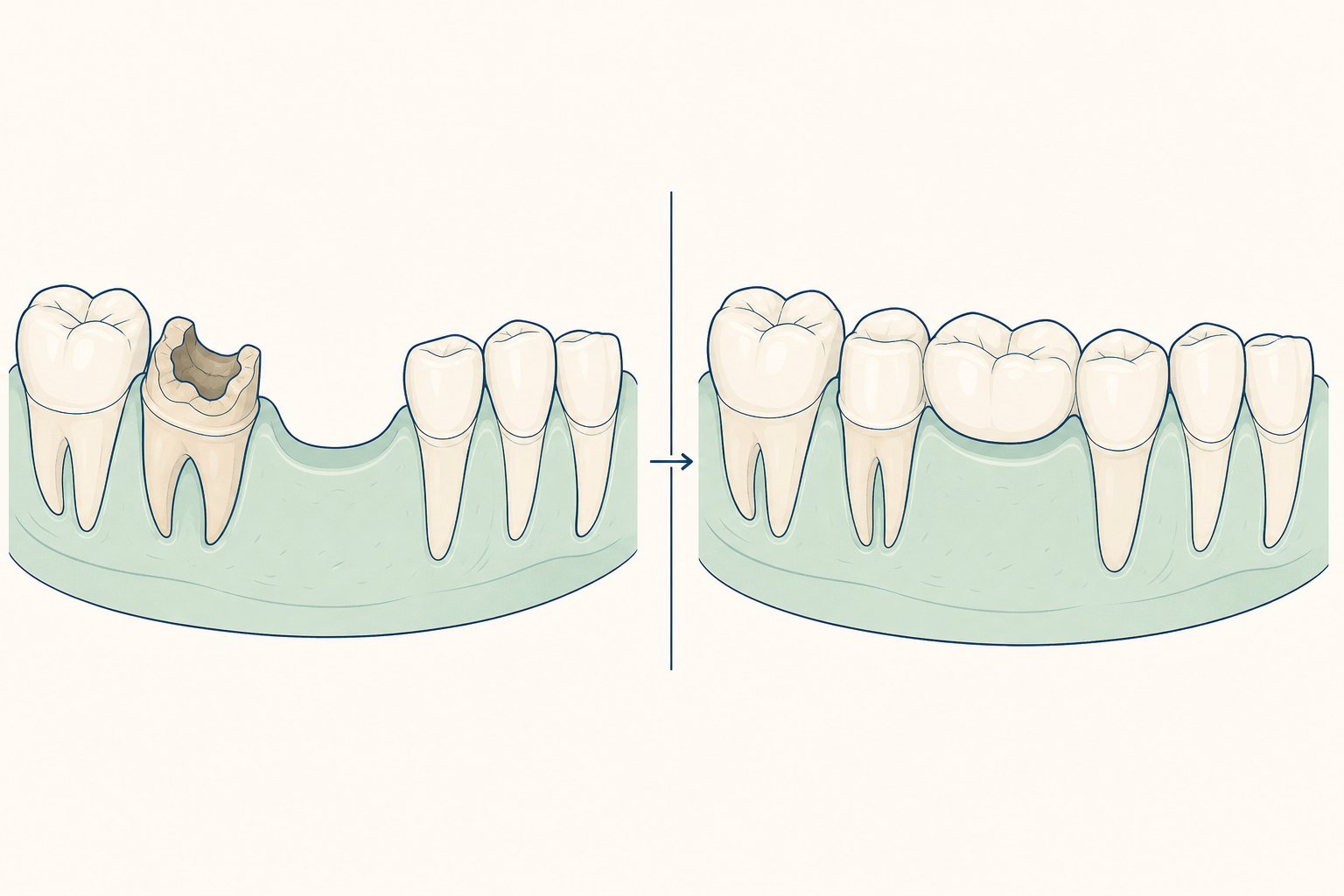
Illustrative diagram: Dental Bridges
Illustration — a representative diagram, not a patient photo.
The DN First Look799 AED
Book The DN First Look

What is a dental bridge?

Dental bridges replace one or more missing teeth with artificial teeth fixed to surrounding teeth or supported by implants.

[3][1]
How bridges are supported
TypeSupport
Fixed bridgeArtificial teeth attach to surrounding teeth and are removable only by a dentist.[3][1]
Implant bridgeArtificial teeth attach directly to the jaw or under gum tissue.[3][1]

[3][1]

Who may need a bridge?

People missing one or more teeth may notice changes in chewing and speaking; a bridge fills that gap with artificial teeth.

[3][1]

Does it hurt?

A bridge replaces missing teeth with artificial teeth supported by surrounding teeth or attached to an implant.

[3][1]

Is it safe?

For tooth-supported CAD/CAM ceramic bridges, the review considers survival, success, failures, and complications, with limited long-term clinical information.

[1][2]

How long does it last?

Bridge research measures survival and success at one, five, and ten years, alongside reported failures and complications.

[1][2]

What happens during treatment?

A bridge uses surrounding teeth for support, while an implant bridge attaches artificial teeth to the jaw or beneath gum tissue. The supporting foundation matters to success.

[3][1]

What is recovery like?

The evidence identifies the bridge as fixed rather than removable and stresses keeping the remaining teeth healthy and strong; it gives no recovery timetable.

[3]
What the bridge depends on
FactorWhy it matters
Remaining teethThey provide support for a tooth-supported bridge.[3]
FoundationThe supporting foundation affects bridge success.[3]

[3]

What are the alternatives?

Implants are a fixed alternative to removable dentures and can support a crown, bridge, or denture. Dentures replace teeth without being fixed to surrounding teeth.

[3][1]

What should I expect?

Bridges may be made from gold, alloys, porcelain, or combinations of these materials. A fixed bridge cannot be removed by the patient.

[3][1]

Is it covered by insurance?

NHS dental contributions depend on treatment type and cost band, while some treatments are available only in particular circumstances.

[3][1]

Frequently asked questions

Can a bridge be taken out at home?

A fixed bridge can only be removed by a dentist; a removable bridge can be taken out and cleaned.

[3][1]