
Professional Desensitizing Treatment
Desensitizing care reduces sharp tooth sensitivity by blocking sensation or treating decay, exposed roots, worn enamel, or damage.
[1]The short answer
Professional desensitizing treatment reduces tooth sensitivity with fluoride gel, desensitizing agents, or treatment of its cause.
[1]
What the change looks like
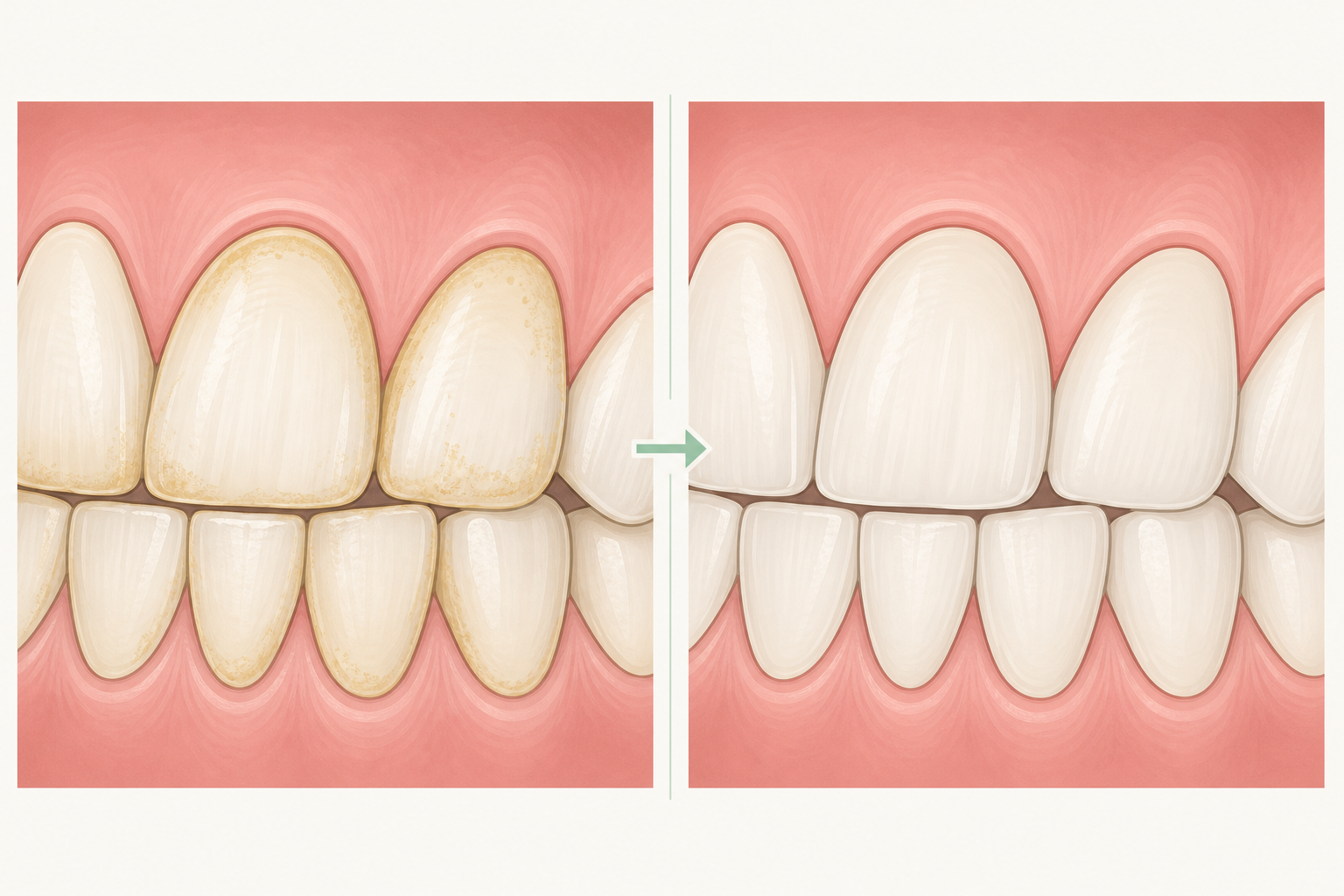
What is Professional desensitizing treatment?
| Part of care | What it addresses |
|---|---|
| Patient question | The trigger for sensitivity, including decay, a fracture, worn filling, gum disease, worn enamel, or an exposed root[1] |
| Clinical purpose | A desensitising approach chosen for the cause of dentine hypersensitivity[1] |
Who may need professional desensitizing treatment?
Does it hurt?
The treatment is intended to reduce the sharp pain of sensitivity rather than create it. The relevant symptoms are the trigger, the affected tooth or area, and whether the pain is severe or persistent.
[1]Is it safe?
Desensitizing care addresses dentine hypersensitivity, which can cause pain and limit food choices. Fluoride gel strengthens enamel, while bonding, a crown, gum graft, or root canal may address the problem behind it.
[2]How long does it last?
Relief lasts according to the cause and treatment used. Desensitizing toothpaste usually needs several applications before sensitivity reduces, while severe persistent sensitivity may require treatment of the tooth itself.
[1]What happens step by step?
What is recovery like?
A topical desensitizing application has no surgical recovery period. Persistent sensitivity, new pain, or a change in the tooth’s symptoms indicates that the underlying cause still needs attention.
[1]What are the alternatives?
What should I expect at the appointment?
What should I ask about payment in the UAE?
Frequently asked questions
What is the main purpose of professional desensitizing treatment?
Professional desensitizing treatment aims to reduce dentine hypersensitivity, the short, sharp response that can occur when exposed dentine reacts to stimuli. The cause of sensitivity still needs attention when the symptom persists or changes.
[1]