
What the change looks like
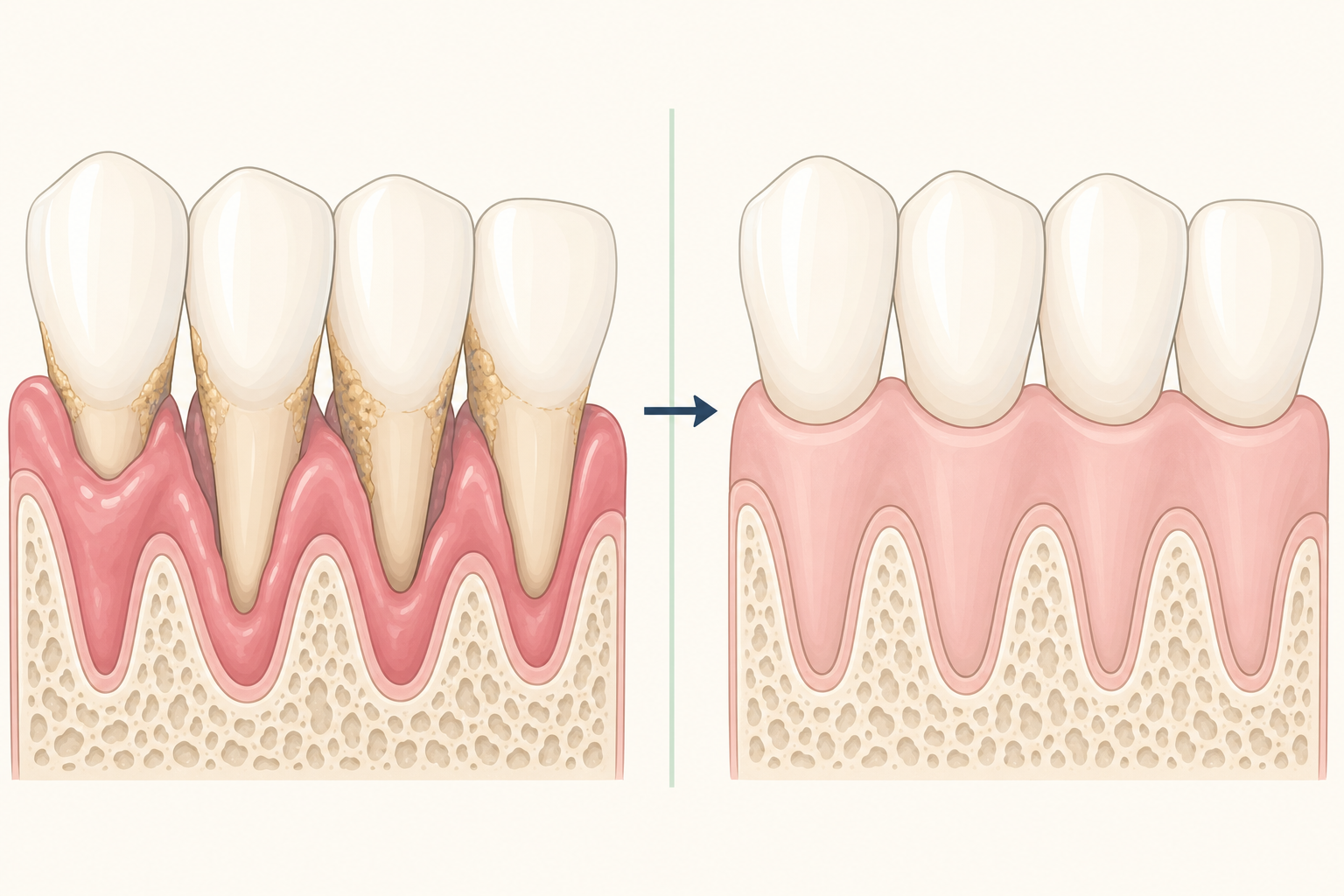
What is pocket reduction surgery?
Who may need it?
It is used when periodontal disease has destroyed supporting gum tissue and bone, creating pockets where bacteria can live and advance beneath the gumline.
[1]Does it hurt?
Periodontists are trained to provide comfort measures, including sedation or anaesthesia, during gum surgery.
[1]Is it safe?
The operation removes bacteria from the pocket and can smooth irregular damaged bone surfaces, limiting places where bacteria can hide.
[1]How long does it last?
Deep pockets can keep enlarging as bacteria advance beneath the gum. Removing bacteria and smoothing irregular bone aims to help the gum reattach to healthy bone.
[1]What happens during surgery?
The periodontist folds back the gum, removes disease-causing bacteria and, when needed, smooths irregular bone before securing the gum tissue into place.
[1]What is recovery like?
After the damaged area has been cleaned and the tissue secured, the aim is for gum tissue to reattach to healthy bone.
[1]What are the alternatives?
What can happen without treatment?
Deep pockets can become a larger space for bacteria, leading to advancing disease, bone loss and tissue loss; severe bone loss can result in extraction.
[1]Is pocket reduction surgery covered by insurance?
Scaling and root planing cleans beneath the gumline and smooths root surfaces; laser treatment has shown similar results to specific non-surgical options, including scaling and root planing alone.
[1]Frequently asked questions
Why are periodontal pockets a problem?
They can deepen, collect bacteria and contribute to bone and tissue loss around teeth.
[1]