
Peri-Implantitis Treatment
Peri-Implantitis Treatment explained in patient-friendly language: what the treatment addresses, who may need it, what the visit involves, recovery questions.
[1]The short answer
The short answer: Peri-Implantitis Treatment is a treatment selected after an examination identifies a problem that this procedure is designed to address. Peri-Implantitis Treatment is used when the gum, tooth, or implant area needs the specific care described by the clinical finding. The dentist matches the treatment to the condition, the tissues involved, and the aim of treatment.
[1]
What the change looks like
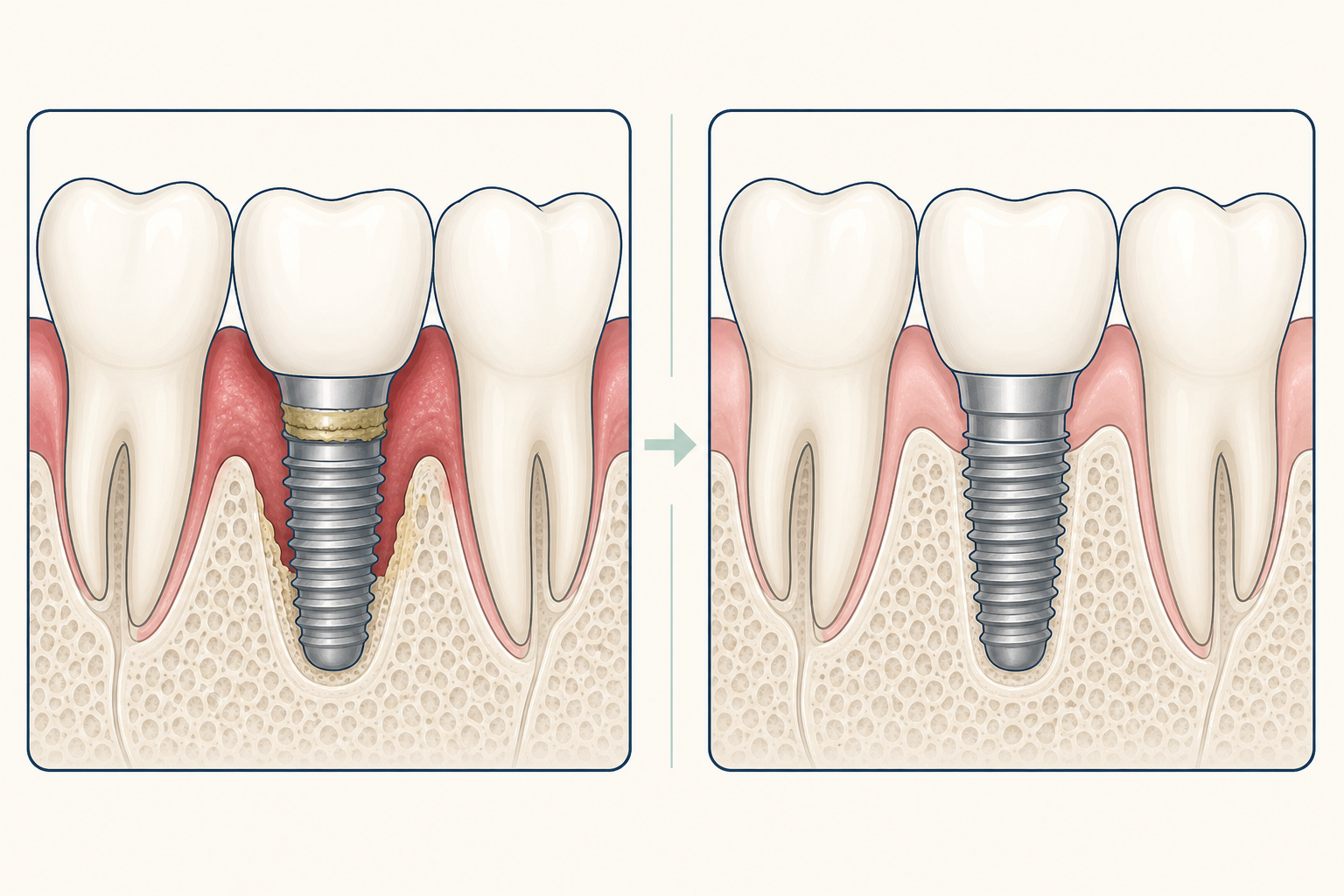
What it is
| Clinical question | What the appointment clarifies |
|---|---|
| What is being treated? | The examination identifies the tooth, gum, or implant finding relevant to the procedure.[1][2] |
| What is the goal? | The dentist connects the treatment choice with the condition and intended result.[1][2] |
Who needs it?
People are considered for peri-implantitis treatment when an examination identifies a problem that this treatment can address. The decision depends on the tooth or gum finding, the health of the surrounding tissues, and the treatment goal. A consultation should connect the visible concern with the planned procedure. The dentist can explain which finding makes this treatment relevant and what care follows.
[1][2]Does it hurt?
Peri-Implantitis Treatment may involve treatment around sensitive oral tissues. Your dentist can explain the expected sensation, the anaesthetic plan, and what to do if discomfort continues after the appointment. Recovery is guided by the tissues treated and by the clinic's instructions. Pain or healing changes should be reported to the treating clinic rather than managed by guesswork.
[1]Is it safe?
The safety of peri-implantitis treatment depends on the diagnosis, the condition of the tissues being treated, and the plan chosen for that individual mouth. Ask which finding the treatment is addressing, what risks apply to you, and which warning signs should prompt a call after treatment. The dentist can discuss these points before care begins.
[1]How long does it last?
How long the result of peri-implantitis treatment lasts depends on the treatment aim and the condition of the treated area. Your dentist can set follow-up expectations after examining the site. Ongoing care matters because the tissues around a treated tooth, gum area, or implant still need monitoring.
[1]How is it done?
The appointment begins with an assessment of the area and a discussion of the treatment objective. The dentist then carries out the planned treatment for peri-implantitis treatment, checks the treated site, and explains the care plan. The exact sequence depends on the finding and the procedure selected.
[1][2]What is recovery like?
Recovery after peri-implantitis treatment is guided by the tissues treated and by the instructions from the clinic. Keep the follow-up plan clear, ask how to care for the area, and contact the clinic if the healing course differs from what you were told.
[1]What are the alternatives?
Alternatives to peri-implantitis treatment depend on what the examination shows and what the treatment is meant to achieve. They may involve a different periodontal or dental procedure, continued care, or another restorative plan. Compare the purpose, expected care, and risks with the dentist before choosing.
[1]What should I expect at the visit?
How do insurance and financing work in the UAE?
Before booking peri-implantitis treatment, ask the clinic to state what the quoted care includes, which visits are part of the plan, and whether follow-up is separate. Payment and insurance questions should be checked with the clinic and insurer because cover depends on the individual policy.
[1]Frequently asked questions
Why might a dentist discuss peri-implantitis treatment?
People are considered for peri-implantitis treatment when an examination identifies a problem that this treatment can address. The decision depends on the tooth or gum finding, the health of the surrounding tissues, and the treatment goal. A consultation should connect the visible concern with the planned procedure. The dentist can explain which finding makes this treatment relevant and what care follows.
[1][2]