
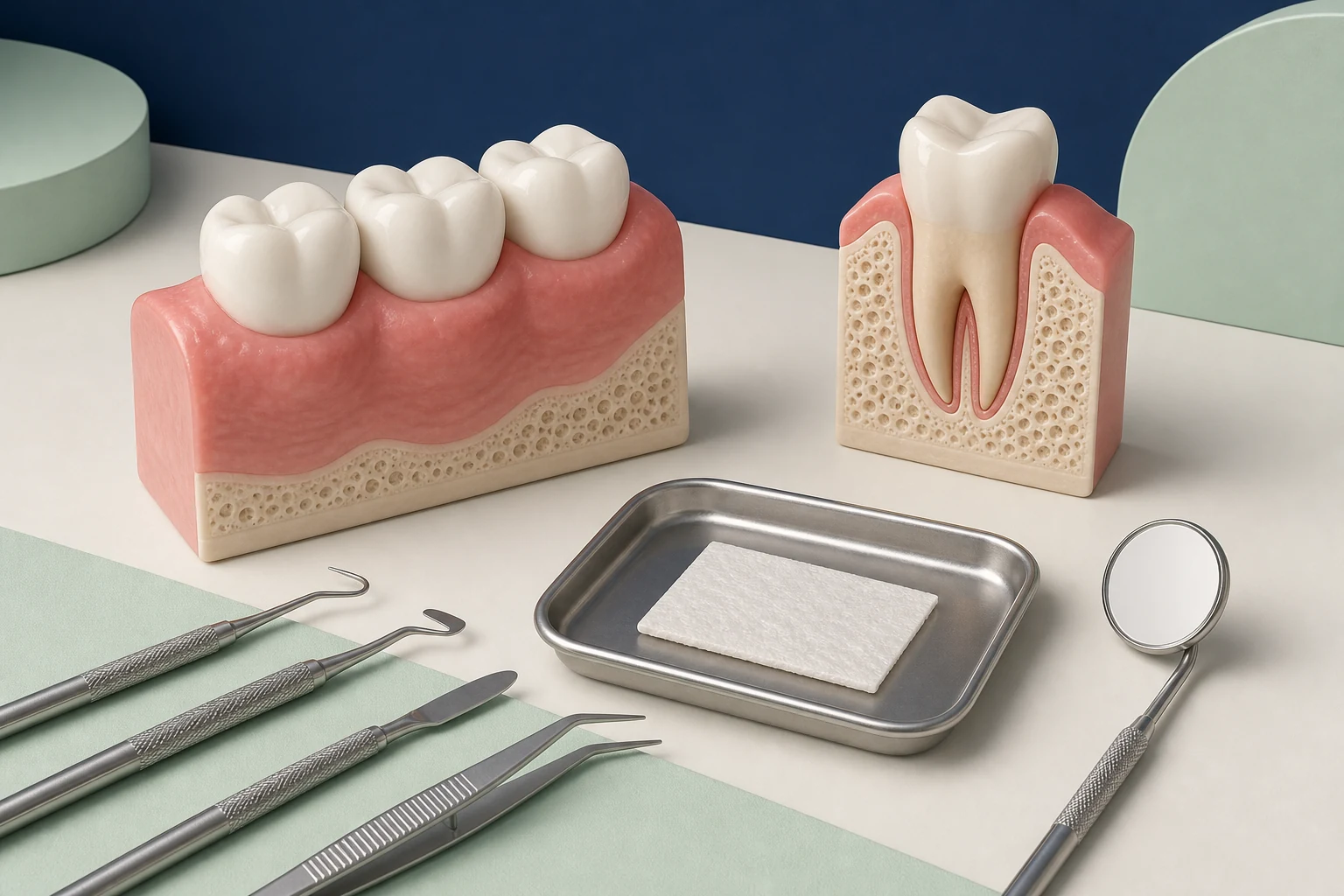
What the change looks like
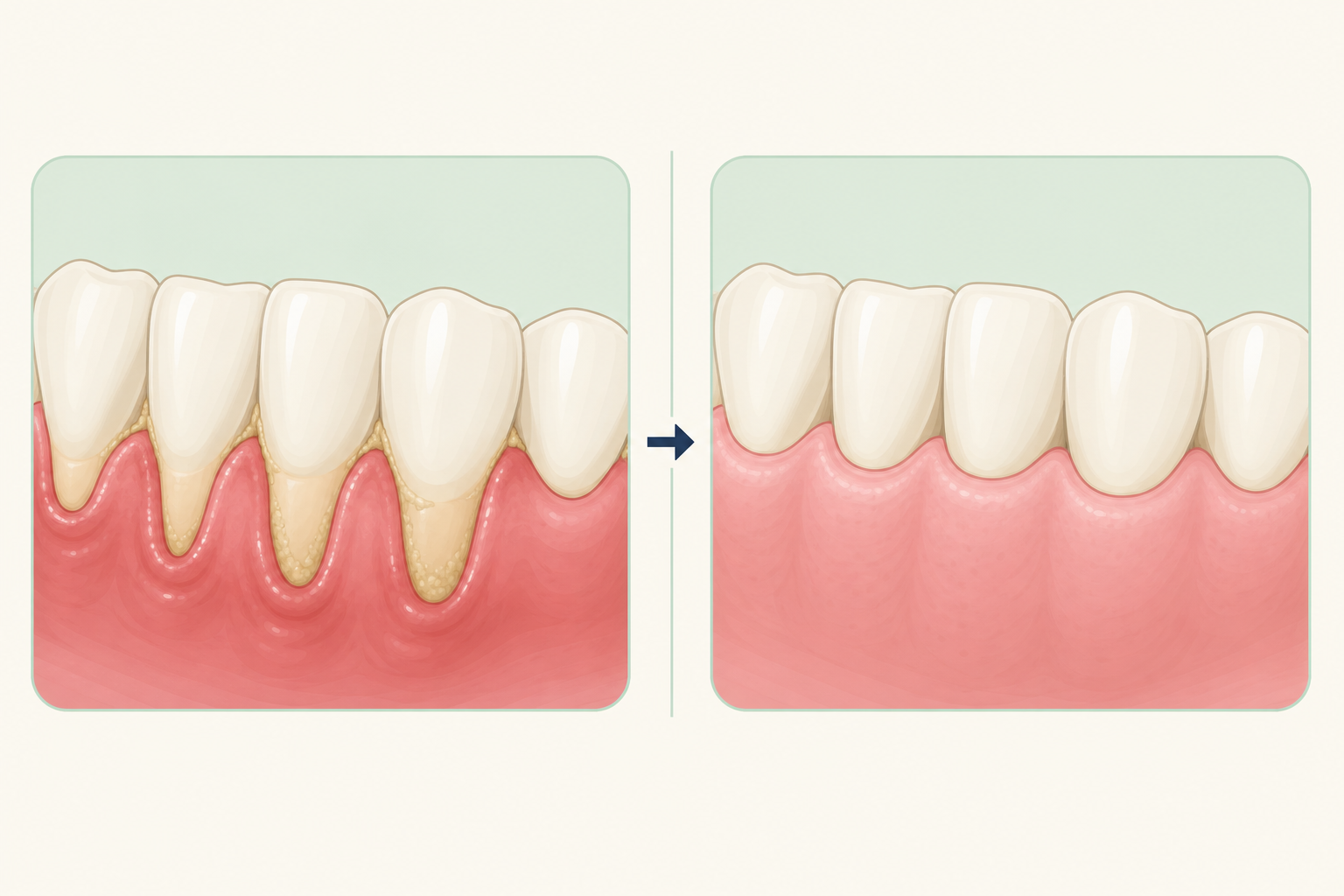
What is gum grafting?
Who may need gum grafting?
Does it hurt?
A local anaesthetic numbs the surgical site. Pain and discomfort can occur afterwards, and simple painkillers can control them.
[1]Is it safe?
Possible complications include bleeding, infection, swelling, a changed or uneven gum appearance, and a need for further surgery.
[1]How long does it last?
The procedure itself usually takes about one hour. The available timeframe is for healing: a few weeks to a few months.
[1]What happens during the procedure?
After numbing, the gum is loosened, tissue is taken from a healthy mouth site, placed beneath the gum at the graft site, covered, and stitched.
[1]What is recovery like?
Stitches either dissolve or are removed at a follow-up appointment between 7 and 21 days. Healing then continues over weeks or months.
[1]What are the alternatives?
Other periodontal surgery can treat disease-related damage. A regenerative procedure may be used when lost supporting bone and tissue need to be rebuilt.
[2]What can it improve?
Covering the root may reduce sensitivity, make home cleaning easier, reduce further recession, protect the tooth from future decay, and improve gum-line symmetry.
[1]