
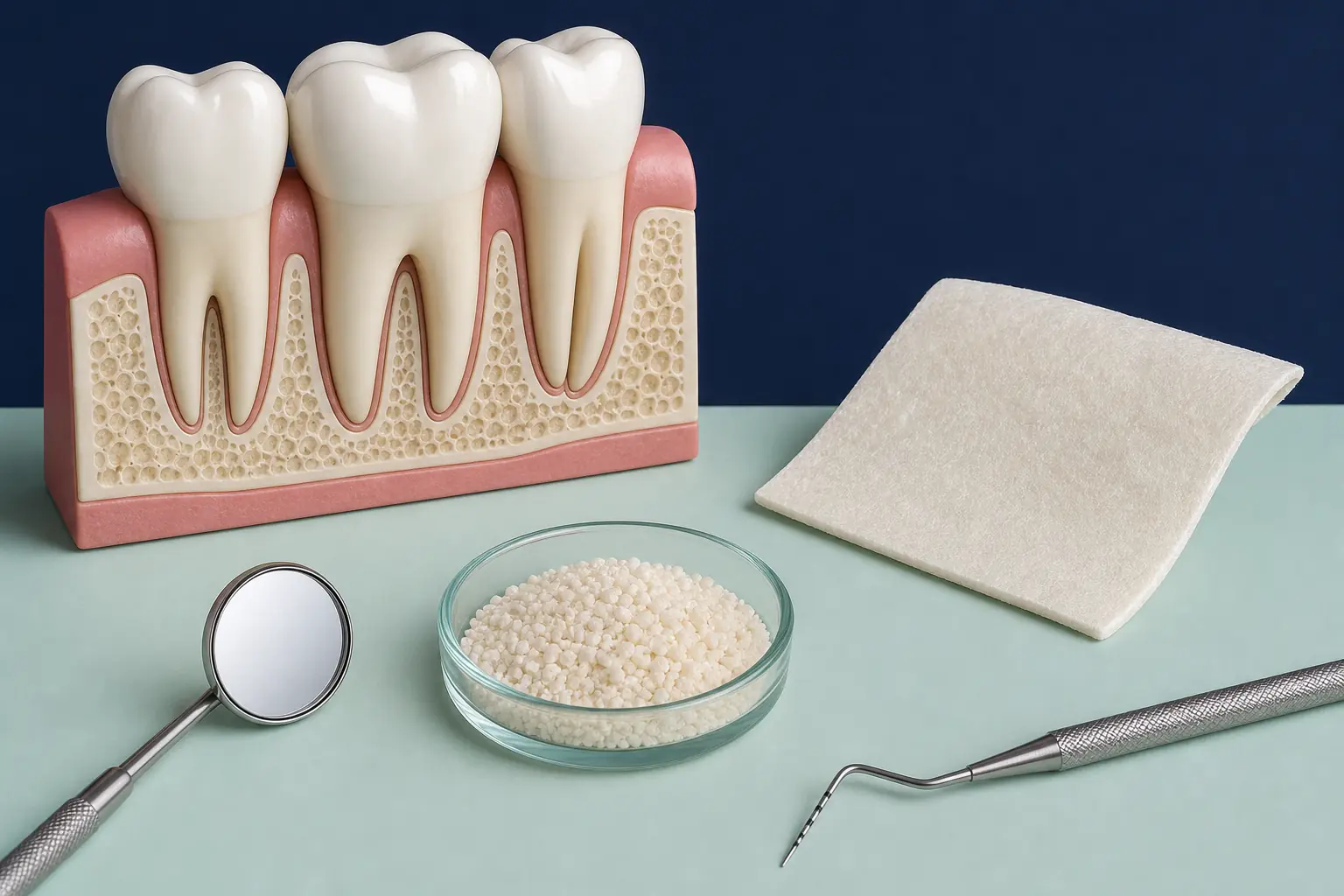
Dental Nation
Treatment guide

Guided Tissue Regeneration

Guided tissue regeneration is a periodontal regenerative procedure that uses a barrier approach to support healing in an infrabony defect while limiting competing tissue growth.

[2][4]
Guided Tissue Regeneration dental educational illustration

What the change looks like
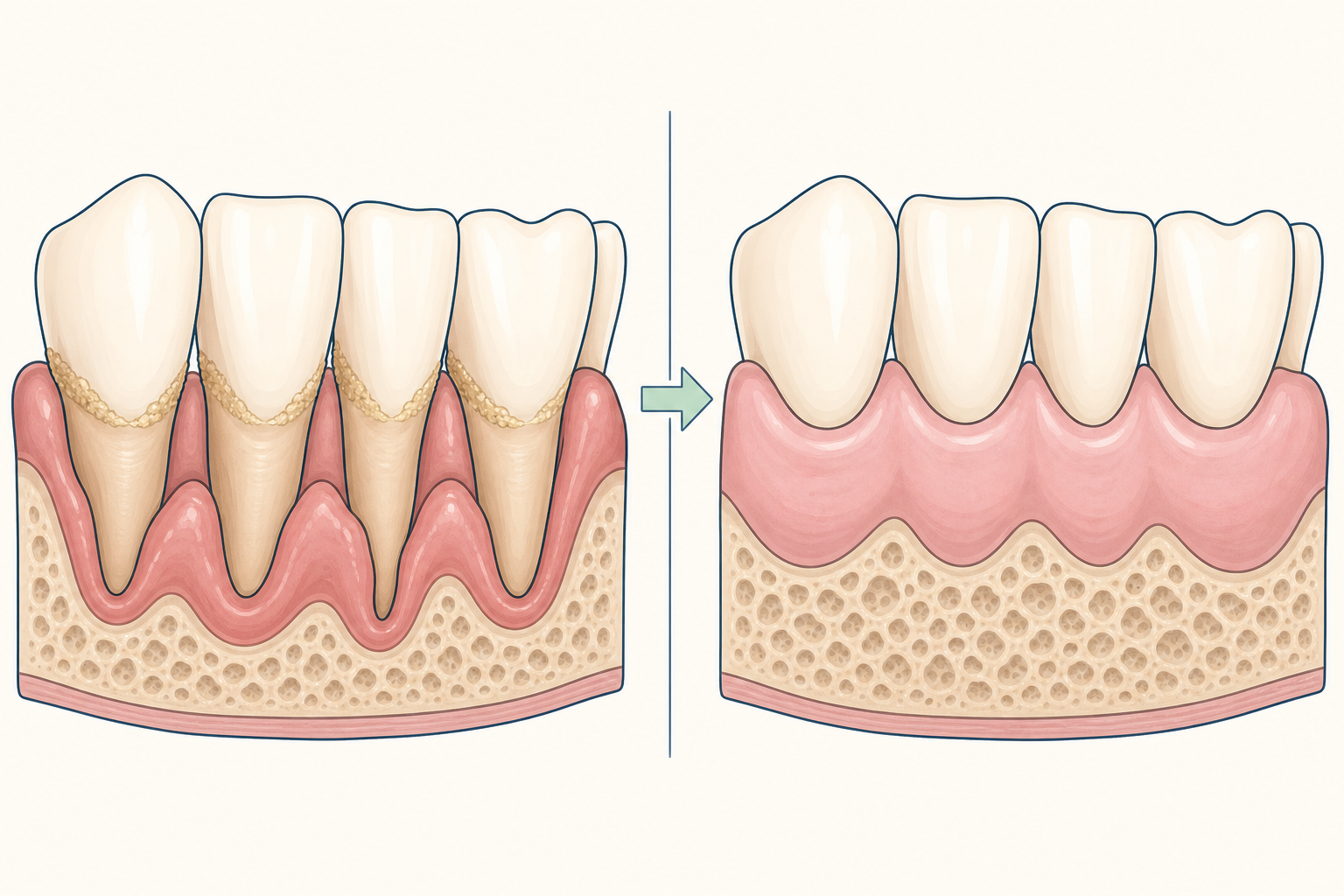
Illustrative diagram: Guided Tissue Regeneration
Illustration — a representative diagram, not a patient photo.
The DN First Look799 AED
Book The DN First Look

What is Guided Tissue Regeneration?

Guided tissue regeneration is a periodontal regenerative procedure that uses a barrier approach to support healing in an infrabony defect while limiting competing tissue growth.

[2][4]
How the treatment is understood
QuestionPatient-facing answer
What is the aim?Guided tissue regeneration is a periodontal regenerative procedure that uses a barrier approach to support healing in an infrabony defect while limiting competing tissue growth.[2][4]
What determines the plan?The clinician matches the approach to the treated site, the clinical findings, and the healing or follow-up needs.[2][4]

[2][4]

Who needs it?

It is considered when periodontal disease has left an infrabony defect and the clinical aim includes periodontal regeneration. The decision depends on the defect and the examination findings.

[2][4]

Does it hurt?

Discomfort depends on the surgical site and the healing response. Your clinician should explain the expected postoperative course and the instructions for protecting the treated area.

[3]

Is it safe?

Published reviews describe guided tissue regeneration as a studied periodontal regenerative approach. Suitability and risks still depend on the defect, the technique, and the healing course.

[3]

How long does it last?

The treatment is completed during surgery, while the regenerative result develops during healing. A review of the treated site is needed to judge the response rather than relying on appearance alone.

[3]

What happens during the procedure?

The clinician assesses the periodontal defect, prepares the site, places the regenerative materials or barrier, and closes the area so early healing can proceed. The exact plan is site-specific.

[2][4]

What is recovery like?

Early wound healing is the part of recovery that needs the closest attention. Protecting the site and following the postoperative plan helps the clinician assess healing.

[3]
What to follow during recovery
StageWhat the patient should understand
Early healingThe treated area needs protection and the postoperative plan should be followed.[3]
Follow-upThe clinician reviews healing and decides what happens next from the clinical response.[3]

[3]

What are the alternatives?

Alternatives depend on the periodontal defect and the treatment goal. A periodontal assessment is needed before comparing regeneration with another approach.

[3]

What should you expect?

Expect an assessment, a site-specific surgical plan, postoperative instructions, and a review of healing. Published evidence does not turn every defect into the same treatment choice.

[2][4]

How do insurance and financing work in the UAE?

Ask the clinic for a written explanation of what the proposed periodontal procedure includes and which parts of care are separate. This page does not assign a UAE price or insurance benefit.

[2][4]

Frequently asked questions

What decides whether this treatment is suitable?

It is considered when periodontal disease has left an infrabony defect and the clinical aim includes periodontal regeneration. The decision depends on the defect and the examination findings.

[2][4]