
Dental Nation
Treatment guide

Space Maintainers

Space maintainers hold an opening after early baby-tooth loss while the developing teeth continue to erupt.

[1][3]

The short answer

Space maintainers preserve an opening after early tooth loss while the developing dentition changes.

[1][3]
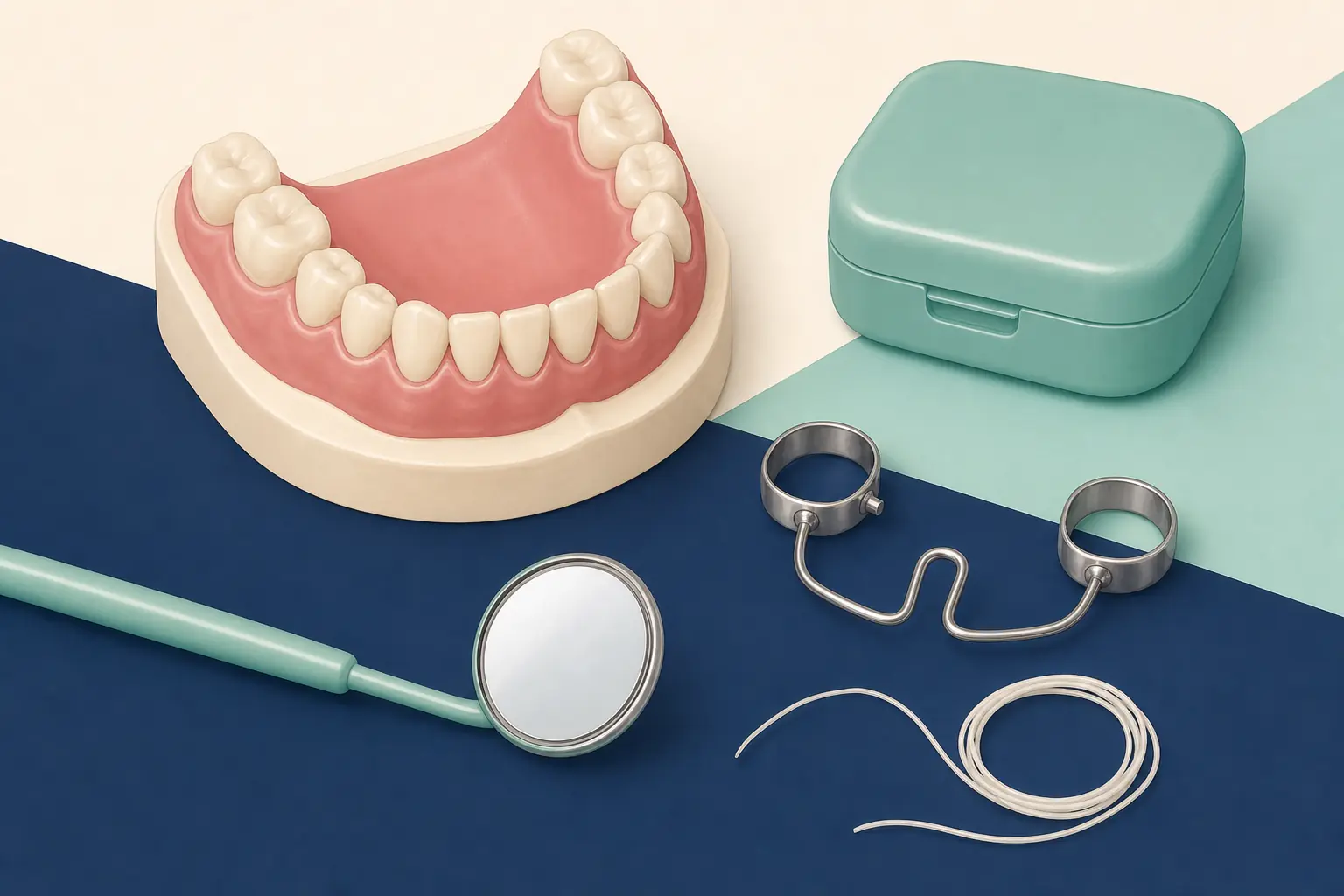
Space Maintainers dental educational illustration

What the change looks like
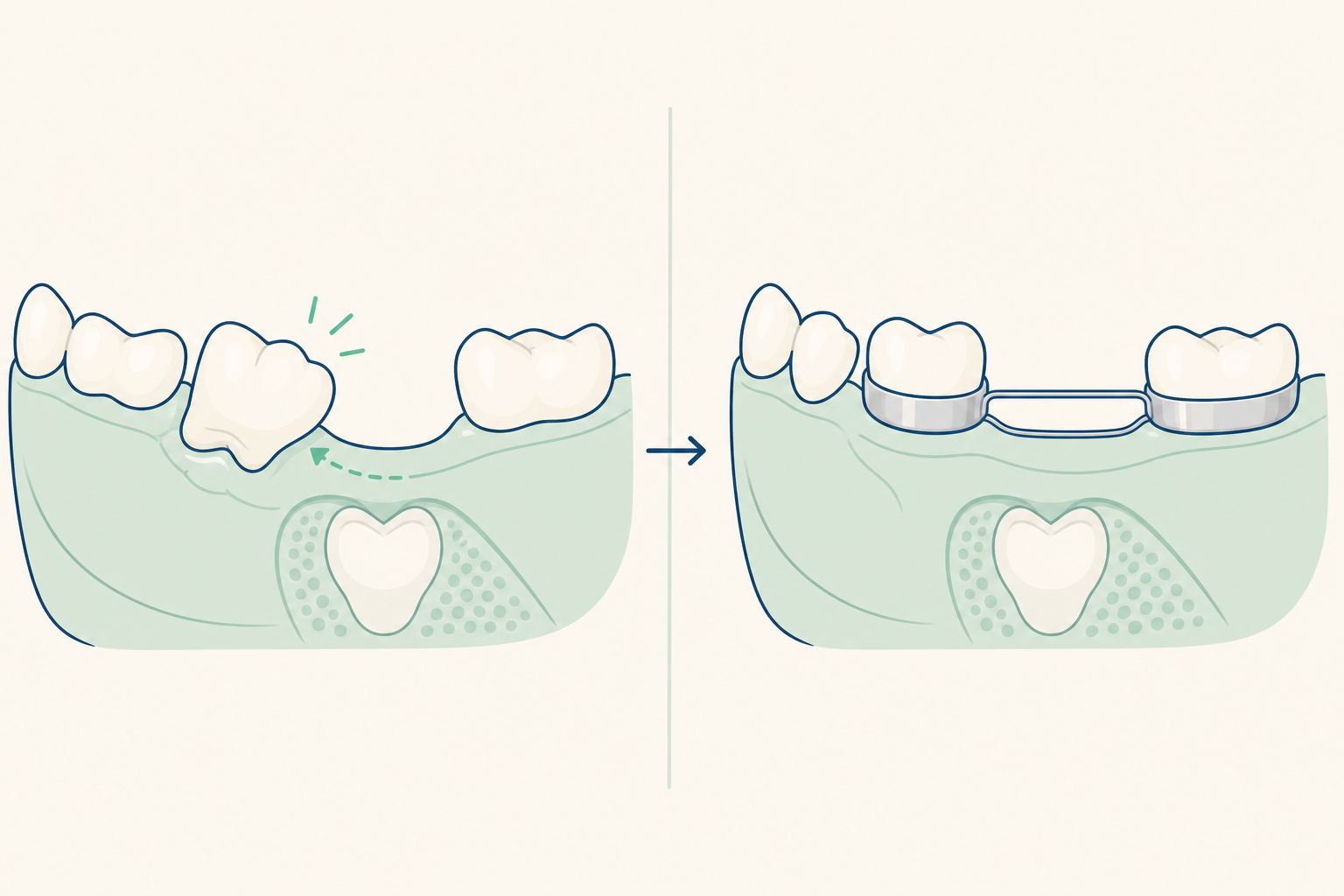
Illustrative diagram: Space Maintainers
Illustration — a representative diagram, not a patient photo.
The DN First Look799 AED
Book The DN First Look

What is a space maintainer?

Common designs
DesignUse
Band and loopSpace maintainer design[1][3]
Lower lingual holding archSpace maintainer design[1][3]

[1][3]

Which children might need one?

Children with premature tooth loss or developing arch-length problems may be considered for space maintenance. The treatment record also covers primary, mixed, adolescent, and adult dentition stages.

[1][3]

Does it hurt?

Children in a study of space maintainers reported experiences that included comfort, pain, and speech interference, so these effects are part of appliance follow-up.

[1][3]

Is it safe?

Possible problems include debonding, soft-tissue irritation, delayed removal, fracture, and dislodgment. Plaque around banded teeth can also contribute to caries and hygiene difficulty.

[1][3]

How long does it last?

A previous study reported an estimated median survival time of 18 months for space maintainers, with 14 months for the lower lingual holding arch in that study.

[1][3]

How is it planned and fitted?

Planning begins with clinical examination and diagnostic records. The findings help set treatment priorities, timing, sequence, and whether space maintenance is appropriate.

[1][3]

What is recovery like?

Regular follow-up remains important after insertion because drifting, dislodgment, breakage, hygiene problems, and eruption changes can develop without review.

[1][3]
Changes worth monitoring
ChangeWhy it matters
Soft-tissue irritationIt is a recorded appliance complication[1][3]
Delayed removalThe appliance may remain longer than intended[1][3]

[1][3]

What are the alternatives?

Developing-dentition care also includes space regaining, preventive procedures, treatment of dental disease, trauma care, and treatment of developing malocclusions.

[1][2]

What should parents expect?

Parents should expect the appliance to be part of continuing care that tracks the developing dentition, oral hygiene, and the eruption path of permanent teeth.

[1][3]

What should you ask about payment?

Dental Nation lists The DN First Look at 799 AED. The clinical records here do not classify space maintainers for insurance purposes.

[1][3]

Frequently asked questions

Can a space maintainer cause problems?

Recorded complications include irritation, debonding, dislodgment, fracture, delayed removal, pain, and hygiene difficulty.

[1][3]