

What the change looks like
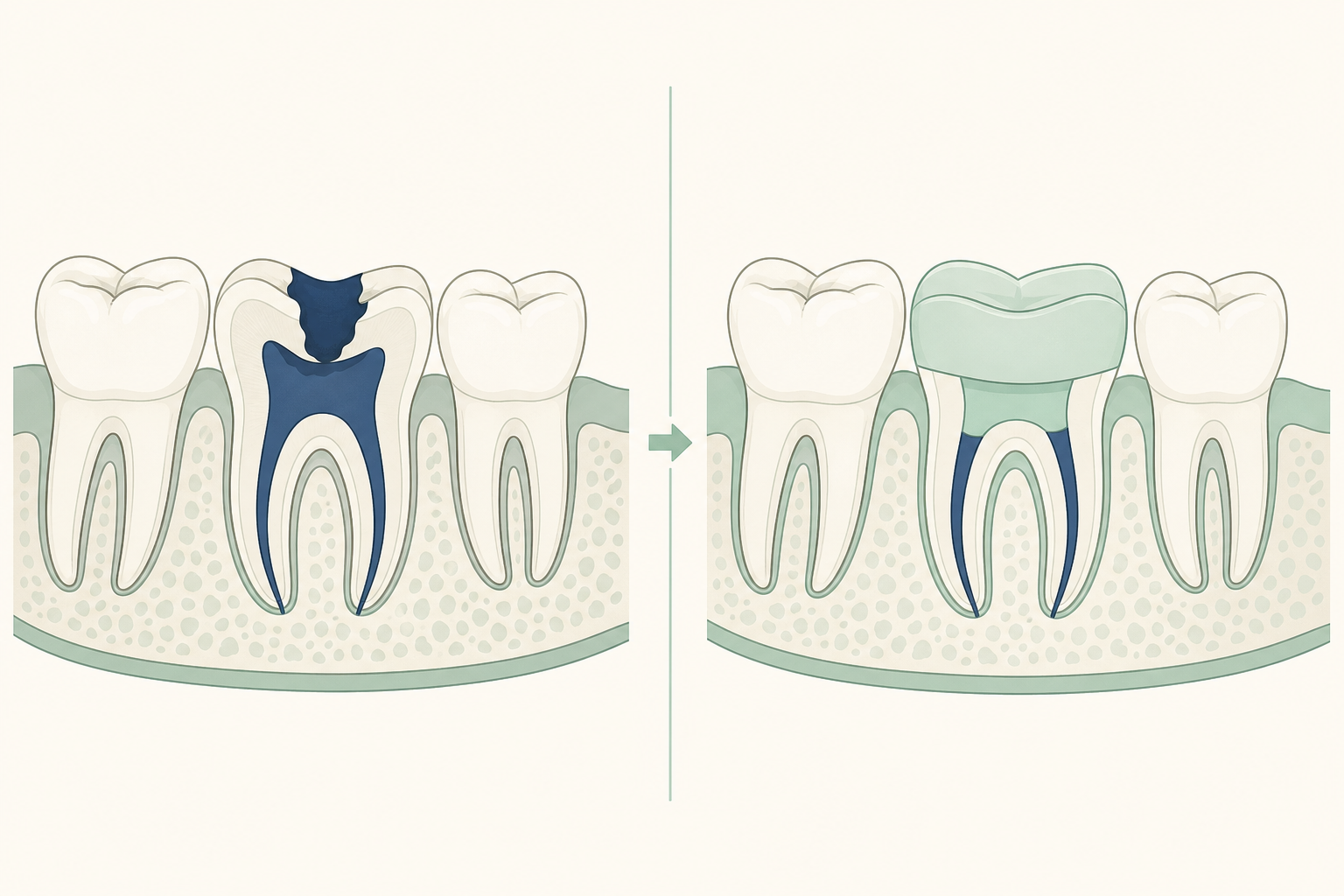
What is a pulpotomy?
When might a child need one?
A pulpotomy is one option for a primary tooth with normal pulp or reversible pulpitis. A complete pulpotomy may be considered in selected primary teeth with signs of irreversible pulpitis when clinical and radiographic signs of infection are absent.
[1]Does it hurt?
The treatment choice follows the health status of the pulp. The captured clinical guidance identifies pulp condition and signs of infection as the factors used to select the pulp therapy.
[1]Is it safe?
A complete pulpotomy is considered only in selected primary and permanent teeth with irreversible pulpitis and without clinical or radiographic signs of infection.
[1]How long does it last?
The material identifies pulpotomy as treatment for a primary tooth and distinguishes it from treatments used for nonvital permanent teeth; it gives no fixed lifespan for the treated tooth.
[1]What happens during the procedure?
Pulp therapy starts with assessing pulp health or pathosis. For a vital primary tooth, the listed options include a pulpotomy; treatment then preserves the remaining healthy tooth structure for restoration.
[1]What is recovery like?
Follow-up is part of managing the treated tooth. The clinical guidance places treatment within continuing assessment of pulp health, tooth value, restorability, and possible alternatives.
[1]What are the alternatives?
Options named for primary teeth include protective liners, indirect pulp treatment, direct pulp cap, pulpotomy, pulpectomy, and lesion stabilisation or tissue repair. Nonvital permanent teeth have other listed options, including root canal treatment, apexification, and regenerative endodontics.
[1][2]What should you expect at the visit?
Expect an assessment of pulp health or pathosis and a decision that takes account of the tooth's value, restorability, and potential alternative treatment.
[1]What should you ask about payment?
The treatment is included in Dental Nation's First Look offer at 799 AED. The clinical records here do not classify pulpotomy for insurance purposes.
[1]