
What the change looks like
What are fillings for children?
Who may need a filling?
Does it hurt?
Pain assessment is part of pediatric treatment planning. Behavior guidance can use communication and other techniques to respond to a child's treatment needs and comfort.
[1]Is it safe?
How long does it last?
Restorations have finite lifespans. In the review, annual failure rates ranged from 0 to 29.9%, so a filling is a repair that needs continued oral care rather than a permanent cure for caries.
[1]What happens during the procedure?
What is recovery like?
After the filling, the important issue is control of the caries process because placing a restoration alone does not stop the disease. The restoration can later fail, with secondary caries the most common recorded reason.
[1]What are the alternatives?
Alternatives in the pediatric restorative framework include resin infiltration for small noncavitated interproximal lesions, interim therapeutic restoration, glass ionomer approaches and crowns when a filling is not the right restoration.
[2]What should parents expect?
Is it covered by insurance in the UAE?
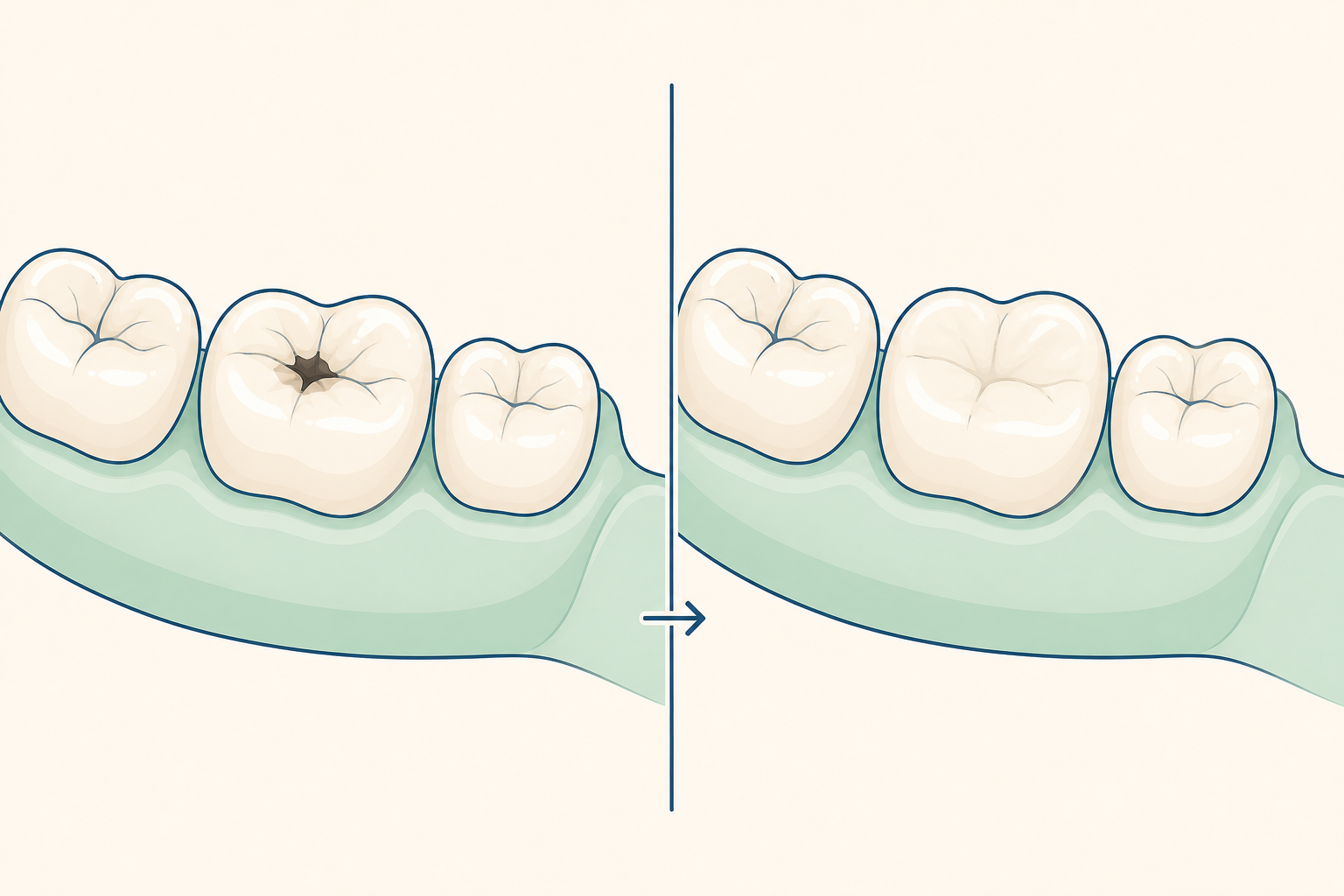
A filling is restorative treatment for a damaged or decayed tooth surface. Caries control remains necessary after the tooth has been restored.
[2]