
Pediatric Crowns (Stainless Steel / Zirconia)
A full-coverage crown can restore a damaged child's tooth, with stainless steel and zirconia among the material choices.
[1][2]The short answer
Pediatric crowns restore damaged teeth when a full-coverage restoration is needed, using stainless steel or zirconia among the available materials.
[1][2]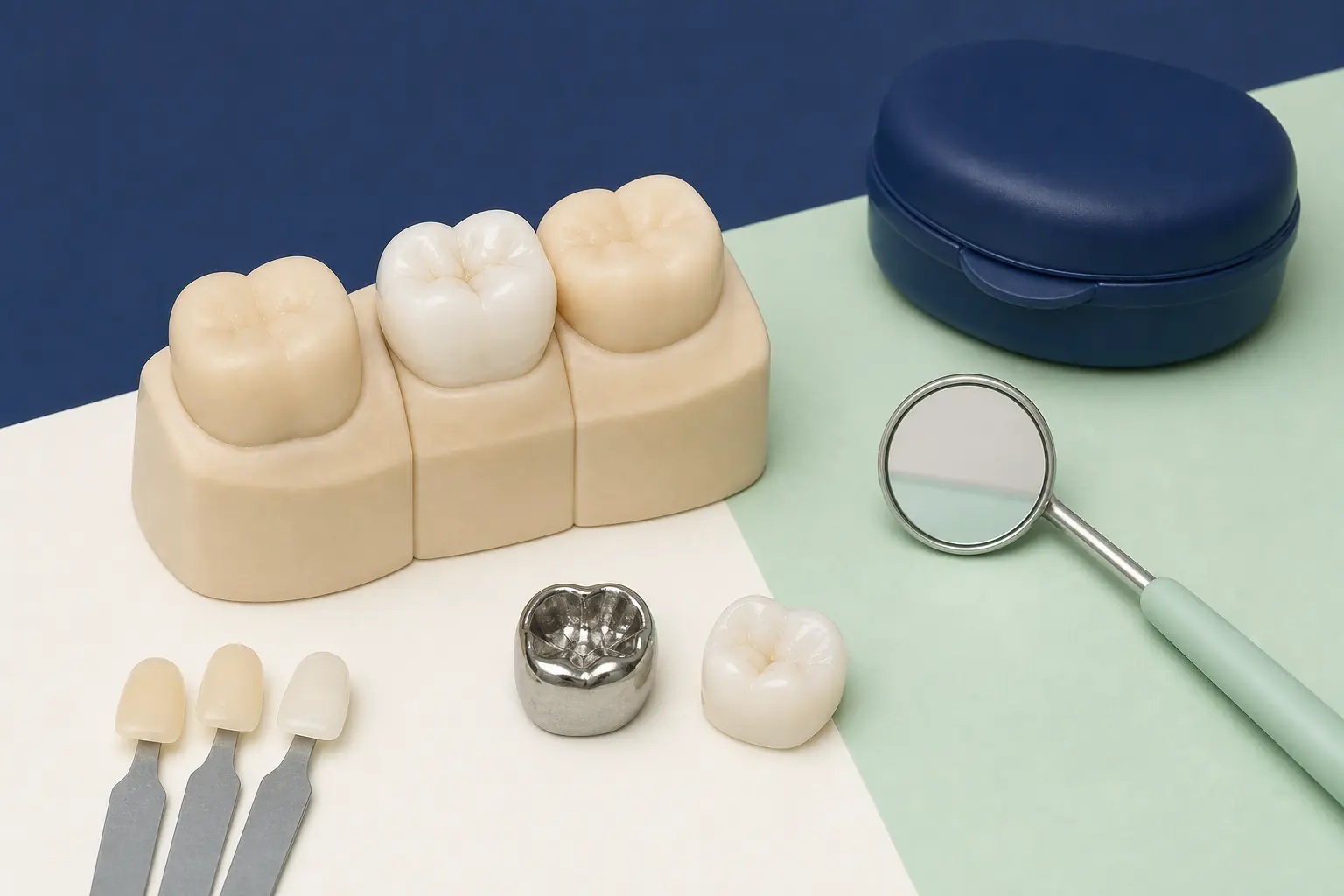
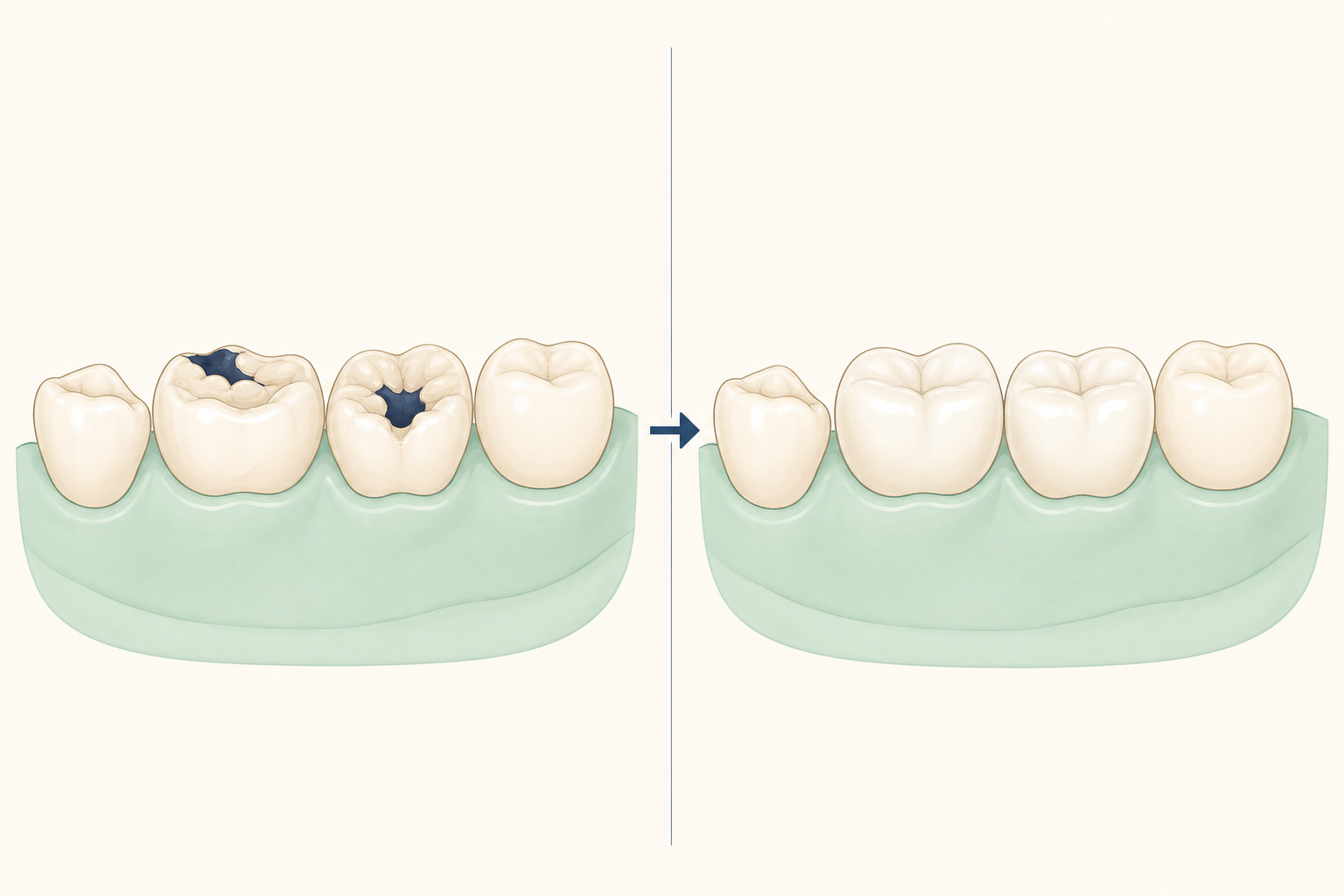
What the change looks like
What are pediatric crowns?
Who may need one?
A crown may be used when a child's damaged tooth needs a restoration that covers the tooth fully. Pediatric restorative decisions also recognize that not every caries lesion requires restoration.
[1]Does it hurt?
Pain assessment is part of pediatric restorative planning. Behavior guidance may use communication, nitrous oxide, sedation or general anesthesia depending on the treatment situation.
[1]Is it safe?
How long does it last?
Crowns are restorations with a finite lifespan. Continued care includes watching for failure and for a crown that needs replacement.
[1]What happens during the procedure?
The tooth and the restoration need are assessed first, followed by selection of an appropriate restorative technique and material. Pediatric care may use complete, stepwise or partial caries excavation approaches.
[1]What is recovery like?
After a crown is placed, the tooth still needs ongoing caries control because restoration alone does not stop the caries process. Restorations can eventually fail and require replacement.
[1]What are the alternatives?
Other pediatric restorative materials include composite resin, glass ionomer cement, resin-modified glass ionomer, compomer and amalgam. Direct and indirect restorations are selected according to the restoration needed.
[1]