Dental Nation
Treatment guide

Traditional Metal Braces

Fixed brackets, wires and elastic modules gradually move teeth, with regular adjustments and a retainer after active treatment.

[1]

The short answer

Traditional metal braces use brackets and wires to move teeth and correct bite problems over orthodontic treatment.

[1]
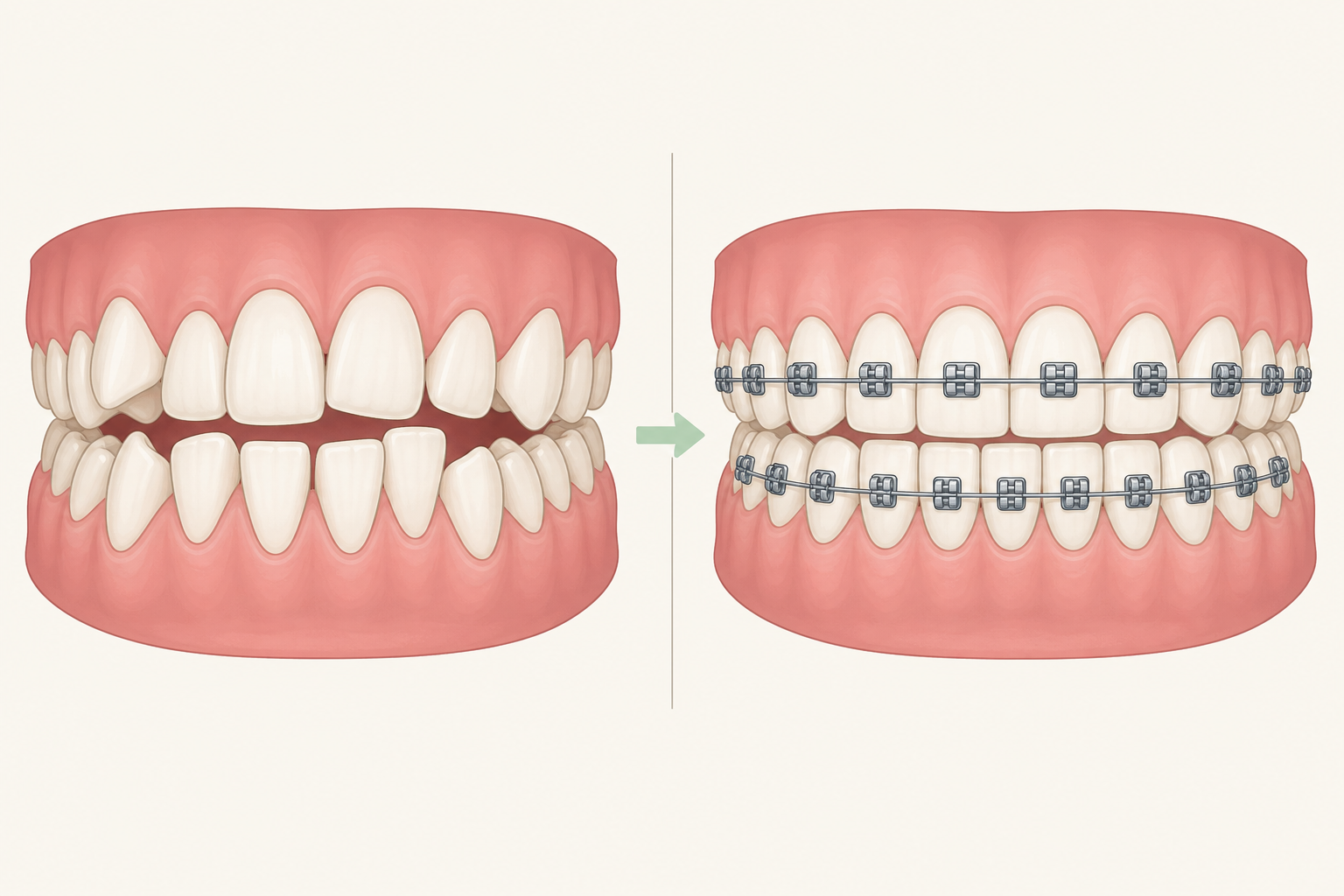
Traditional Metal Braces dental educational illustration

What the change looks like

Illustrative diagram: Traditional Metal Braces
Illustration — a representative diagram, not a patient photo.
The DN Scan499 AED · fully deducted if treatment starts within 30 days
Book The DN Scan

What are Traditional Metal Braces?

Questions to bring to the assessment
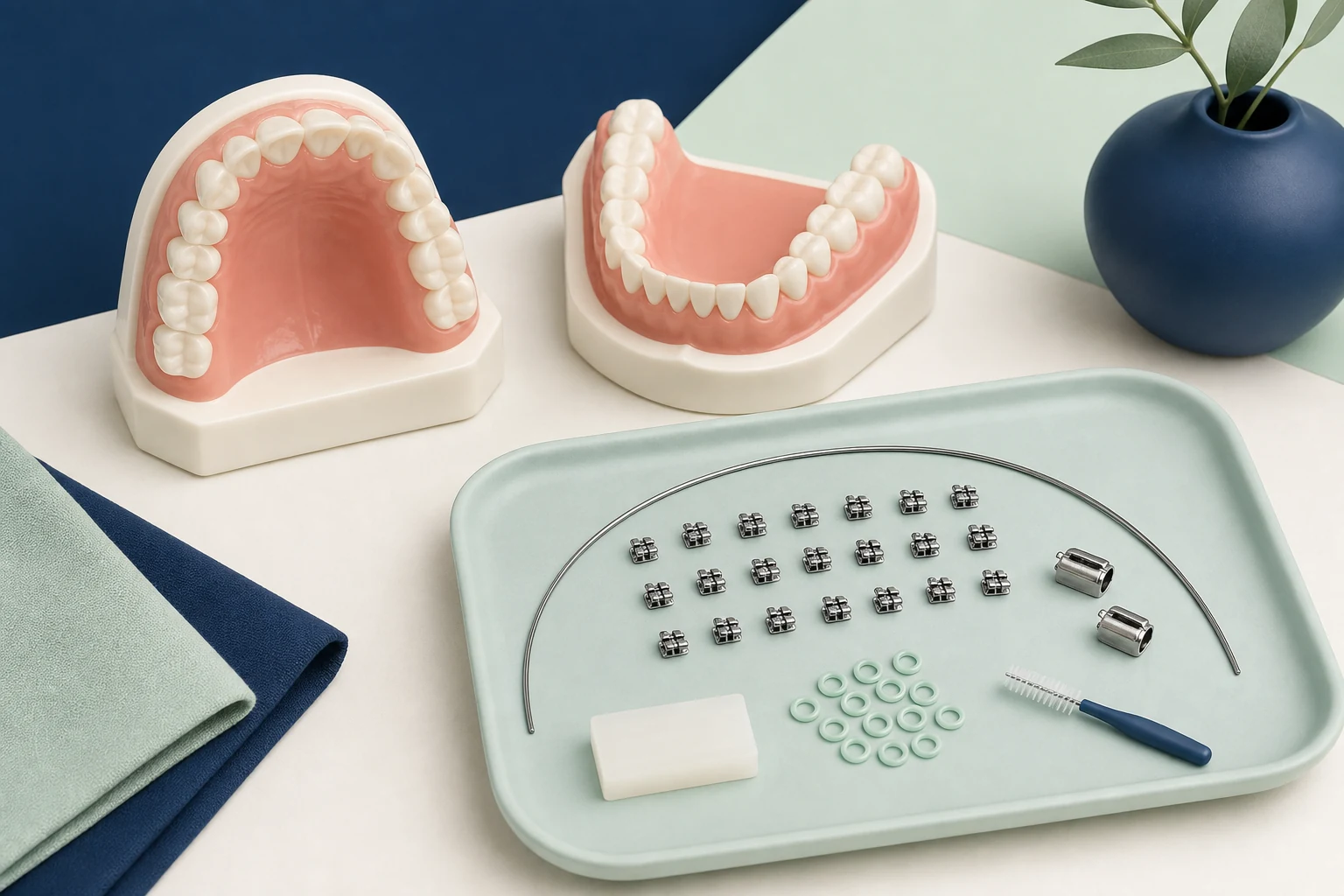
Part of bracesPatient question
Brackets and archwireHow will these parts be used for my planned tooth movement?[1]
Fixed applianceWhat cleaning routine should I follow while the braces are in place?[1]

[1]

Who might discuss Traditional Metal Braces?

An orthodontic assessment considers the position of the teeth and how the bite meets. Fixed braces may be discussed when the proposed plan calls for controlled tooth movement.

[1][2]

Does it hurt?

Braces can feel unfamiliar when they are fitted or adjusted. Tell the orthodontic team if discomfort is difficult to manage or if a bracket or wire is causing a sore area.

[2]

Is it safe?

Orthodontic treatment is planned after an assessment of the teeth and bite. Keeping appointments and following cleaning advice helps the team monitor the treatment as it progresses.

[2]

How long does it last?

Treatment time varies with the orthodontic problem and the movements required. Retention follows active treatment to help hold the teeth in their new positions.

[2]

What happens during treatment?

The orthodontic team assesses the bite, places the braces, and adjusts the appliance during planned visits. The details depend on the treatment plan and the movements required.

[1][2]

What is the adjustment period like?

There is an adjustment period after fitting and later adjustments. Contact the orthodontic team if a wire, bracket, or discomfort needs attention instead of trying to alter the appliance yourself.

[2]
Questions for the adjustment period
During treatmentWhat to do
After an adjustmentUse the advice given by your orthodontic team and report discomfort that does not settle.[2]
A loose or troublesome partContact the orthodontic team for instructions rather than adjusting the appliance at home.[2]

[2]

What are the alternatives?

Clear aligners and other orthodontic appliances may be discussed when they suit the treatment goal. The alternative should be judged against the movements your plan requires.

[1][2]

What should you ask at the assessment?

Ask how the appliance will be cleaned, how visits will be scheduled, and what to do if a part feels loose. These questions make the day-to-day plan clearer.

[1][2]

How should you check insurance and financing?

The cost of private braces varies with the complexity of the dental problem and the type of braces fitted.

[1][2]

Frequently asked questions

How is Traditional Metal Braces chosen?

A clinician assesses the tooth or bite concern before deciding whether this treatment fits the proposed plan.

[1][2]
What should I do if I have a concern during treatment?

Contact the treating dental or orthodontic team for advice that fits your treatment plan.

[2]