

What the change looks like
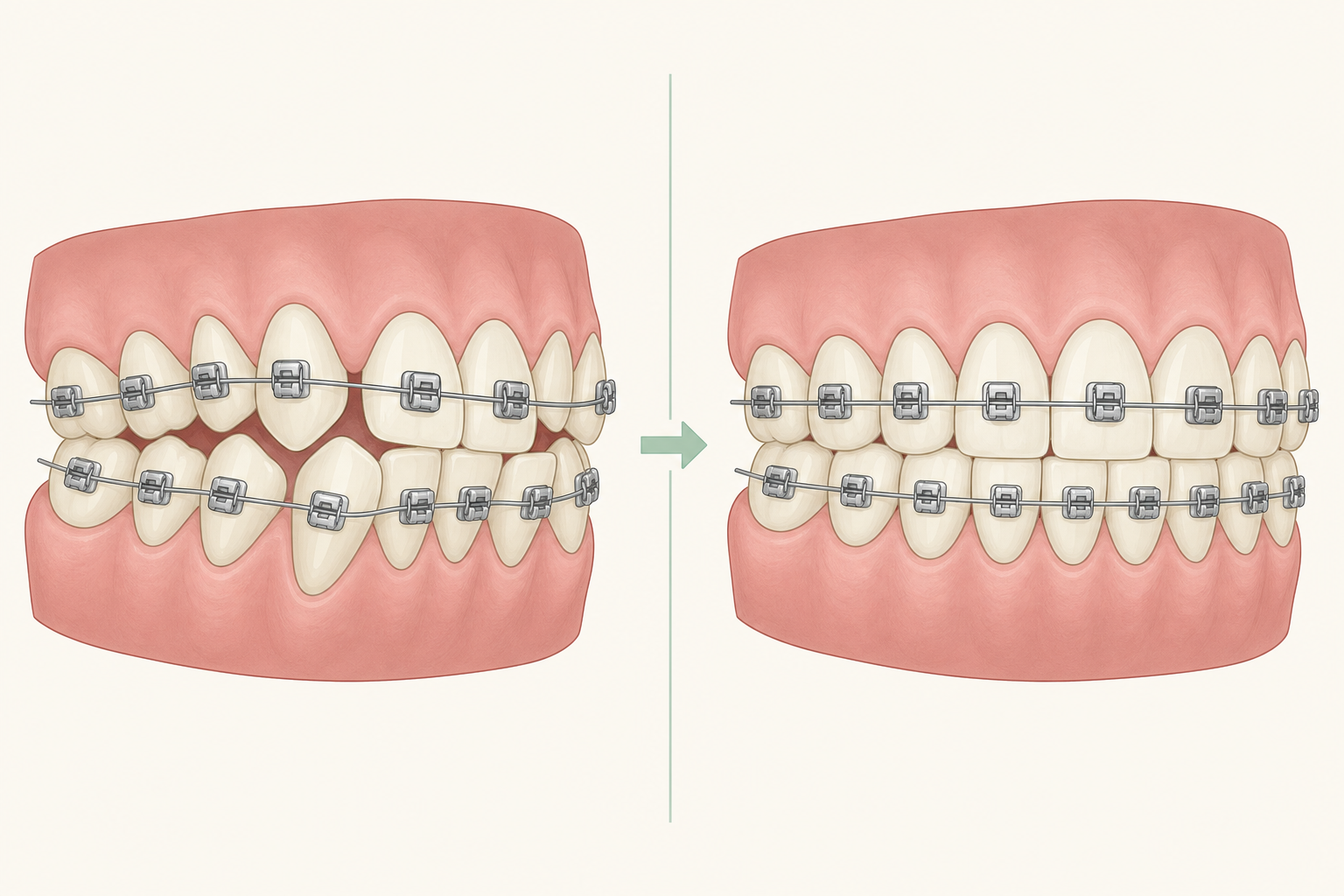
What are Self-Ligating Braces?
Who might discuss Self-Ligating Braces?
An orthodontist assesses tooth position and bite before recommending an appliance. Self-ligating braces may be part of a plan when fixed braces fit the movements being planned.
[1]Does it hurt?
Any fixed brace can take time to get used to. Speak to the orthodontic team about discomfort, rubbing, or a part that feels loose so the problem can be assessed.
[1]Is it safe?
Braces work through planned orthodontic forces and need professional monitoring. Cleaning around the brackets and attending planned visits lets the team check teeth, gums, and appliance progress.
[1]How long does it last?
Treatment length follows the orthodontic problem and the movement planned. The sequence includes active tooth movement followed by retention to help hold the result.
[1]What happens during treatment?
The orthodontist plans the movements, fits brackets and an archwire, then reviews the appliance through scheduled visits. The clip mechanism is one part of how the wire is held in place.
[1]What is the adjustment period like?
There can be an adjustment period after fitting or changing the wire. Follow the team’s instructions and contact them when discomfort, breakage, or a loose component needs review.
[1]What are the alternatives?
Conventional fixed braces and clear aligner treatment may be considered. The best choice depends on the movements needed, the bite, and the practical demands of treatment.
[1]What should you ask at the assessment?
Ask what type of bracket has been proposed, how it will be cleaned, and how appointments are expected to work. A clear plan helps you prepare for fixed treatment.
[1]How should you check insurance and financing?
The cost of private braces varies with the complexity of the dental problem and the type of braces fitted.
[1]Frequently asked questions
How is Self-Ligating Braces chosen?
A clinician assesses the tooth or bite concern before deciding whether this treatment fits the proposed plan.
[1]What should I do if I have a concern during treatment?
Contact the treating dental or orthodontic team for advice that fits your treatment plan.
[1]