
What the change looks like
What are palatal expanders?
Who may need one?
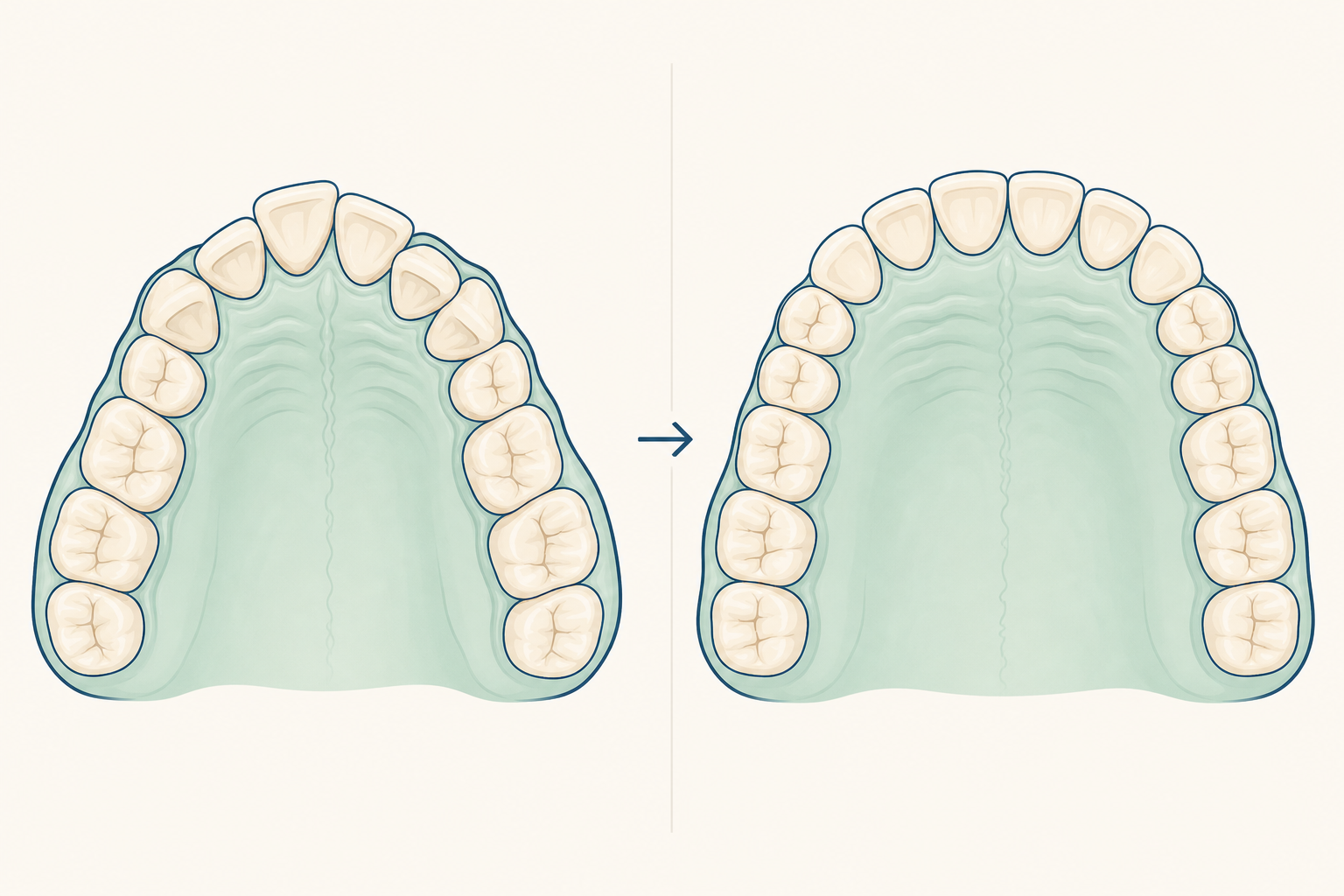
Palatal expanders may be used for crowded, overlapping, crooked, or impacted teeth, difficulty chewing, or a crossbite, open bite, overbite, or underbite. Widening can make room for teeth and improve how the upper and lower teeth fit together.
[1]Does it hurt?
Minor discomfort can occur for the first few days with a new palatal expander, and some people feel slight discomfort after turning the key. Severe pain or discomfort is not expected.
[1]Is it safe?
Temporary effects while getting used to an expander can include mild discomfort, headaches, drooling, lisping, and spacing between the front teeth. Orthodontic treatment can correct that front-tooth spacing.
[1]How long does it last?
A rapid palatal expander commonly takes three to six months to reach the desired width. In teenagers and adults, whose bones are more developed, expansion may take up to one year.
[1]How does widening happen?
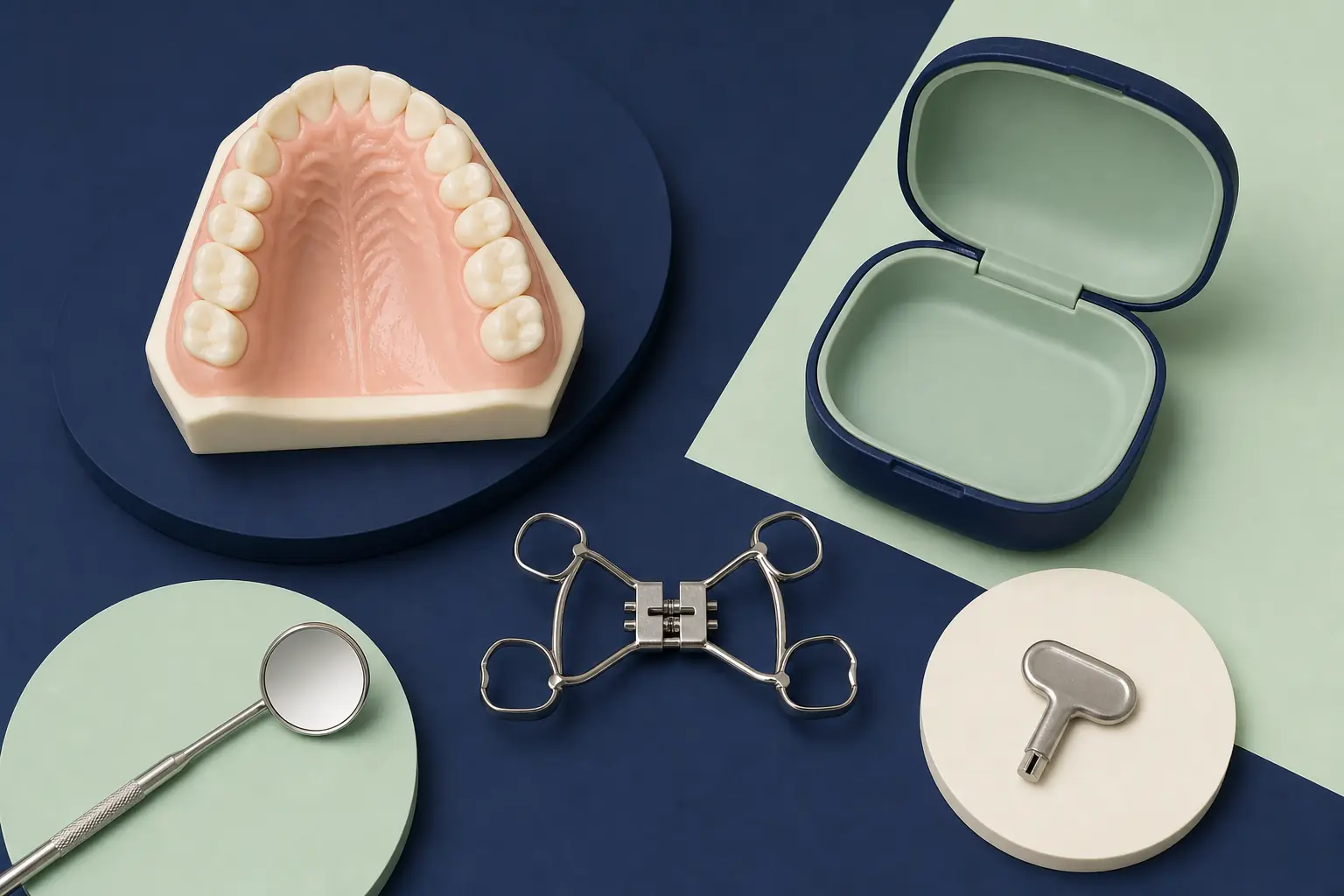
A rapid expander sits in the roof of the mouth and is attached to the back upper teeth. Turning its central screw a little each day creates tension that moves the two palatal bones apart.
[1]What is the adjustment period like?
Getting used to a palatal expander can take time. Early tenderness, drooling, and a lisp can occur, while the gradual widening process continues for weeks or months depending on the appliance and age.
[1]What are the alternatives?
What should I expect each day?
What does a UAE appointment include?
A palatal expander fits in the roof of the mouth and is used to widen a narrow upper jaw. That widening can create more room for teeth or improve the bite.
[1]Frequently asked questions
Can adults have a palatal expander?
Teenagers and adults can have palatal expanders, but expansion may take longer because their bones are more fully developed.
[1]Who wrote this page
This library is published by Dental Nation, a licensed dental group practising in the United Arab Emirates. Pages are written and overseen by the same clinical team that treats patients in our clinics, and are held to a fixed editorial standard for safety and accuracy.
This page is patient education, not medical advice, and cannot replace an examination. Anything urgent — facial swelling, trauma, uncontrolled bleeding or severe pain — needs a dentist or emergency care now.