
What the change looks like
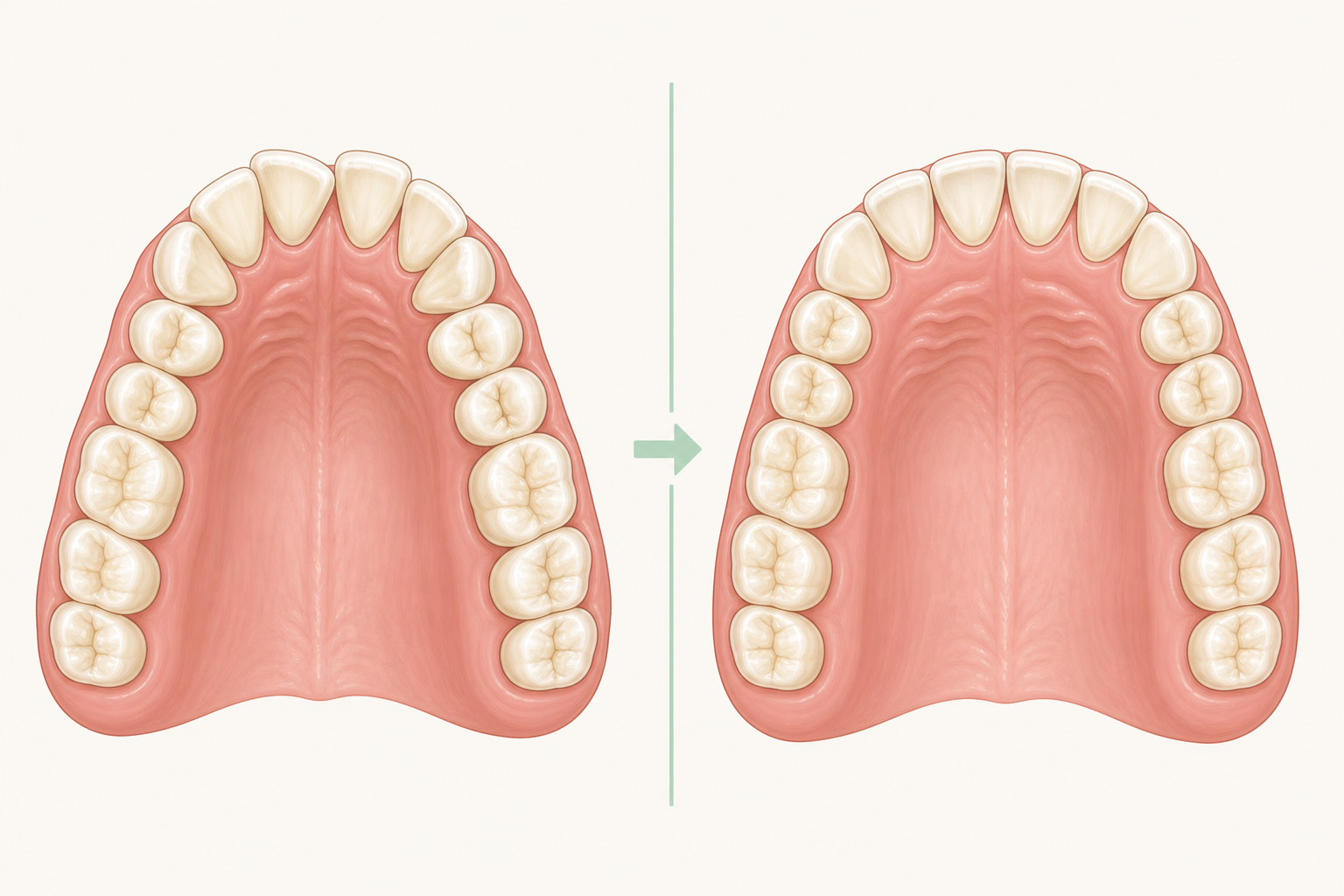
What are lingual braces?
Who may choose lingual braces?
Adults who want their braces concealed may choose brackets on the tongue-facing tooth surfaces. As fixed appliances, they can treat a wider range of problems than removable systems, and they come in customised and non-customised forms.
[1]Does it hurt?
Fixed braces can feel strange after fitting and teeth may be sore for several days. Soft food and pain relief can make the first few days more comfortable.
[1]Is it safe?
Poor diet and oral hygiene can cause decalcification, leaving white marks on enamel. White-mark damage is less frequent and less severe on the lingual tooth surfaces than with standard braces.
[1]How long does it last?
The treatment period reflects the tooth and jaw movement required. Once the fixed appliance is removed, a retainer is worn to reduce teeth returning to their original positions.
[1]What happens during fitting?
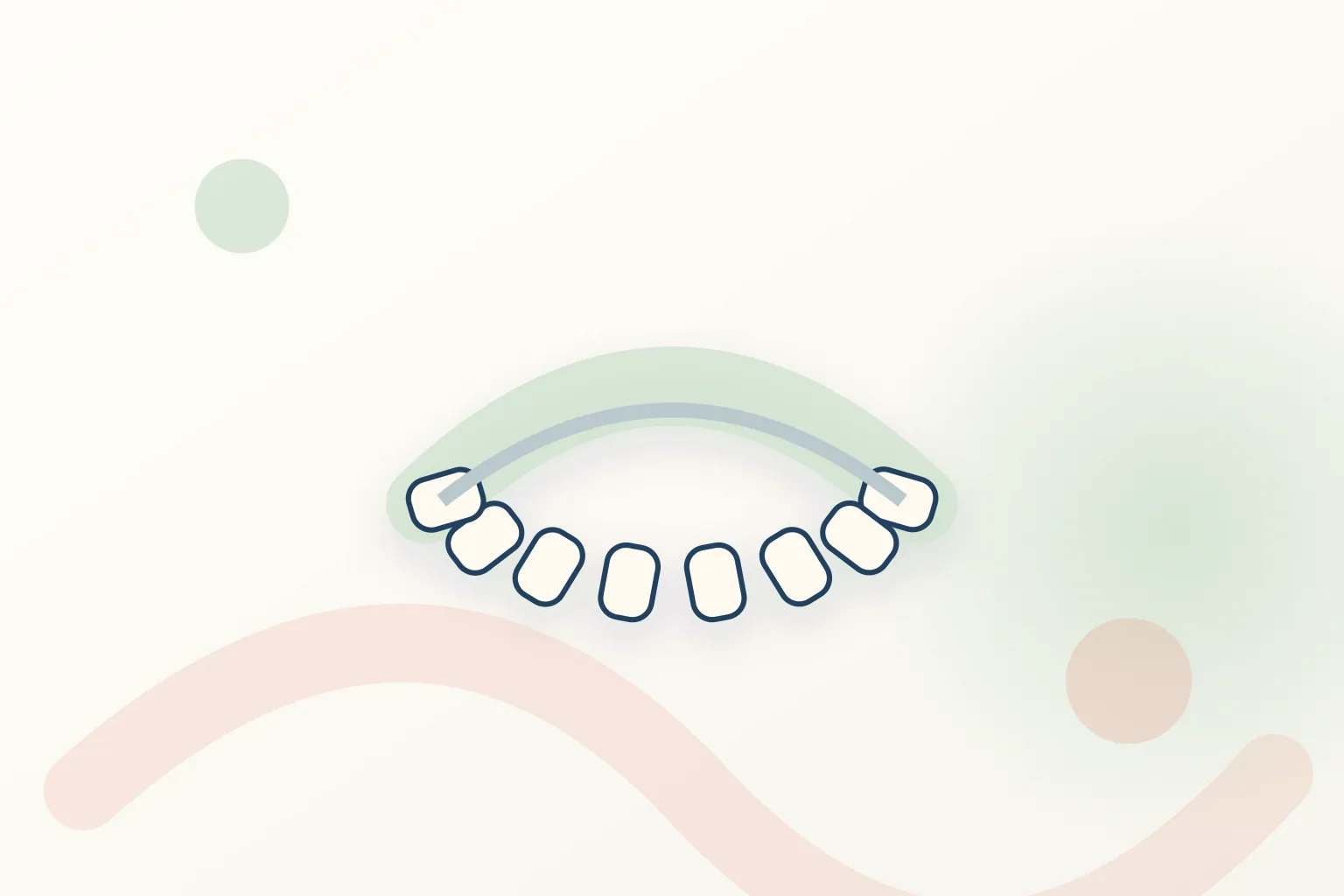
Brackets and wires are attached to the inside surfaces of the teeth, where they guide movement. An upper lingual appliance can be combined with standard braces on the lower teeth.
[1]What is recovery like?
Allow for a few sore days after fitting, then keep the inner tooth surfaces clean throughout treatment. Retention begins after the brackets are removed.
[1]What are the alternatives?
What should I expect day to day?
The brackets stay fixed while the teeth move, so cleaning the inner surfaces needs daily attention. Hard and sticky foods can damage a fixed appliance.
[1]How does insurance and financing work?
Frequently asked questions
Can lingual and standard braces be used together?
Yes. Lingual braces on upper teeth can be paired with standard braces on lower teeth.
[1]Who wrote this page
This library is published by Dental Nation, a licensed dental group practising in the United Arab Emirates. Pages are written and overseen by the same clinical team that treats patients in our clinics, and are held to a fixed editorial standard for safety and accuracy.
This page is patient education, not medical advice, and cannot replace an examination. Anything urgent — facial swelling, trauma, uncontrolled bleeding or severe pain — needs a dentist or emergency care now.