Dental Nation
Treatment guide

Interproximal Reduction

Interproximal reduction creates orthodontic space by reshaping enamel between teeth and can be an alternative to extraction or expansion for mild crowding.

[3][4]

The short answer

Interproximal reduction is controlled enamel reshaping between neighbouring teeth, used to create space in orthodontic treatment and sometimes to reduce black triangles after alignment.

[3][4]
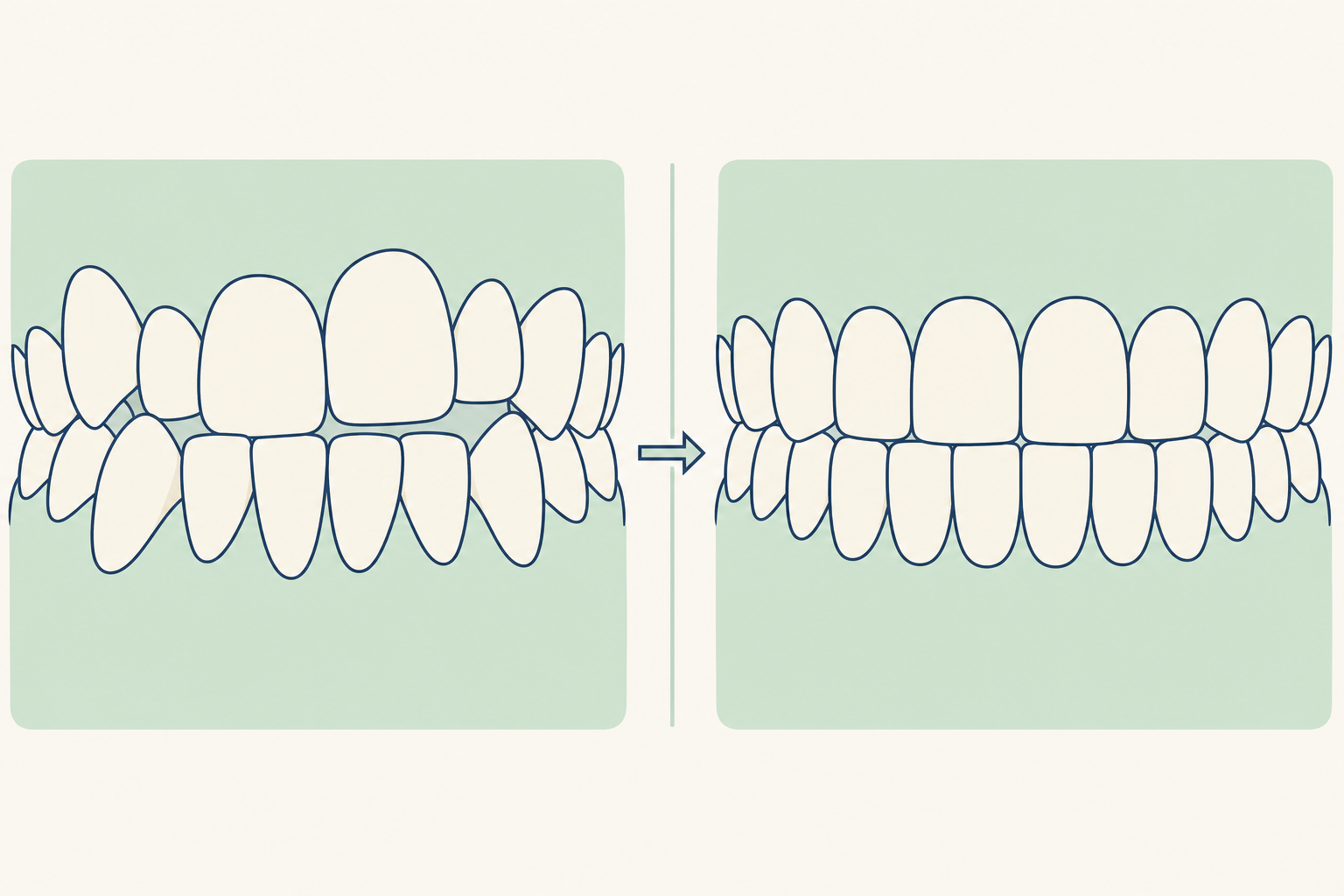
Interproximal Reduction dental educational illustration

What the change looks like

Illustrative diagram: Interproximal Reduction
Illustration — a representative diagram, not a patient photo.
The DN Scan499 AED · fully deducted if treatment starts within 30 days
Book The DN Scan

What is interproximal reduction?

Why enamel may be reshaped
SituationRole of interproximal reduction
Mild to moderate crowdingIt has been presented as an alternative to extraction or expansion procedures.[3][4]
Black triangles after alignmentEnamel reshaping may improve anterior appearance by preventing or reducing visible gingival retraction between teeth.[3][4]

[3][4]

Who may have it?

Interproximal reduction has been studied during orthodontic treatment in children and adolescents aged 8 to 17 with permanent teeth. It is also described for mild to moderate crowding and anterior appearance after alignment.

[2][5]

Does it hurt?

A review described minor papillary incisions during stripping that patients did not describe as painful. Protecting the tissues between teeth is part of the technique when enamel is reduced.

[2][3][4][5]

Is it safe?

The procedure has potential effects on enamel and gum tissues, which is why the systematic reviews assessed enamel integrity, periodontal health and tooth-width changes. A protective wire, separator or wedge can reduce the chance of gingival injury.

[2][3][4][5]

How long does it last?

Interproximal reduction changes enamel surfaces rather than being a removable appliance with a replacement cycle. The children and adolescent review examined enamel integrity, gum health and dimensional changes after the procedure.

[2][5]

How is it done?

The published technique describes protecting the soft tissues, reducing selected contact surfaces, then polishing the enamel. Both oscillating and manual strips have been compared as systems for interproximal enamel reduction.

[3][4][5]

What is it like afterward?

The clinical review of younger patients focused on outcomes after interproximal reduction, including enamel integrity, periodontal health and dimensional changes. Follow-up belongs to the orthodontic treatment rather than to a separate healing phase.

[2][5]
What follow-up studies assessed
AreaOutcome assessed
EnamelEnamel integrity after interproximal reduction.[2][5]
Gums and tooth sizePeriodontal health and dimensional changes.[2][5]

[2][5]

What are the alternatives?

For mild to moderate crowding, the review names extraction and expansion as alternatives to grinding between teeth. Other orthodontic methods may use tooth movement rather than interproximal enamel reduction.

[3][4]

What should you expect?

The work is carried out at the contact areas between teeth. The process can include a wire, separator or wedge near the gums for protection, followed by enamel reduction and polishing.

[3][4][5]

Insurance and financing in the UAE

Interproximal reduction can be part of non-extraction orthodontic treatment for mild to moderate crowding. It is an alternative to extraction or expansion procedures in that setting.

[3][4]

Frequently asked questions

Can interproximal reduction replace tooth extraction for crowding?

For mild to moderate crowding, enamel reduction has been presented as an alternative to extraction or expansion procedures.

[3][4]