
Dental Nation
Treatment guide

Ceramic Braces

Tooth-coloured ceramic or porcelain brackets make fixed braces less visible while gradually moving teeth.

[1]

The short answer

Ceramic braces use tooth-coloured or clear brackets and wires to gradually move teeth while remaining less visible.

[1]
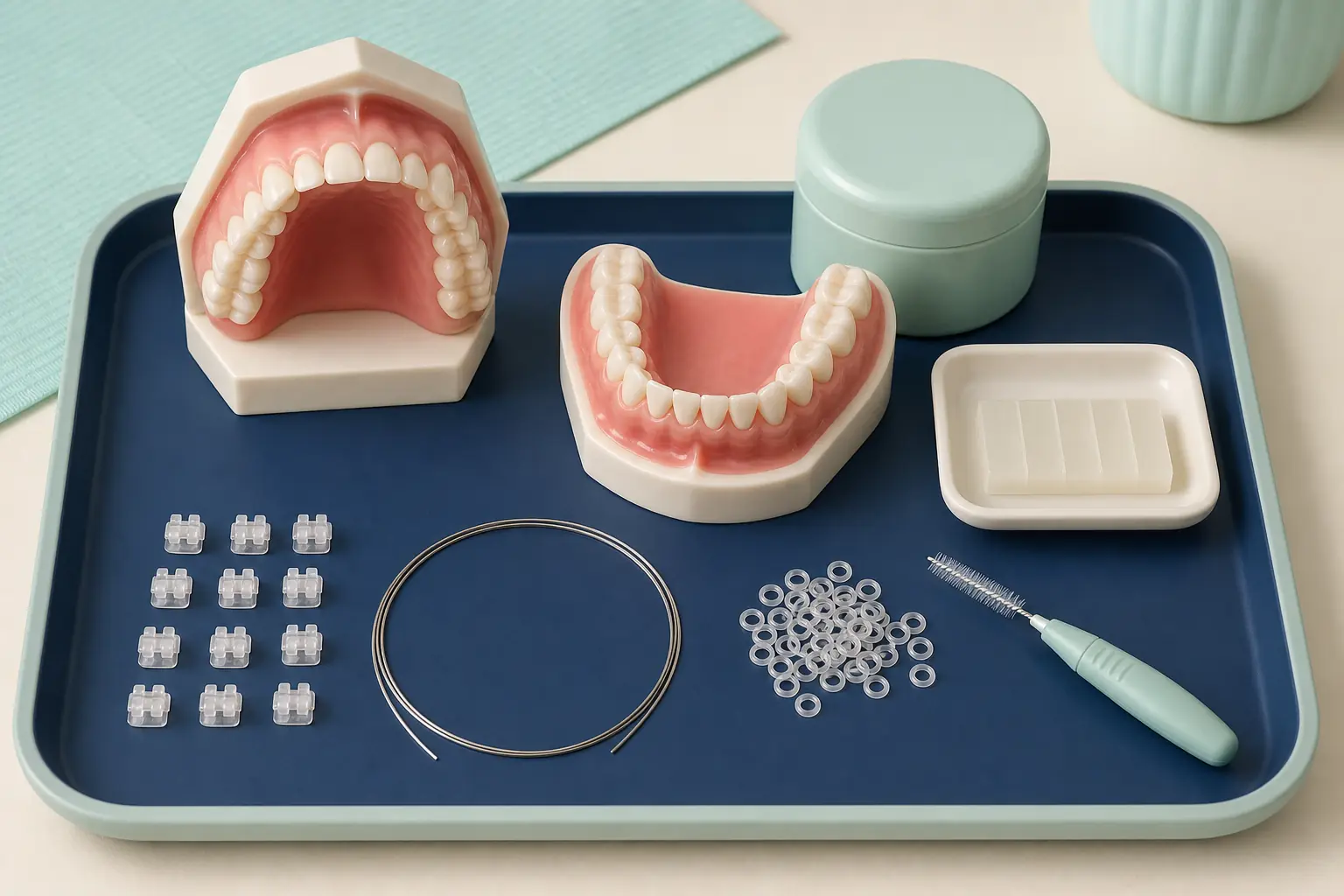
Ceramic Braces dental educational illustration

What the change looks like
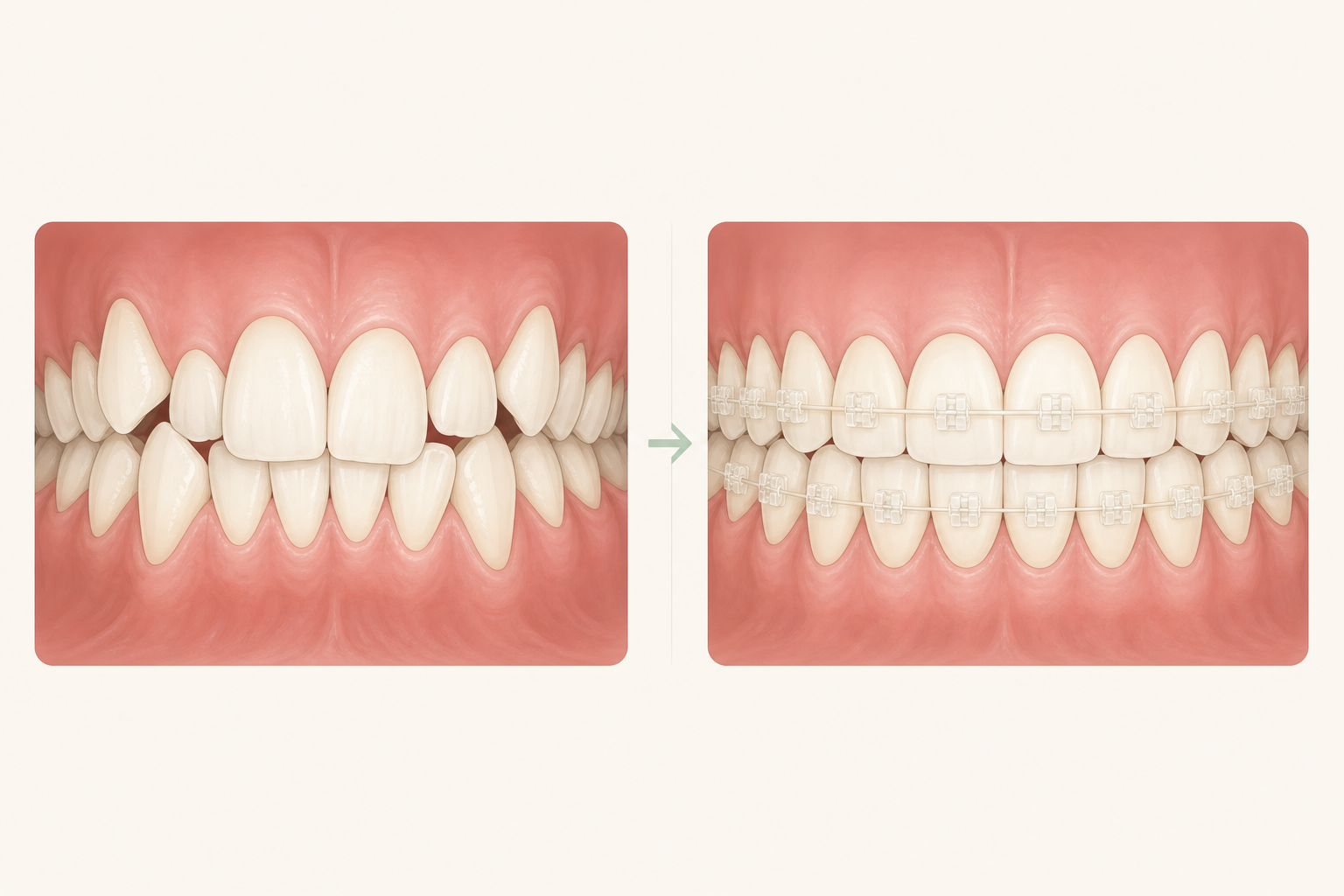
Illustrative diagram: Ceramic Braces
Illustration — a representative diagram, not a patient photo.
The DN Scan499 AED · fully deducted if treatment starts within 30 days
Book The DN Scan

What are ceramic braces?

How the fixed appliance moves teeth
ComponentWhat it does
BracketsTooth-coloured or clear brackets are fixed to the teeth.[1]
WiresWires work with the brackets to put pressure on teeth over time.[1]

[1]

Who may choose ceramic braces?

Ceramic or porcelain brackets suit people who want a fixed appliance that blends with their teeth more closely than metal braces. They tend to move teeth faster than clear aligners, although this option is not available in every situation.

[1]

Does it hurt?

The appliance can feel unfamiliar at first, and teeth may ache for several days after fitting. Soft foods and pain relief can help through that early soreness.

[1][2]

Is it safe?

Hard or sticky foods can damage the fixed appliance. Daily cleaning with fluoride toothpaste and tools that reach around brackets helps keep hard-to-reach areas clean.

[1][2]

How long does it last?

Small corrections can take a few months, while moving many teeth or repositioning the jaw can take years. Adjustment appointments commonly occur every 6 to 8 weeks.

[1]

What happens during the procedure?

Teeth are prepared with cleaning and any needed cavity treatment before the appliance is fitted. Brackets are bonded to each tooth, then a wire and small elastic modules apply the force that moves teeth.

[1][2]

What is recovery like?

Choose softer foods while the first days of soreness settle. A soft brush, fluoride toothpaste, proxy brushes or a water flosser can help clean around the ceramic brackets and wire.

[1][2]
Practical care during fixed brace treatment
SituationUseful step
First few daysChoose soft food while soreness settles.[1][2]
Daily cleaningUse fluoride toothpaste and tools that reach around brackets and wires.[1][2]

[1][2]

What are the alternatives?

Metal braces and self-ligating brackets are fixed alternatives; clear aligners are removable. Some tooth and bite movements also use elastic bands, headgear or a palatal expander alongside braces.

[1][2]

What should I expect during treatment?

Treatment includes adjustments about every 6 to 8 weeks, careful cleaning and avoiding foods that can break the appliance. After removal, a retainer helps hold teeth away from their former positions.

[1][2]

How does insurance and financing work?

Orthodontic payment can vary with the type of brace and the complexity of tooth movement. In the NHS system, adults usually pay privately and children are assessed partly on whether their teeth affect eating or cleaning.

[1][2]

Frequently asked questions

What are ceramic brace brackets made from?

They are made from ceramic or porcelain and may be tooth-coloured or clear.

[1]