
What the change looks like
What it is
| Patient question | What the assessment considers | Why it matters |
|---|---|---|
| What problem is being treated? | The tooth, tissues, symptoms, and purpose of care | It clarifies the decision before treatment[2] |
| What information is still needed? | The examination and the treatment discussion | It helps match the procedure to the clinical finding[2] |
Who needs it?
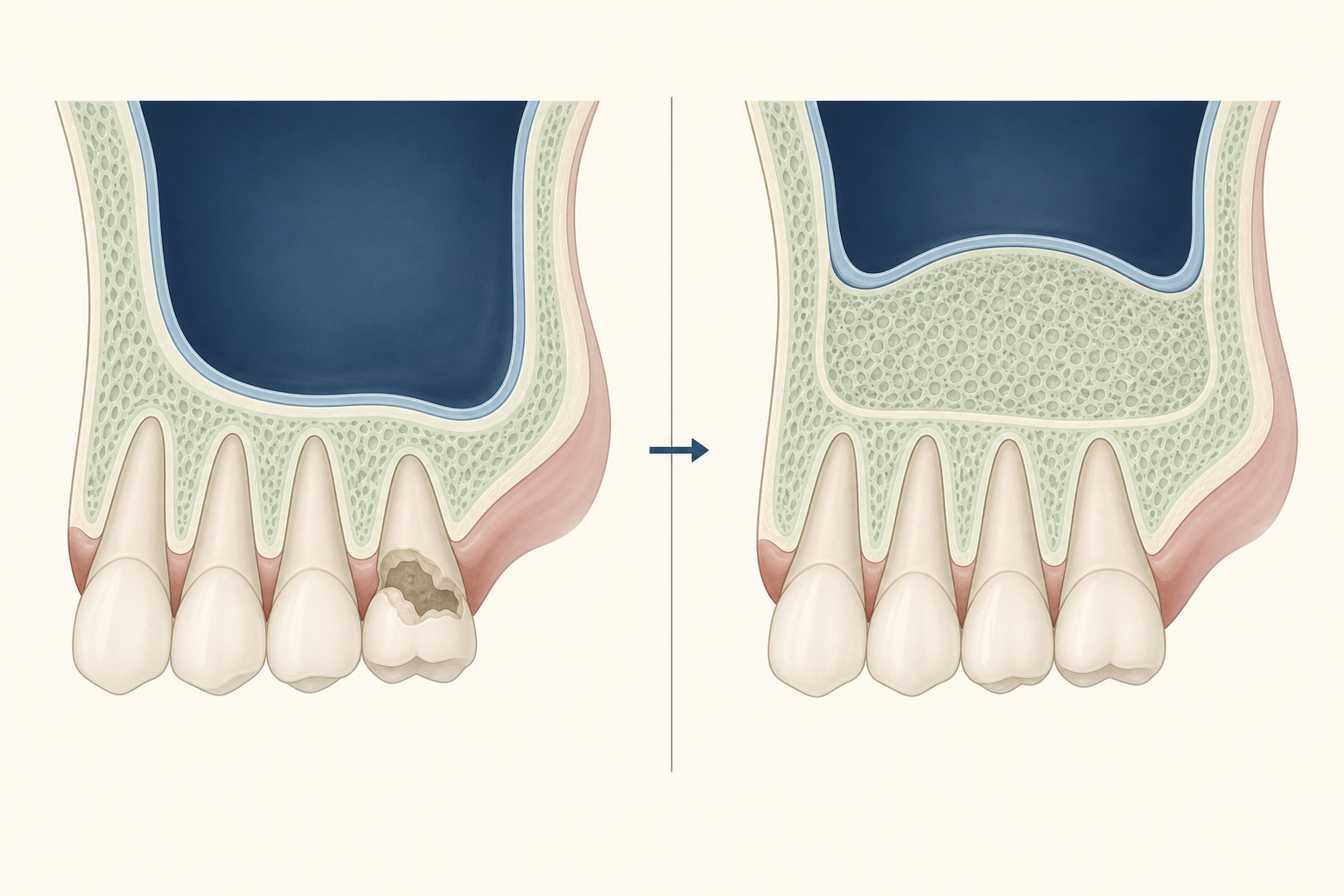
This operation is used for the upper back jaw when there is too little residual bone below the maxillary sinus to support an implant of the planned length.
[2]Does it hurt?
The operation involves lifting the sinus membrane with an osteotome or blunt instrument. The membrane can be perforated during sinus-floor elevation, alongside the usual surgical discomfort.
[3]Is it safe?
A systematic review focuses on complications of sinus-floor elevation, including membrane perforation and problems that require management. These are surgical risks of working beneath the sinus floor.
[3]How long does it last?
How is it done?
What is recovery like?
Recovery follows surgery in the sinus area and requires attention to complications of sinus-floor elevation. The grafted compartment is allowed to heal while new bone forms around the implant tip.
[3]| Recovery topic | What to discuss | When to contact the dental team |
|---|---|---|
| Protecting the treated area | Instructions for eating, cleaning, and daily care | When the advised course changes[3] |
| Discomfort or swelling | What is expected for this procedure | When symptoms worsen or feel unusual[3] |
What are the alternatives?
What should you expect?
What should you ask about payment?
Payment questions should separate the implant from the sinus-floor elevation, because the lift adds a surgical procedure beneath the maxillary sinus to the tooth-replacement plan.
[2]Frequently asked questions
Can a short implant avoid a sinus lift?
Short implants of six millimetres or less have been compared with longer implants placed with sinus-floor elevation in the posterior upper jaw where bone is atrophic.
[2]