Dental Nation
Treatment guide

Sedation Dentistry

Sedation uses medicine to reduce dental anxiety or sleepiness, with options ranging from inhaled gas to tablets or injected medicine.

[1]

The short answer

Sedation dentistry uses medicine to make a dental visit more relaxed or sleepy, using inhaled gas, tablets, injected medicine, or deeper anaesthesia when needed.

[1]
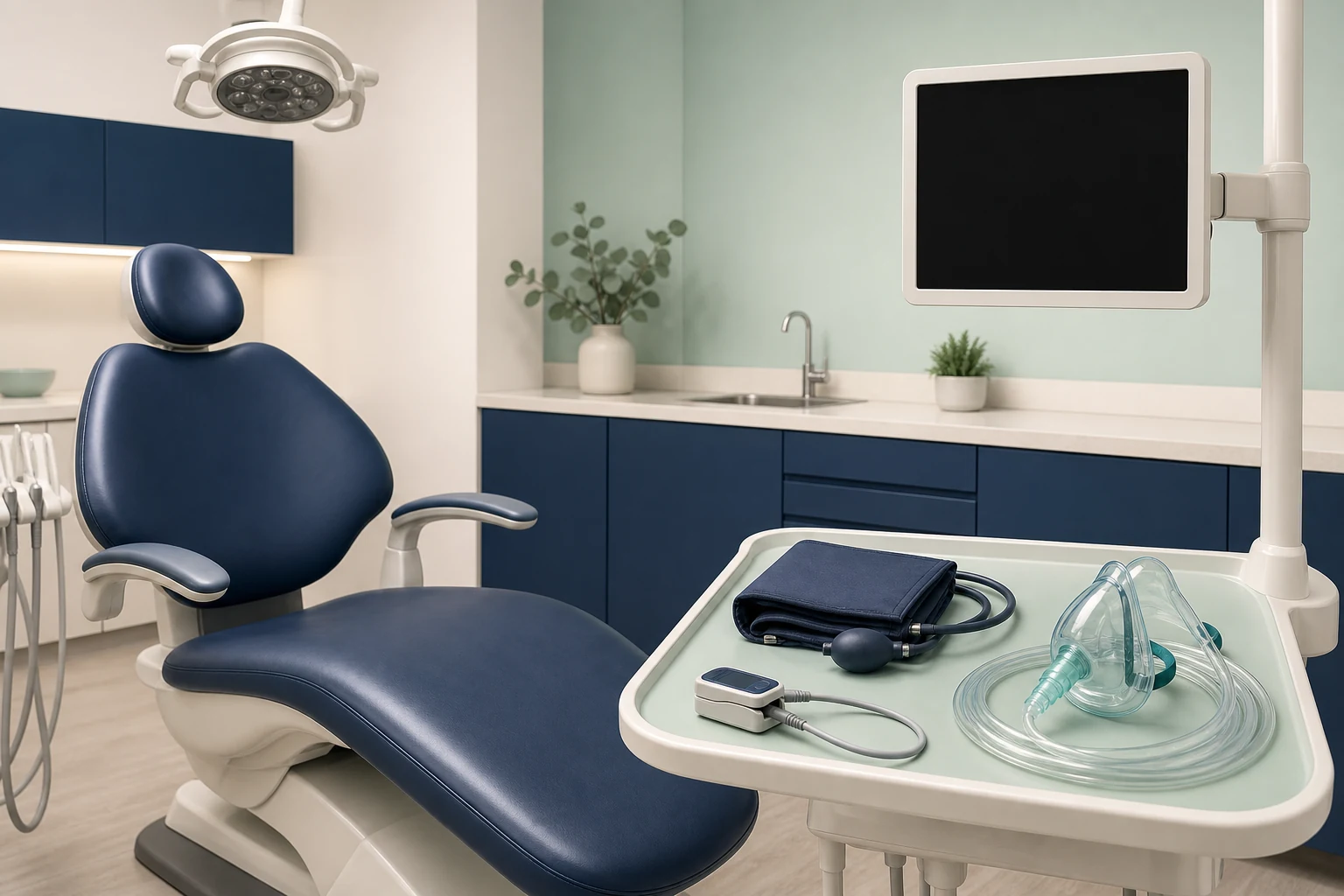
Sedation Dentistry dental educational illustration

What the change looks like

Illustrative diagram: Sedation Dentistry
Illustration — a representative diagram, not a patient photo.
The DN First Look799 AED
Book The DN First Look

What is sedation dentistry?

Ways sedation may be given
RouteDescription
Inhaled gasA sedative gas is breathed in before or during dental treatment.[1][2]
PillMedicine is taken to create a more relaxed visit.[1][2]
InjectionMedicine is injected, with deeper levels possible for more complex treatment.[1][2]

[1][2]

Who may need sedation?

Sedation may make dental treatment possible and more comfortable for people who cannot receive care in general dental practice, including people with dental anxiety or a lengthy procedure ahead.

[1][3]

Does it hurt?

Sedation is used to manage anxiety and help make dental treatment comfortable; local anaesthetic is a separate medicine that blocks pain signals in a specific area of the mouth.

[1][2]

Is it safe?

Sedation levels are not defined by the route alone. Minimal sedation retains independent airway control and normal responses to tactile stimulation and verbal commands, while deeper levels require appropriate monitoring and emergency equipment.

[2]

How long does it last?

Recovery depends on the sedation type and how the body responds. Nitrous oxide recovery is commonly 15 to 30 minutes; oral or IV sedation recovery can take up to 24 hours.

[2]

What happens during sedation?

The sedative is administered before or during treatment by the chosen route. For moderate sedation, the dentist remains in the operatory until recovery criteria are met; deeper sedation requires continuous monitoring until discharge.

[1][2]

What is recovery like?

Nitrous oxide usually wears off within 15 to 30 minutes. Oral or IV sedation can require a full day of recovery, during which driving is avoided and the next day is kept easy.

[2]
Typical recovery windows
OptionRecovery guidance
Nitrous oxideRecover within 15 to 30 minutes and go about the day.[2]
Oral or IV sedationRecovery can take up to 24 hours; do not drive for 24 hours.[2]

[2]

What are the alternatives?

Options range from no sedation to inhaled nitrous oxide, oral conscious sedation, IV sedation, and general anaesthesia. The procedure, health, allergy history, and anxiety level affect which approach is suitable.

[1][3]

What should I expect afterwards?

Some people have drowsiness, headache, nausea, or vomiting after sedation. If grogginess continues for 24 hours, or nausea and vomiting occur, the patient should contact the dentist.

[2]

How is sedation paid for in the UAE?

A price or insurance classification is not specified. A sedation quote should name the route, the depth of sedation, the dental procedure, monitoring, and recovery arrangements.

[1][2]

Frequently asked questions

Can I drive after dental sedation?

After oral or IV sedation, do not drive for 24 hours; nitrous oxide recovery is usually 15 to 30 minutes.

[2]