
Impacted Tooth Surgery
Impacted tooth surgery removes a trapped wisdom tooth and can protect nearby teeth from decay and gum disease.
[1][2]The short answer
Impacted tooth surgery removes a wisdom tooth that is trapped or cannot grow normally. Removing an impacted tooth can protect nearby teeth and oral tissues from decay, gum disease and other problems.
[1][2]
What the change looks like
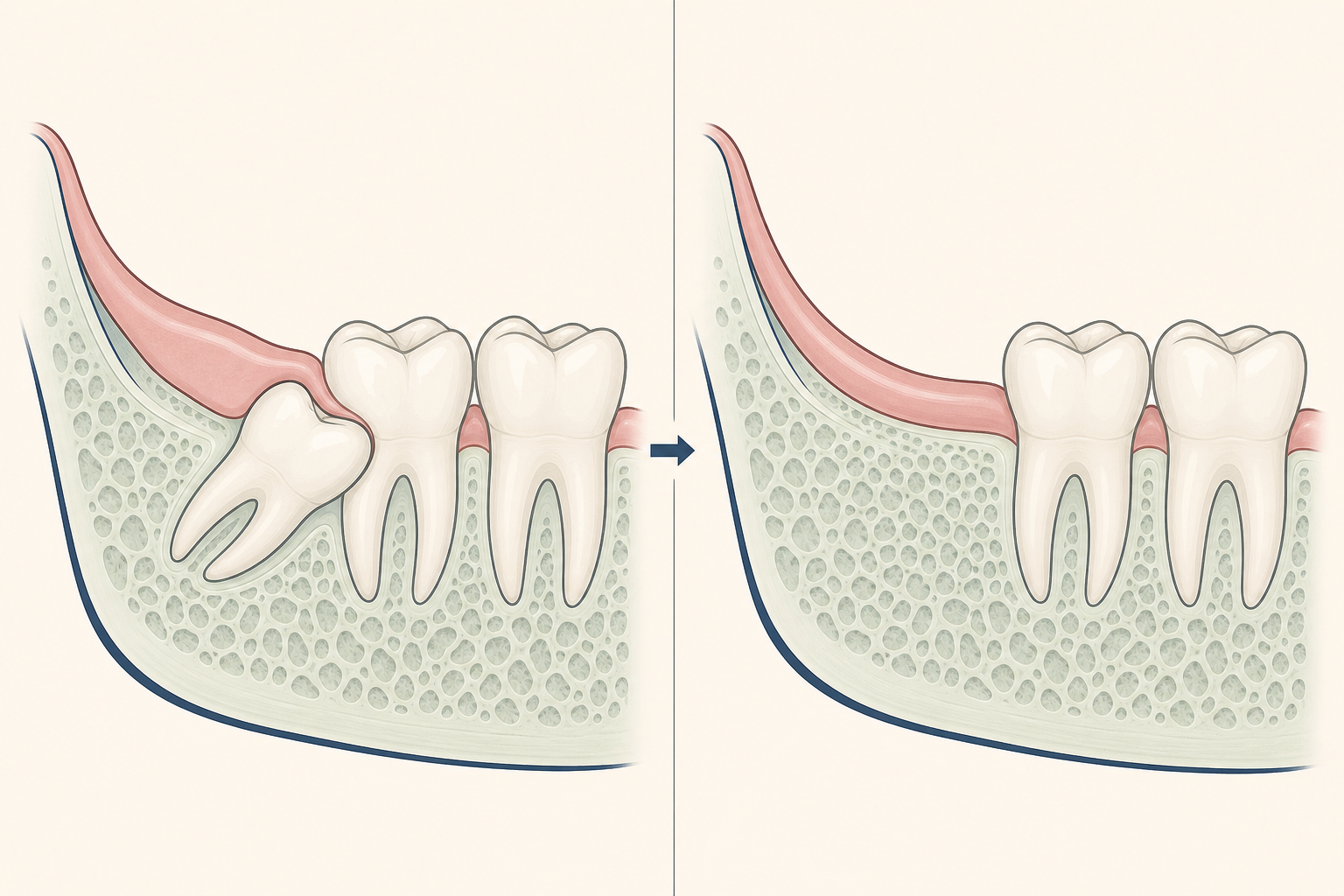
What it is
| Patient question | What the assessment considers | Why it matters |
|---|---|---|
| What problem is being treated? | The tooth, tissues, symptoms, and purpose of care | It clarifies the decision before treatment[1][2] |
| What information is still needed? | The examination and the treatment discussion | It helps match the procedure to the clinical finding[1][2] |
Who needs it?
Does it hurt?
Is it safe?
How long does it last?
How is it done?
What is recovery like?
Keep gauze in place for about 30 minutes, replace it if needed, rest, and expect some oozing rather than excessive bleeding. Full recovery takes about two weeks.
[2]| Recovery topic | What to discuss | When to contact the dental team |
|---|---|---|
| Protecting the treated area | Instructions for eating, cleaning, and daily care | When the advised course changes[2] |
| Discomfort or swelling | What is expected for this procedure | When symptoms worsen or feel unusual[2] |
What are the alternatives?
Observation is an alternative when a wisdom tooth is healthy, grows normally and causes no problems. An impacted tooth may instead be removed to reduce the risk of decay or gum disease.
[1]What should you expect?
Treatment for Impacted Tooth Surgery is planned around the condition being addressed, the relevant anatomy, and the intended result. The appointment may include examination, discussion of the procedure, and a plan for care. The exact approach depends on the clinical findings rather than the procedure name alone.
[1][2]What should you ask about payment?
Impacted Tooth Surgery is a dental procedure or clinical approach discussed in relation to a specific oral finding. The assessment starts with the tooth, surrounding tissues, symptoms, and the reason treatment is being considered. A clinician uses those findings to decide whether this procedure fits the problem and whether another option deserves discussion.
[1][2]