
Frenectomy
Releasing a restrictive lip or tongue attachment can address limited movement or gum recession that continues after plaque control.
[1]The short answer
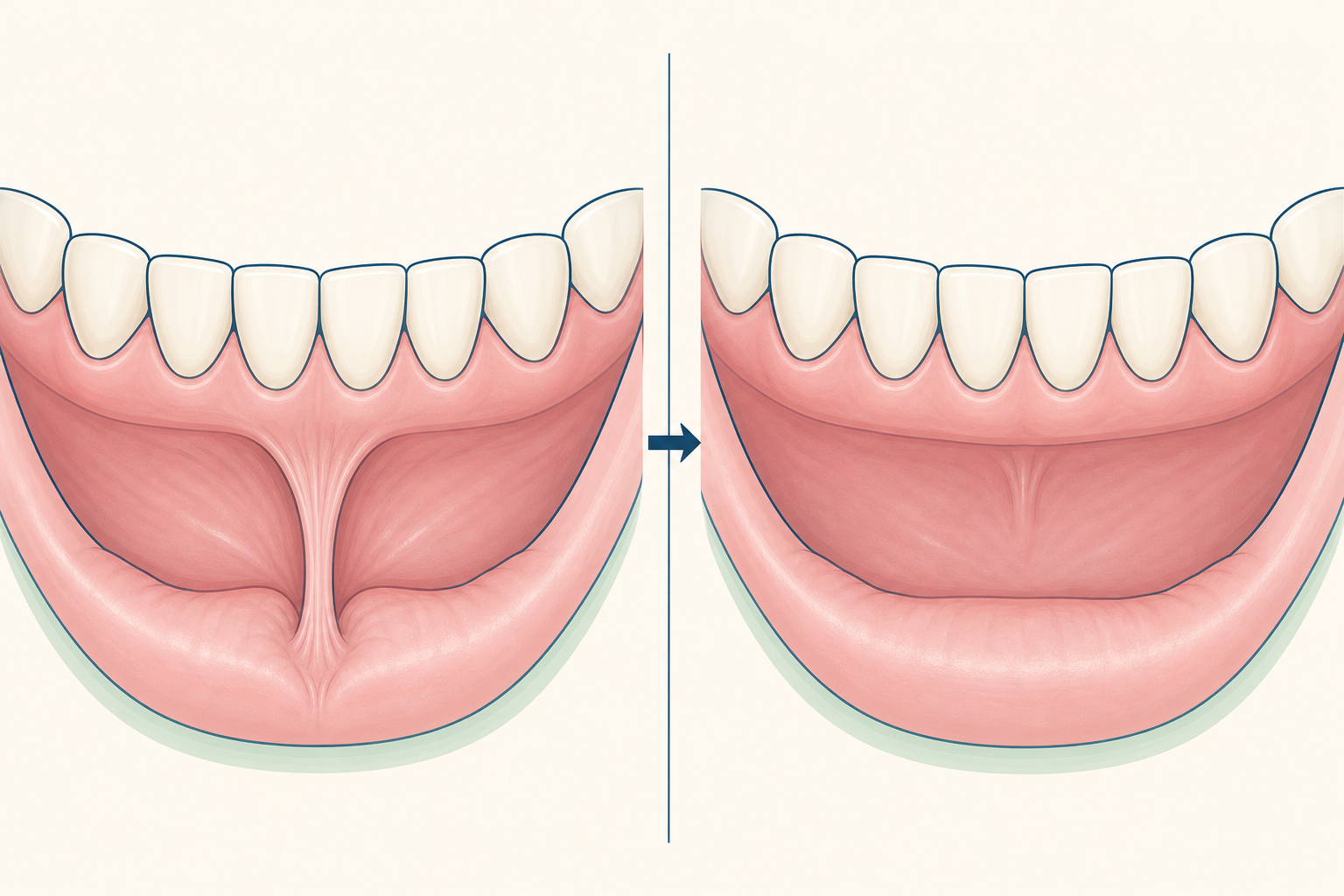
A frenectomy releases or removes a restrictive lip or tongue frenulum when it limits movement or contributes to persistent gum recession.
[1]
What the change looks like
What it is
| Patient question | What the assessment considers | Why it matters |
|---|---|---|
| What problem is being treated? | The tooth, tissues, symptoms, and purpose of care | It clarifies the decision before treatment[1] |
| What information is still needed? | The examination and the treatment discussion | It helps match the procedure to the clinical finding[1] |
Who needs it?
A frenectomy may be considered for a tongue or lip attachment that interferes with oral movement, or for gum recession that continues after plaque-related inflammation has been addressed.
[1]Does it hurt?
Is it safe?
How long does it last?
How is it done?
What is recovery like?
Recovery centres on healing of the released lip or tongue tissue. Bleeding, pain and discomfort during speech or chewing are practical issues measured after the procedure.
[2]| Recovery topic | What to discuss | When to contact the dental team |
|---|---|---|
| Protecting the treated area | Instructions for eating, cleaning, and daily care | When the advised course changes[2] |
| Discomfort or swelling | What is expected for this procedure | When symptoms worsen or feel unusual[2] |
What are the alternatives?
What should you expect?
What should you ask about payment?
Payment questions should identify whether the procedure is for a lip, tongue or cheek frenulum and whether laser or scalpel surgery is planned, because those are distinct treatment approaches.
[1]Frequently asked questions
Can gum recession improve without frenectomy?
When plaque-induced inflammation is present, eliminating that inflammation can minimise gum recession without surgery. Surgical treatment is considered when recession continues after oral-hygiene management.
[1]