
Botox for Bruxism (Masseter)
Masseter botulinum toxin injections may reduce bruxism-related muscle activity, with evidence focused on symptoms and safety.
[2]The short answer
Masseter botulinum toxin is studied as a way to reduce the muscle activity associated with sleep bruxism and related temporomandibular symptoms.
[2]
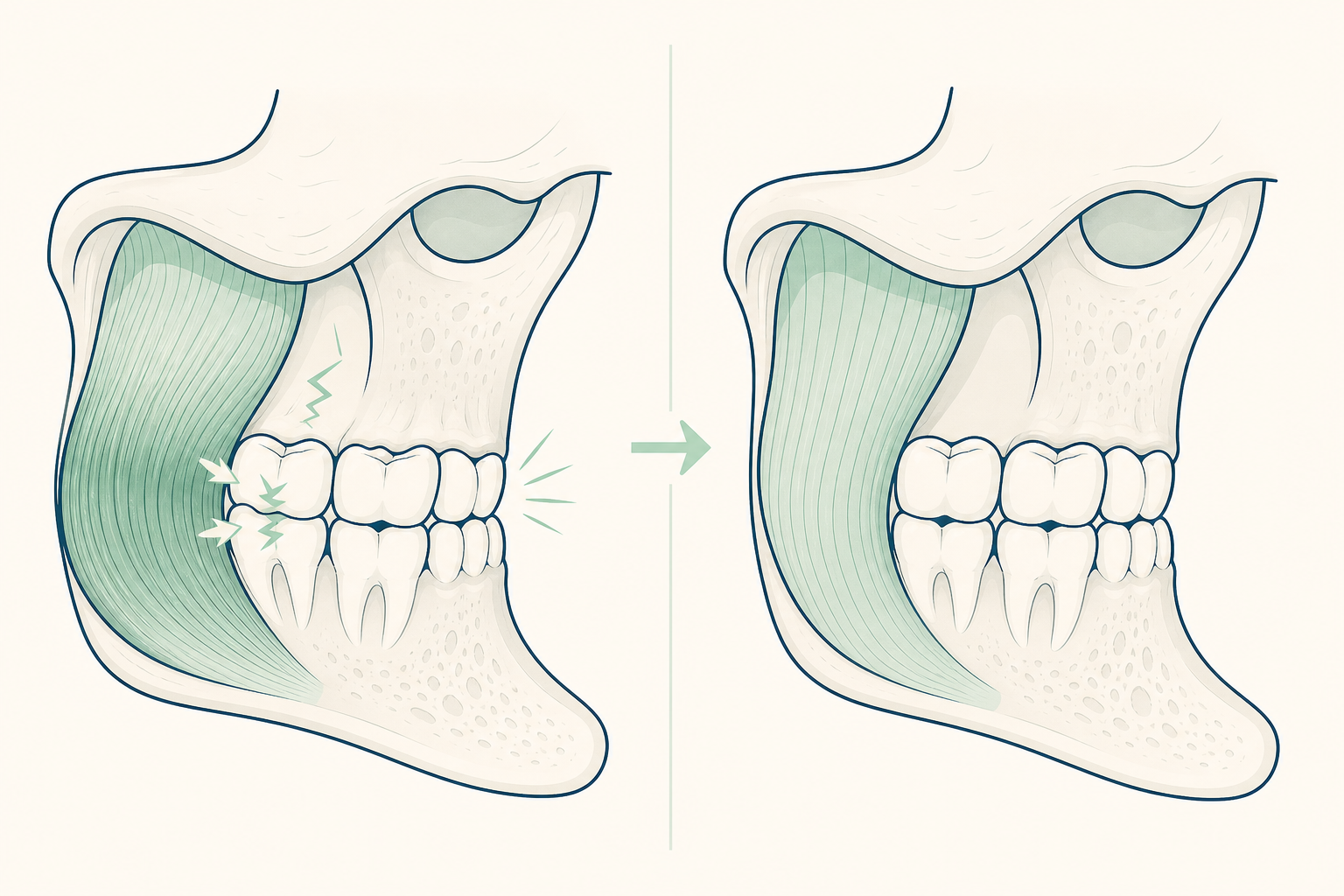
What the change looks like
What is Botox for bruxism?
Who may consider it?
It is considered for people with bruxism-related muscle activity or temporomandibular symptoms, while bruxism itself can involve clenching or grinding.
[2]Does it hurt?
The treatment involves injections into the masseter muscle, which is the muscle named in this treatment's clinical focus.
[2]Is it safe?
How long does it last?
Botulinum toxin is studied for sleep-bruxism symptoms, with published work assessing both its efficacy and safety. Bruxism can involve clenching or grinding, and the masseter is the muscle named in this treatment's clinical focus. The treatment is delivered by injection, with the intended effect being reduced masseter activity and possible improvement in related jaw symptoms. Efficacy and safety are assessed together in the clinical literature.
[1][2][4]What happens during treatment?
Botulinum toxin is delivered by injection to the masseter muscles, the muscles named in this treatment’s clinical focus.
[2]What is recovery like?
What else can help bruxism?
What should you expect?
The intended focus is reduced masseter activity and possible improvement in related jaw symptoms, with efficacy and safety considered together.
[2]Is it covered by UAE insurance?
The clinical records establish the treatment target and study outcomes, but they do not establish UAE insurance benefits or a local price.
[2]Frequently asked questions
Is Botox a treatment for grinding and clenching?
Botulinum toxin is studied for sleep-bruxism-related muscle activity and temporomandibular symptoms.
[2]