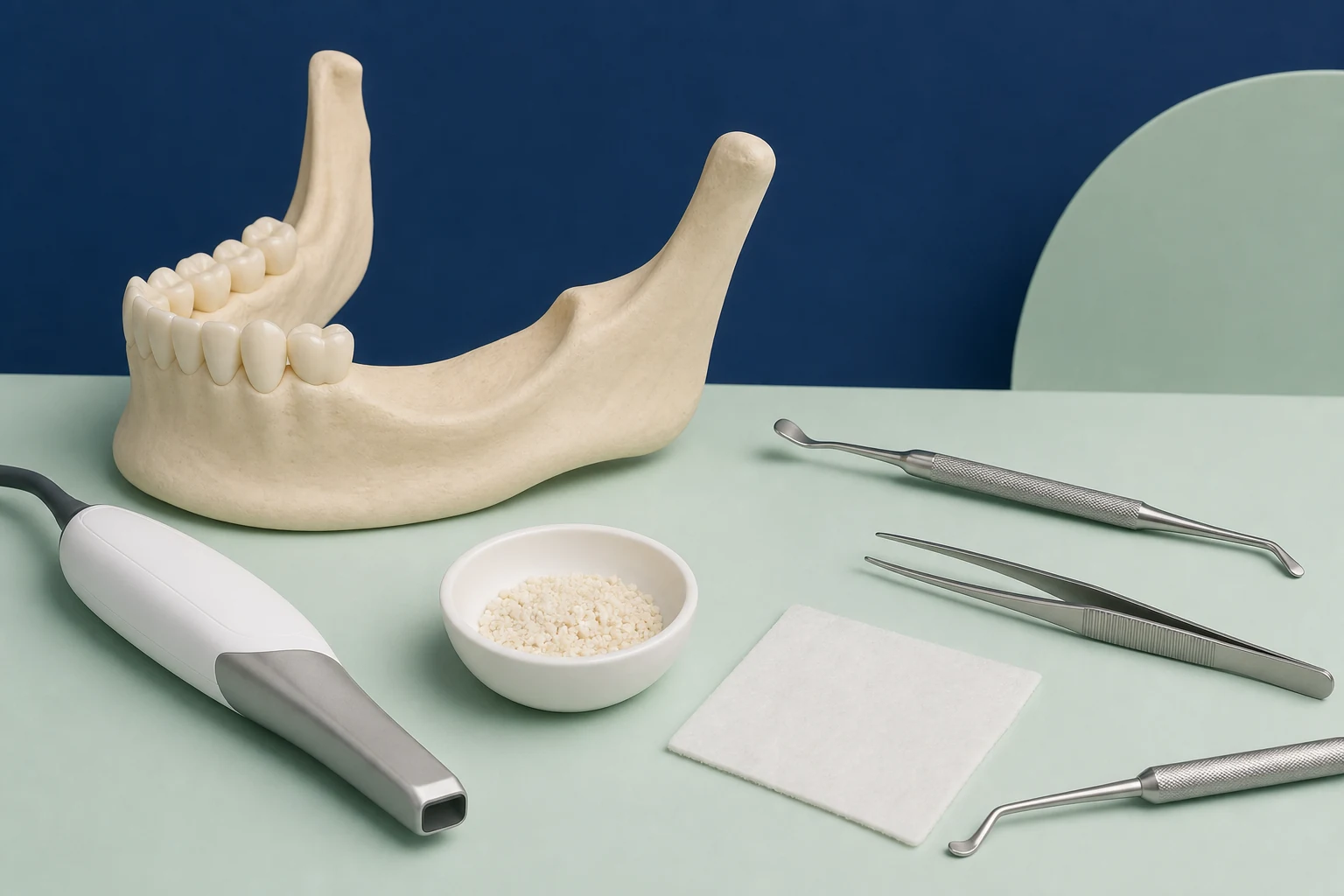
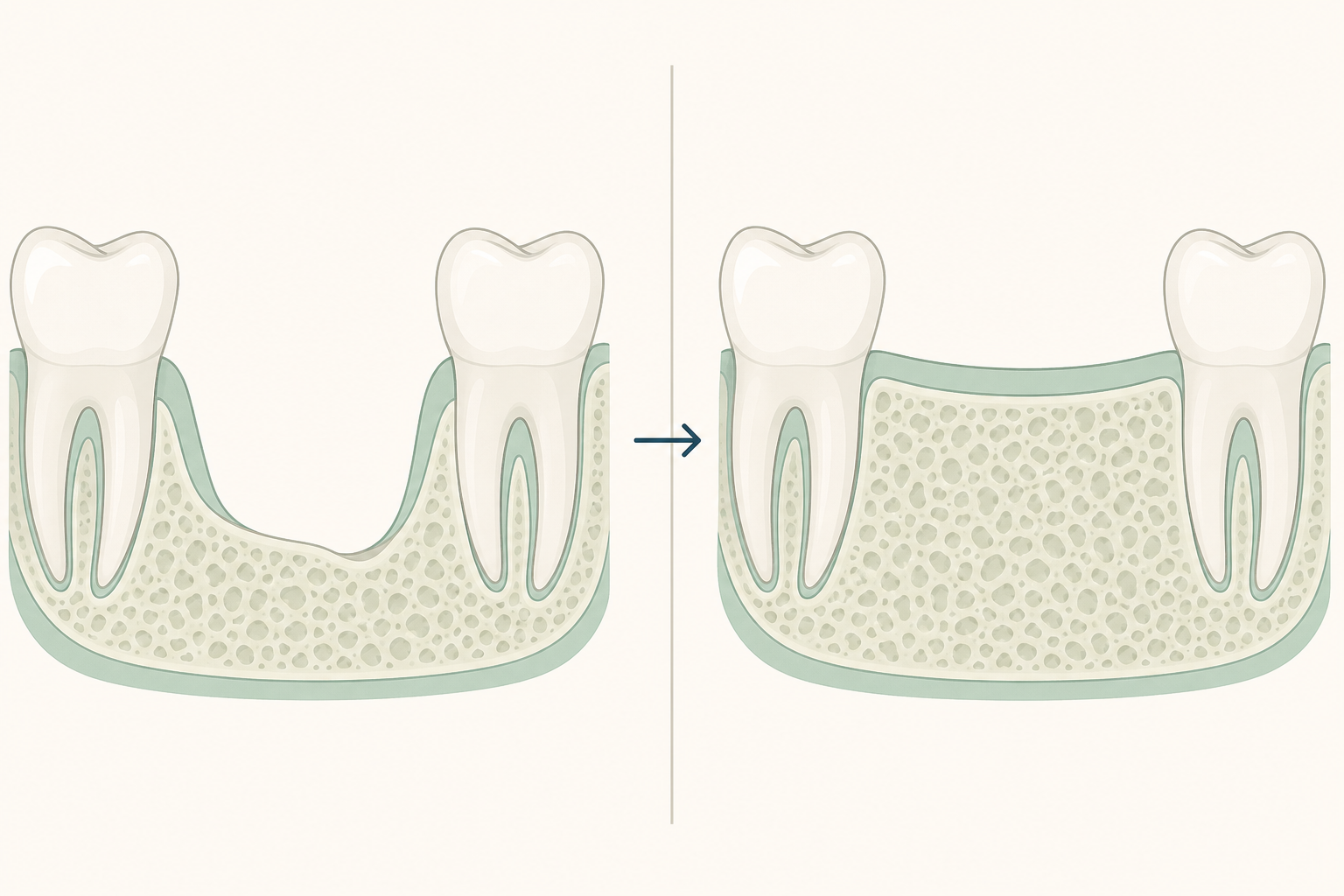
Bone grafting may be used before implant surgery when the jaw does not have enough successful bone for an implant. A small graft can be taken from the jaw, while a larger graft may be taken from the hip.
Minor grafting is carried out with local anaesthetic, which numbs the mouth while you stay awake. Major hip grafting uses general anaesthetic, so you are asleep for the operation.
Bone grafting can lead to pain, swelling, bruising or infection. Sometimes the graft does not produce enough successful bone for implant surgery and another graft may be needed.
A graft is assessed by whether it has healed into enough bone to support the planned implant. The material itself becomes part of the rebuilt jaw area rather than a temporary removable device.
For a block graft, bone from a bank or from your hip, jaw, chin or scalp is fixed into the jaw with screws. When an implant is placed later, those screws are removed at the same appointment.
Expect pain, swelling and bruising where the graft is taken. Jaw swelling can last one to two weeks; after a hip graft, walking may be uncomfortable for two to four weeks.
Angled implants can avoid simple grafting and have similar five-year survival and success outcomes to conventional implants. Other options include zygomatic or pterygoid implants, a bridge, a removable denture, or leaving a space when enough functional teeth remain.
Hip bone is commonly used for a major graft because it can provide a considerable amount of suitable bone. The hip bone grows back after grafting, but the operation leaves a scar of about eight centimetres along the pant line.
Payment discussions should separate a minor jaw graft from a major hip graft, because major grafting involves general anaesthetic and a short hospital stay, while a minor graft is completed under local anaesthetic.
Can a bridge replace a tooth instead of a bone graft and implant?
A bridge can be fixed to adjacent teeth either with adhesive resin bonding or with crowns. Conventional bridge preparation can damage the nerve in a filed tooth, while resin-bonded bridges do not require tooth reduction.