
Dental Nation
Treatment guide

Root Canal Retreatment

Persistent infection can be cleaned through a second root canal course, often over two to five appointments.

[1]

The short answer

Root canal retreatment cleans a tooth again after incomplete healing or infection, usually across two to five appointments.

[1]
Root Canal Retreatment dental educational illustration

What the change looks like
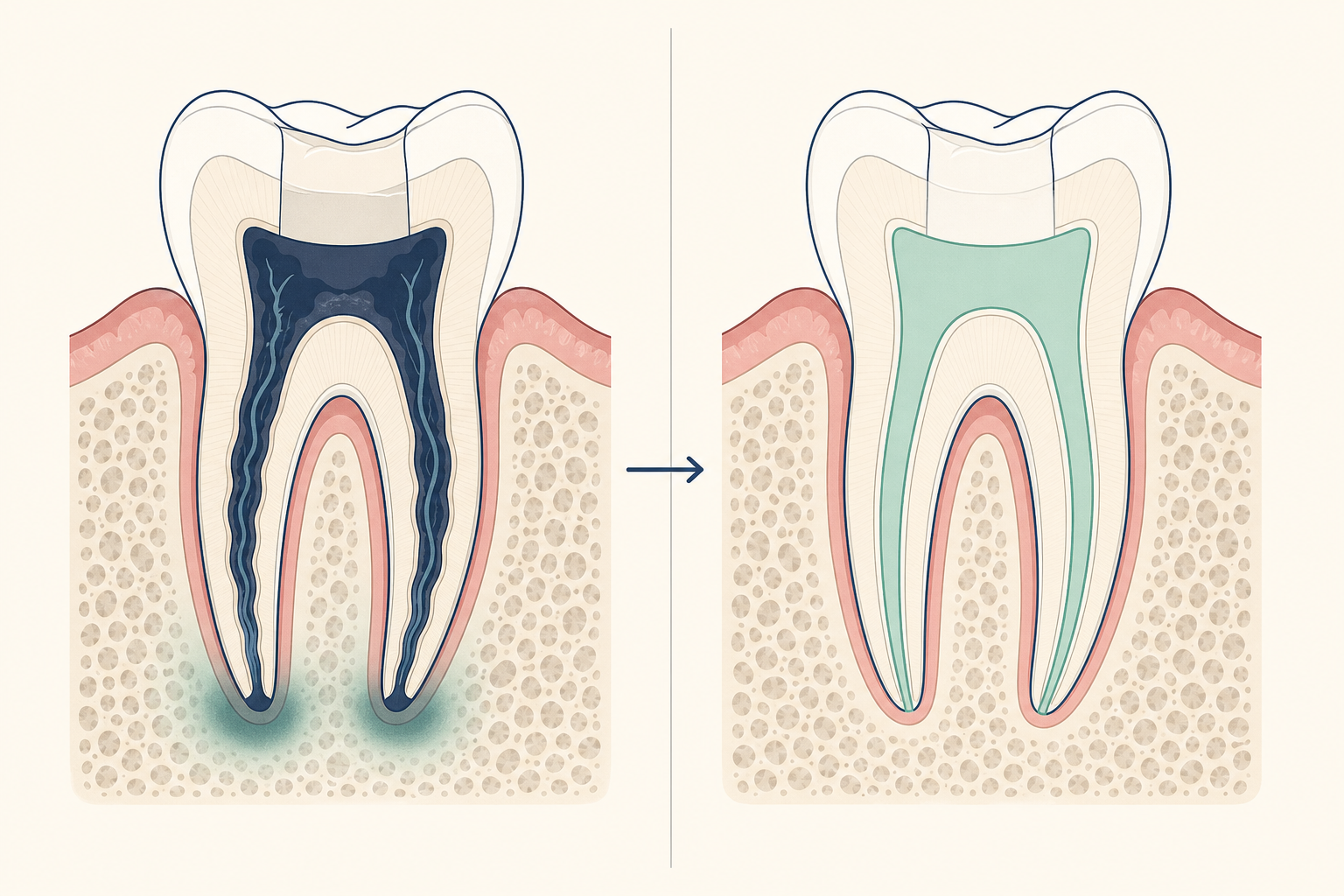
Illustrative diagram: Root Canal Retreatment
Illustration — a representative diagram, not a patient photo.
The DN First Look799 AED
Book The DN First Look

What is root canal retreatment?

What the treatment involves
FeatureWhat to expect
ReasonPersistent infection or a complex second attempt[1]
SessionsUsually 2 to 5 appointments, lasting 1 to 3 hours each[1]

[1]

Who may need it?

A second course is used when healing is incomplete or infection follows earlier root canal treatment and the tooth needs further cleaning.

[1]

Does it hurt?

Local anaesthetic is often used at the beginning of each session to numb the tooth and surrounding area and prevent discomfort.

[1]

Is it safe?

A rubber dam forms a barrier around the tooth, separating fine instruments and antiseptics while creating a protected working area.

[1]

How long does it last?

Retreatment commonly takes two to five sessions of one to three hours, with medication and a temporary seal placed between visits.

[1][2]

What happens during the procedure?

The first appointment may remove old fillings, crowns, or bridgework to assess the remaining tooth structure before the canals are cleaned further.

[1][2]

What is recovery like?

Between appointments, medication is placed inside the tooth and covered with a temporary filling or crown while the next stage is prepared.

[1][2]
Stages between visits
StagePurpose
Between sessionsMedication is placed inside the tooth[1][2]
Temporary sealA temporary filling or crown protects the tooth[1][2]

[1][2]

What are the alternatives?

After a root canal has failed, options include another nonsurgical cleaning course or root-end surgery to deal with infection near the root tip.

[1][2]

What should I expect afterwards?

Incomplete healing or infection after treatment may lead to extraction, another retreatment, or periapical surgery; tooth discolouration and very rare numbness are recorded risks.

[1][2]

What about insurance and financing in the UAE?

Retreatment can involve several long appointments, temporary protection between them, and further procedures if infection does not settle.

[1]

Frequently asked questions

Can a failed root canal be treated without surgery?

Nonsurgical retreatment is one option after failed primary root canal therapy, alongside root-end surgery.

[1][2]