Dental Nation
Treatment guide

Apicoectomy (Root-End Surgery)

Surgery can clear persistent infection at a root tip when repeat root canal treatment cannot improve the filling.

[1][2]

The short answer

An apicoectomy removes infection around a tooth root tip and seals the root end when a previous root filling cannot be improved.

[1][2]

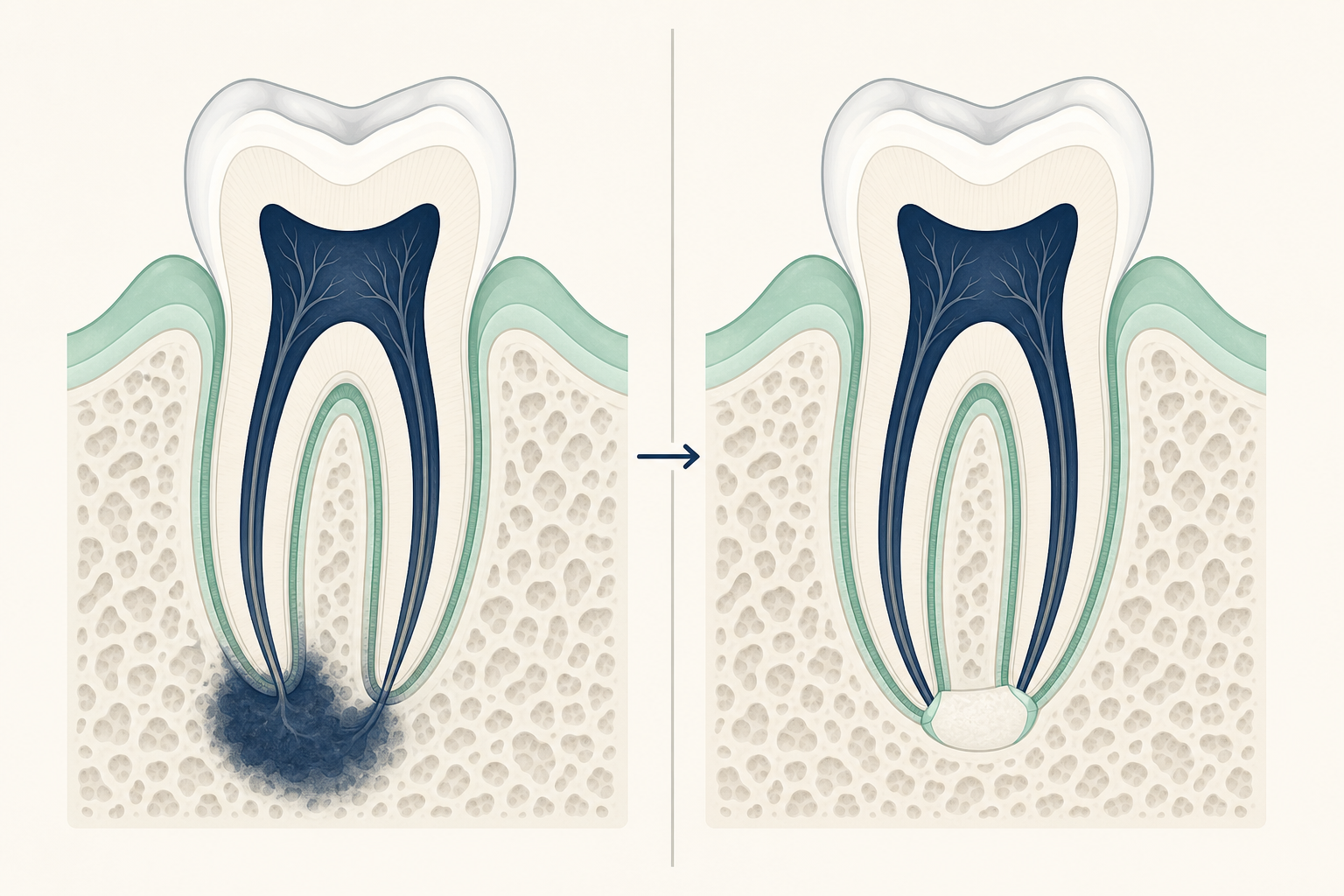
Apicoectomy (Root-End Surgery) dental educational illustration

What the change looks like

Illustrative diagram: Apicoectomy
Illustration — a representative diagram, not a patient photo.
The DN First Look799 AED
Book The DN First Look

What is an apicoectomy?

What root-end surgery addresses
FindingWhy surgery may be used
Persistent infection at the root tipThe infection may sit around the end of the root within the jaw bone after root canal treatment has not succeeded.[1][2]
A root filling that cannot be improvedA metal post may be impossible to remove without breaking the root, so surgery may be considered.[1][2]

[1][2]

Who might need it?

This operation may be used for a tooth with persistent infection after root canal treatment, particularly when repeat root treatment cannot improve the existing filling or a metal post cannot be removed safely.

[1][2]

Does it hurt?

Apical surgery is usually performed under local anaesthetic while you are awake, so the tooth area is numbed for the procedure.

[1][2]

Is it safe?

Root-end surgery can leave temporary numbness in the gum, and gum healing can occasionally expose the edge of an existing crown. Infection can also return months or years later.

[1][2]

How long does it last?

An apicoectomy cannot be guaranteed to succeed permanently: infection may return months or years later, when repeat surgery or removal of the tooth may be needed.

[1][2]

How is it done?

The gum is cut and lifted from the bone, a small amount of bone is removed to reach the infected area, infected tissue and part of the root tip are removed, and the root end is sealed with a small filling. Dissolving stitches close the gum.

[1][2]

What is recovery like?

You can go home immediately after apical surgery and many people do not need time away from work. Dissolving stitches usually disappear in about two weeks.

[1][2]
Early recovery after apical surgery
TimeWhat may happen
After the procedureYou can usually go home immediately after surgery.[1][2]
Around two weeksDissolving stitches usually disappear around this time.[1][2]

[1][2]

What are the alternatives?

Repeating the root canal filling is the usual alternative considered before apical surgery. Removal of the tooth, followed by a denture, bridge, or dental implant, may also be considered.

[1][2]

What should I expect?

The whole operation may take up to an hour. Bleeding afterwards is unusual; pressure over the area for at least 10 minutes can usually stop it.

[1][2]

What affects the treatment plan?

Whether a tooth can be retreated depends on the existing root filling and whether a metal post can be removed without breaking the root.

[1][2]

Frequently asked questions

Can an apicoectomy save a tooth after a failed root canal?

It can treat infection around a root tip, but infection can return later and the tooth may then need repeat surgery or removal.

[1][2]

Sources used for this guide

  1. ApicectomyUniversity Hospitals Sussex NHS Foundation Trust · 2026-07-21
  2. Apical surgeryLeeds Teaching Hospitals NHS Trust · 2026-07-21