Dental Nation
Treatment guide

Apexification

Apexification creates an apical barrier in an immature permanent tooth when nonvital pulp requires endodontic treatment.

[2][1]

The short answer

Apexification is an endodontic treatment for an immature permanent tooth that creates an apical barrier when the pulp is nonvital.

[2][1]
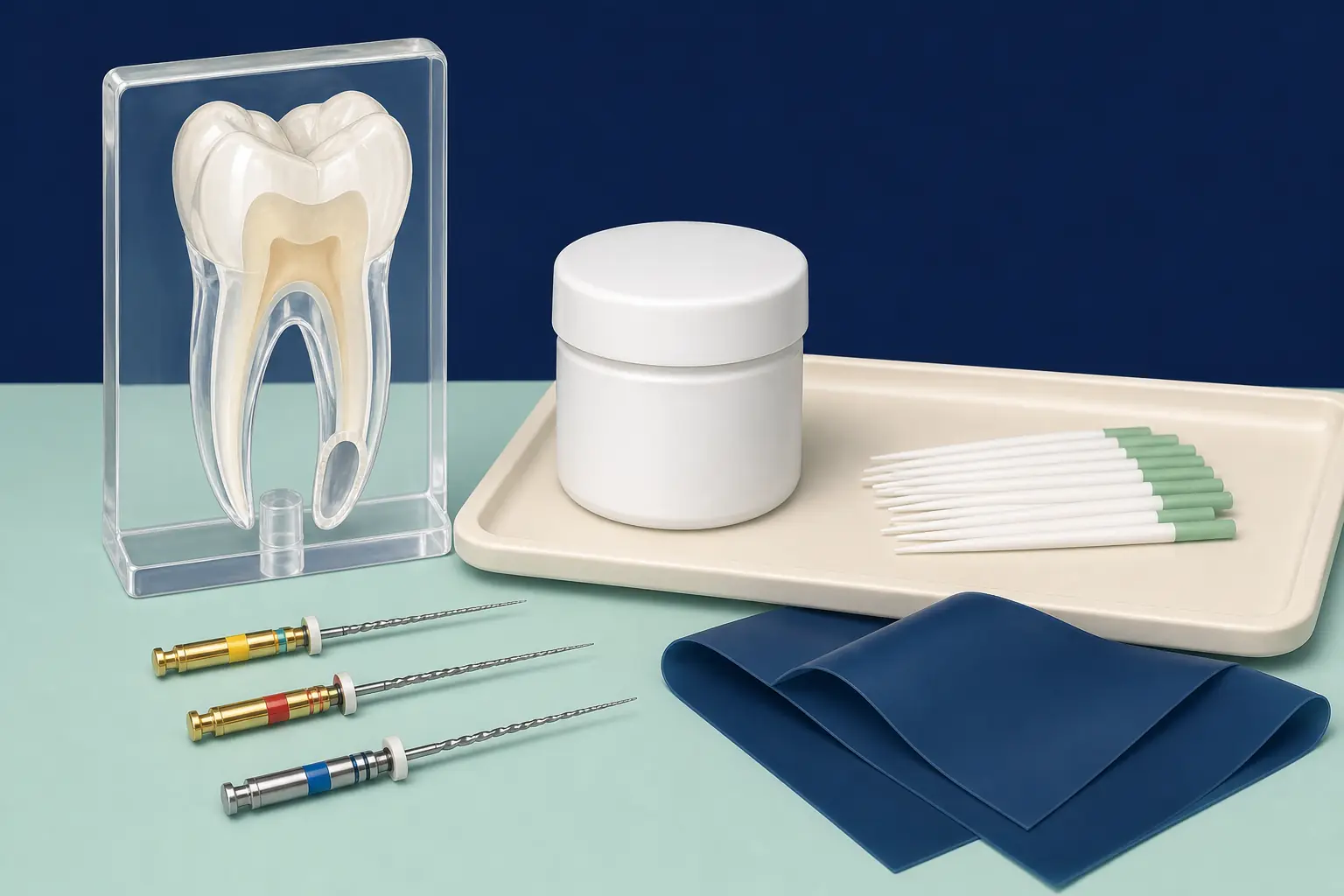
Apexification dental educational illustration

What the change looks like

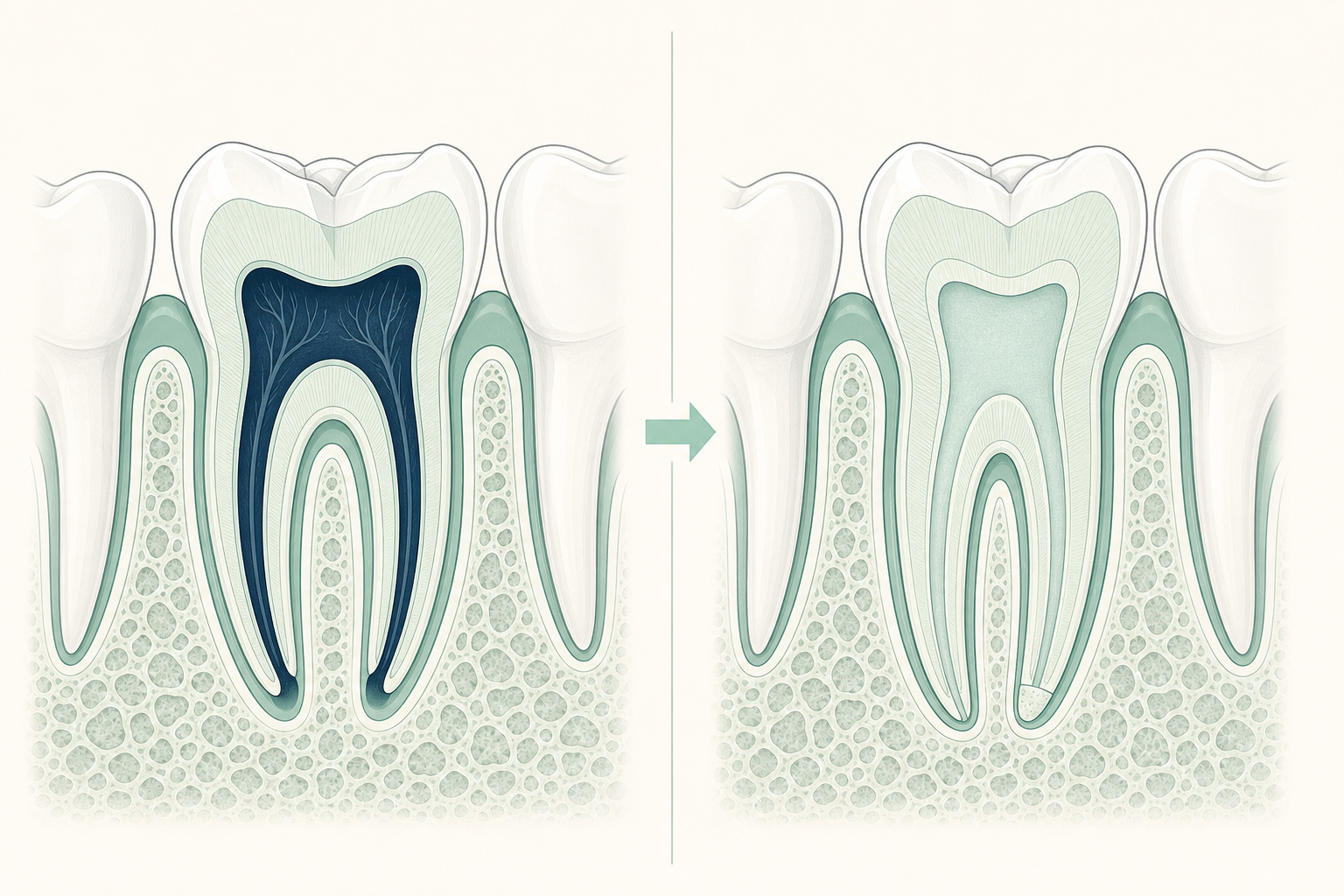
Illustrative diagram: Apexification
Illustration — a representative diagram, not a patient photo.
The DN First Look799 AED
Book The DN First Look

What is apexification?

Calcium hydroxide and mineral trioxide aggregate are materials used in this approach for immature teeth.

[2][1]
Materials used in apexification
MaterialRole
Calcium hydroxideUsed for management of immature teeth[2][1]
Mineral trioxide aggregateUsed to form an apical barrier[2][1]

[2][1]

Who may need it?

The treatment is used for a permanent tooth that has not completed root development and has nonvital pulp. The tooth’s restorability and possible alternatives are part of selecting pulp therapy.

[2][1]

Does it hurt?

Apexification treats a tooth with nonvital pulp, so the painful living pulp is not the tissue being preserved. The procedure itself is endodontic treatment rather than vital pulp therapy.

[2][1]

Is it safe?

The main safety issue is the condition and strength of an immature tooth. Long-term calcium hydroxide has been associated with a possible increased risk of root fracture, while regenerative treatment is another option for some immature necrotic teeth.

[4][1]

How long does it last?

Apexification is intended to create an apical barrier and retain the treated tooth. Published outcome work measures both survival of the treatment and survival of the tooth in the mouth.

[2][3][5]

What happens during treatment?

The nonvital immature tooth is managed endodontically, then calcium hydroxide or mineral trioxide aggregate is used in the process of forming an apical barrier. The material comparison concerns success and barrier formation.

[2][1]

What is recovery like?

Recovery is followed by checking whether the treated tooth remains asymptomatic and retained in the mouth. Outcome studies use tooth retention and treatment survival as patient-centred measures.

[2][3][5]
What follow-up looks for
Follow-up focusMeaning
Asymptomatic toothThe tooth remains without symptoms[2][3][5]
Tooth retentionThe tooth remains in the mouth[2][3][5]

[2][3][5]

What are the alternatives?

Regenerative endodontic therapy is the principal alternative discussed for young immature necrotic teeth. Conventional root canal treatment is another nonvital pulp treatment for permanent teeth.

[4]

What should you expect?

The choice is tied to pulp status, root maturity, restorability, and alternative treatment. The material may be calcium hydroxide or mineral trioxide aggregate, with no perceivable difference reported for success and apical barrier formation in the cited comparison.

[2][1]

Is apexification covered by insurance in the UAE?

Apexification is a nonvital pulp treatment for a permanent tooth, rather than a cosmetic procedure. Coverage therefore depends on the dental benefit terms that apply to endodontic treatment.

[2][1]

Frequently asked questions

Can apexification be replaced by regenerative endodontics?

Regenerative endodontic therapy is an alternative evaluated for young immature necrotic teeth.

[4]