
Dental Nation
Treatment guide

Dental X-Rays

Dental X-rays can uncover cavities or impacted teeth hidden from an examination, with images taken when diagnostic information is needed.

[2]

The short answer

Dental X-rays can reveal new cavities, impacted teeth, and other damage or disease that cannot be seen during a dental examination.

[2]
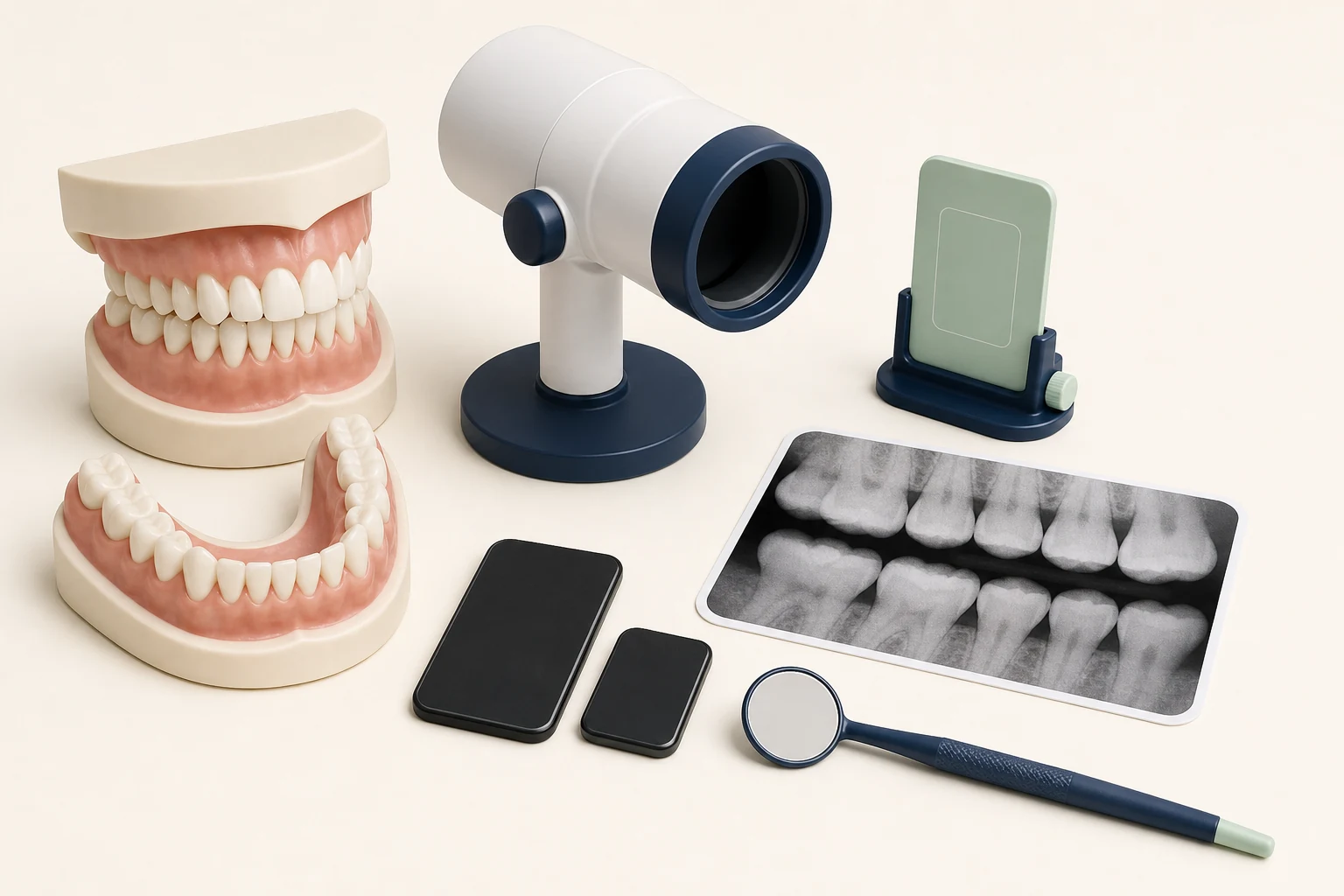
Dental X-Rays dental educational illustration

What is it?

They can also create a record of current oral health, so later images can help identify changes over time.

[2][1]
What a dental X-ray can help show
Clinical purposeInformation from the image
Checking areas hidden from viewThe image can reveal new cavities or impacted teeth that a dental examination cannot see.[2]
Recording oral health at a new visitAn image may establish a baseline for identifying changes later.[2][1]

[2][1]

Who needs it?

A new patient may need images to document current oral health and create a baseline. Children and teenagers may need them more often because their teeth and jaws are still developing.

[2][1]

Does it hurt?

For each image, the dental team positions you and focuses the beam on the area that needs to be examined.

[2][1]

Is it safe?

Dental X-rays use very low radiation doses. Imaging tools and techniques are designed to limit exposure, and images are used in moderation to reduce radiation further.

[2][1]

For children, intraoral radiographs are the standard diagnostic tool. Cone beam CT needs specific justification and comprehensive interpretation because of its safety considerations.

[2][1]

How long does it last?

An image can act as a baseline for later comparison, but an X-ray is not automatically needed at every dental visit. The timing depends on the diagnostic information required.

[2][1]

What happens during the procedure?

The image is selected to answer a particular diagnostic question. You are positioned for the X-ray, then the beam is directed at the area of interest to obtain the image.

[2][1]

What is recovery like?

The image can confirm that teeth are healthy or show disease or damage that was not visible during the examination. Its value continues when it is compared with later changes in oral health.

[2]
What affects when dental X-rays are taken
FactorEffect on imaging
Current oral health and signs of oral diseaseThese help determine whether an image is needed and how often images may be taken.[2]
Age and risk for diseaseThese factors affect the timing and frequency of dental X-rays.[2]

[2]

What are the alternatives?

Previous images may be forwarded to a new dental practice instead of making another set. When a new image is needed, the type is selected to provide the diagnostic information required.

[1][2][3]

What should you expect?

The decision to take an X-ray considers current oral health, age, disease risk, and signs or symptoms of oral disease. Clinical findings and dental history also guide the timing and selection of images.

[2][1]

Insurance and financing in the UAE

Dental X-rays are taken when they provide the information needed to assess oral health, identify a problem, or guide treatment planning.

[2][1]

Frequently asked questions

Do children need dental X-rays more often than adults?

Children and teenagers may need X-rays more often than adults because their teeth and jaws are still developing.

[2][1]