
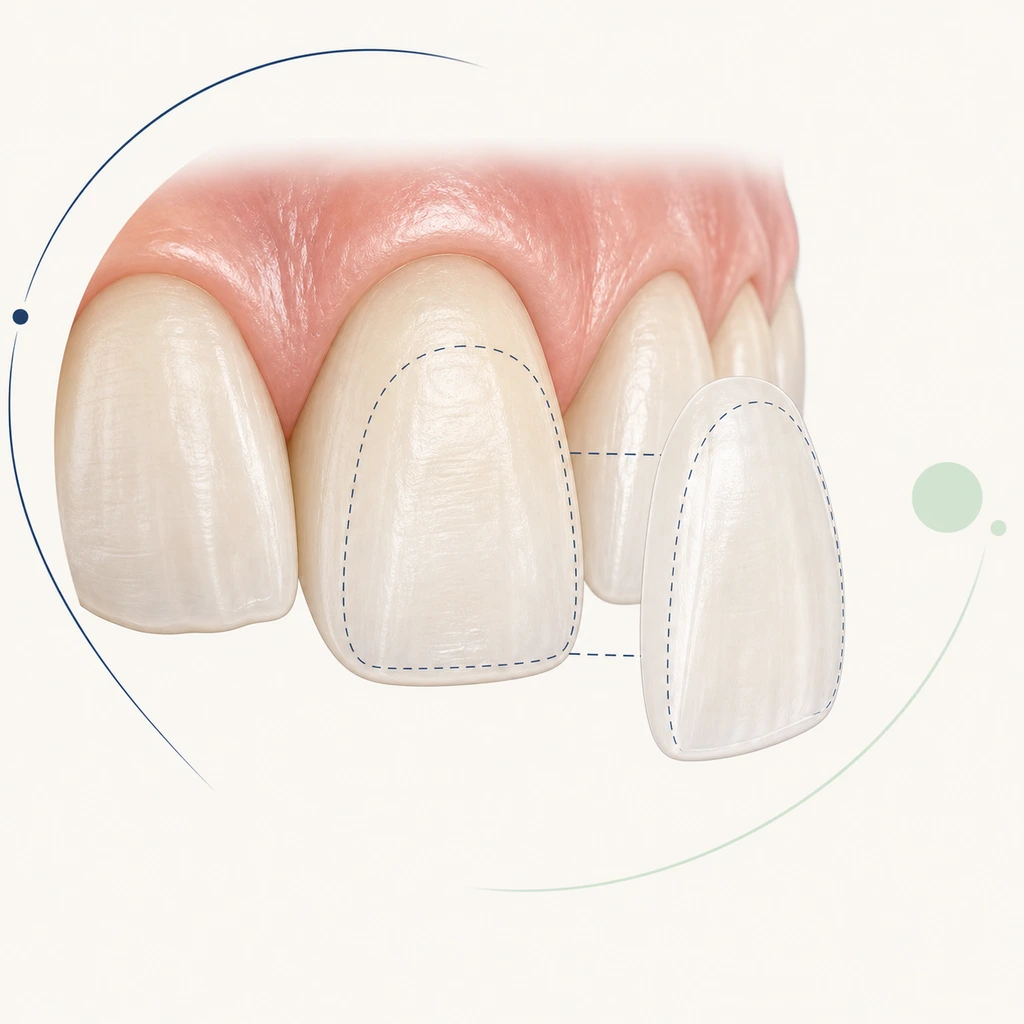
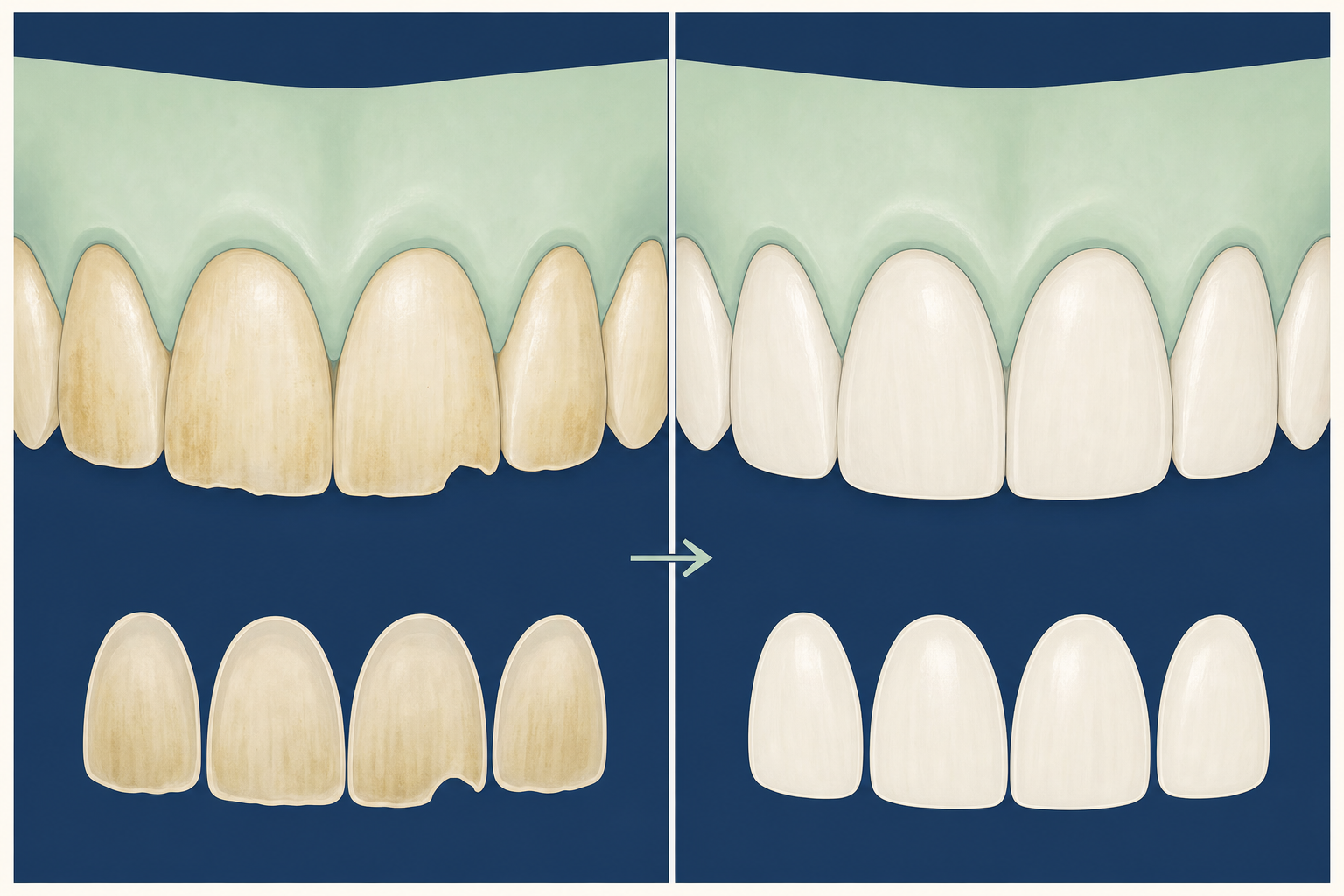
What the change looks like
How much do veneers cost?
What are veneers?
Veneers can be porcelain shells custom-made for the front of a tooth or composite filling material bonded to it. Porcelain is strong, long-lasting and natural-looking; composite may need less enamel removal and fewer visits.
[1]Who may consider veneers?
Veneers change the visible front surface of teeth. Decay and gum disease are treated before veneer placement because covering unhealthy teeth can worsen the existing problem. Clenching, grinding and a deep overbite can also make veneers a poor choice.
[1]Does it hurt?
For porcelain veneers, a small amount of enamel is removed from the front and sides of the tooth before bonding. That preparation is irreversible because the original enamel surface cannot be restored.
[1]Is it safe?
How long do veneers last?
A veneer can chip, crack, wear down or loosen over time. When that happens, it may need to be re-bonded, repaired or replaced.
[1]How are veneers placed?
Porcelain placement includes choosing a shade, preparing the tooth, and taking an impression or three-dimensional scan. A laboratory makes the shell, then its fit and shape are checked before the tooth is cleaned and the veneer is bonded.
[1]What is recovery like?
A temporary veneer may be worn while the laboratory makes the final porcelain shell. At the fitting visit, the shell is adjusted for shape and fit before cleaning and bonding.
[1]Porcelain or composite: which is different?
What should I expect?
The shade is selected to match natural teeth. A porcelain veneer is then custom-made for size, shape and fit, while enamel removal means the tooth cannot return to its original surface.
[1]Will insurance cover veneers?
Insurance may exclude veneers because they are cosmetic dentistry. Cover may be considered when the treatment is medically necessary.
[1]Frequently asked questions
Why might a veneer be temporary at first?
A temporary veneer can cover the prepared tooth while the laboratory makes the final porcelain shell.
[1]