
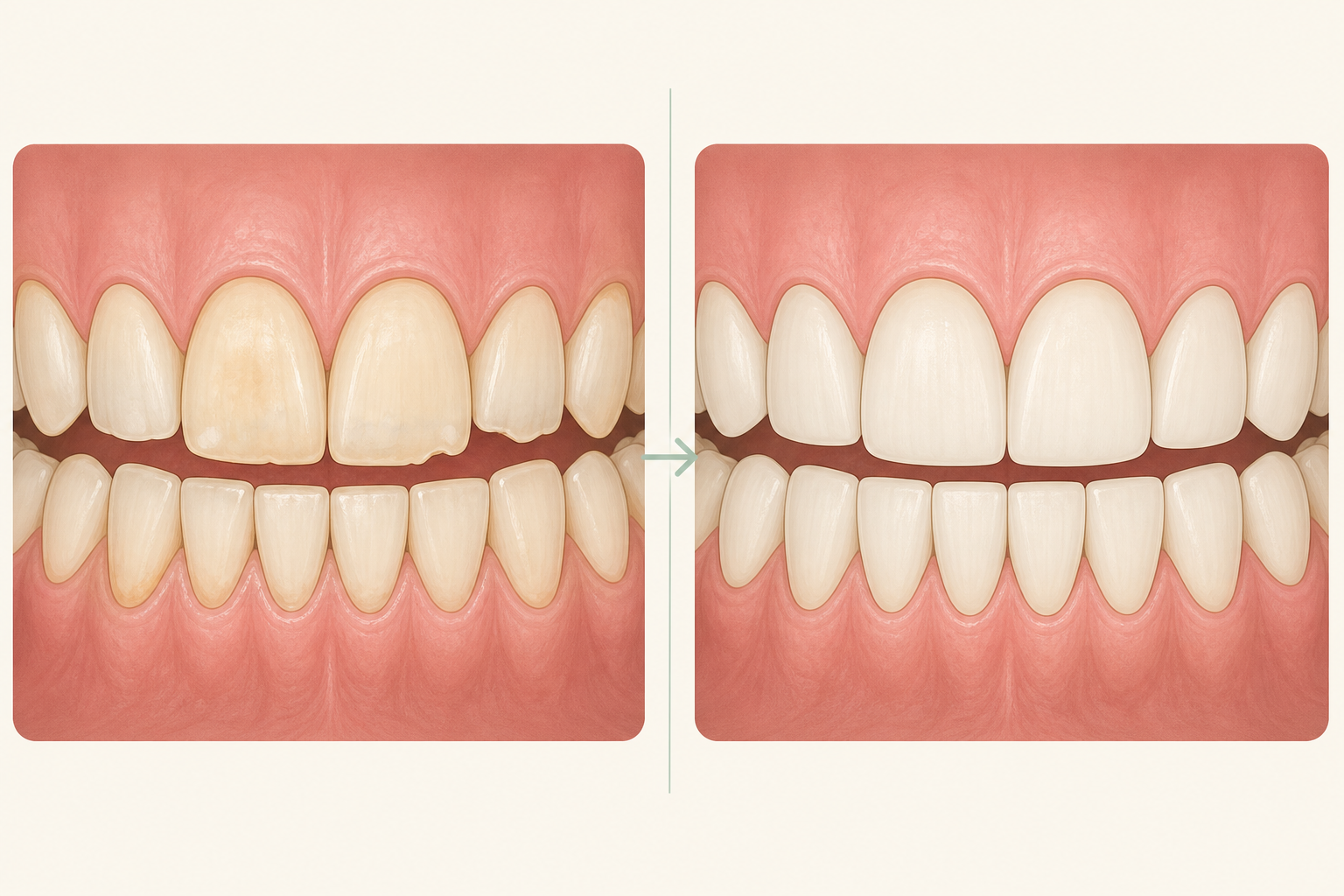
What the change looks like
How much do no-prep veneers cost?
What are no-prep veneers?
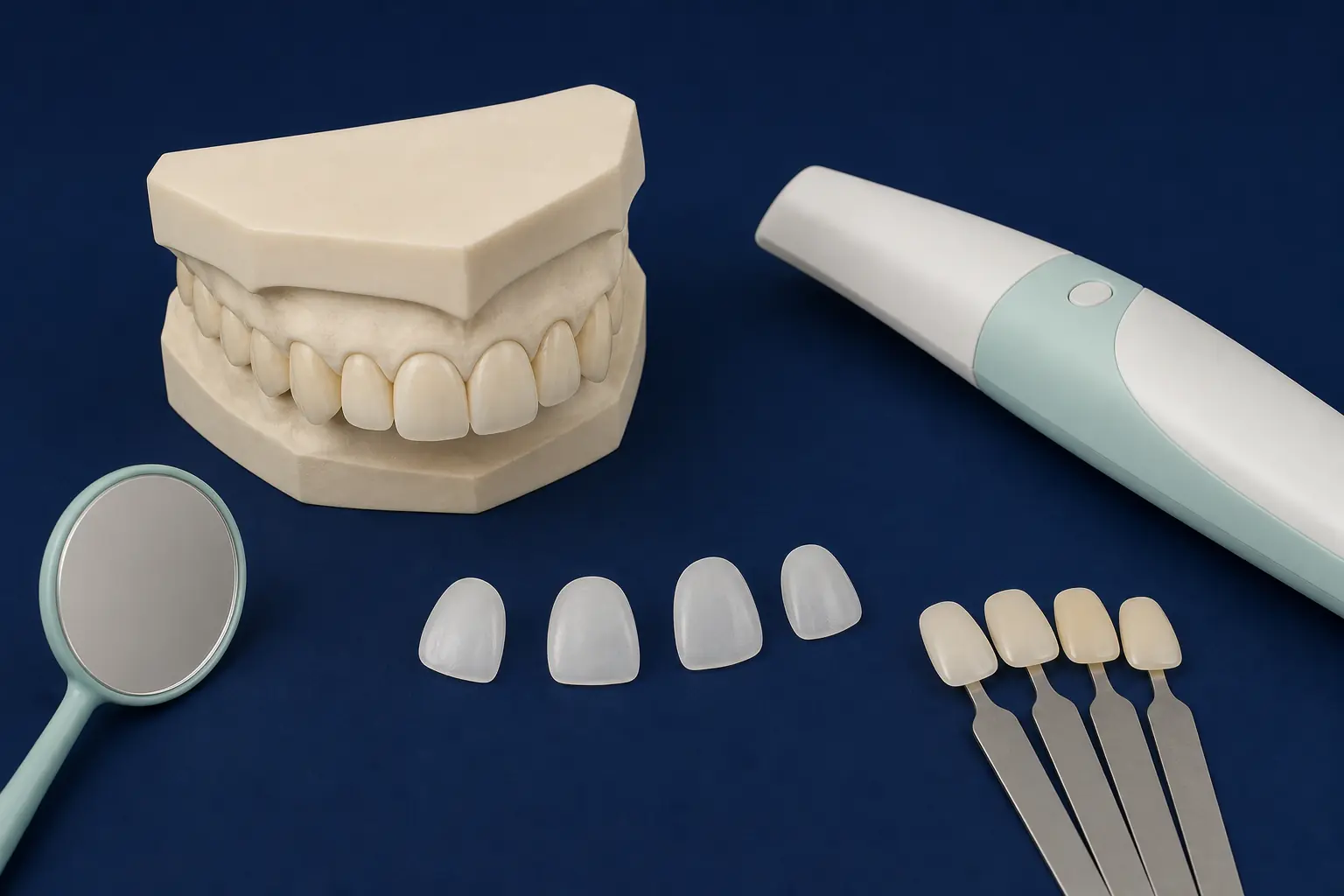
No-prep veneers are ceramic restorations intended to preserve natural tooth structure by avoiding tooth preparation. Their aim is conservative treatment, but predictable long-term protocols have not been established.
[3]Who may consider no-prep veneers?
No-prep veneers are considered where preserving natural tooth structure is part of the aim. Careful case selection matters because a systematic review found no eligible randomized controlled clinical trials for the technique.
[3]Does it hurt?
The name refers to no tooth preparation, and the technique is treated as conservative. It does not establish a predictable treatment experience for every person because controlled clinical protocols still need study.
[3]Is it safe?
How long do no-prep veneers last?
How are no-prep veneers placed?
This is a ceramic, no-preparation technique rather than the usual porcelain-shell workflow that removes enamel and uses a laboratory-made veneer. Controlled research has not yet defined a predictable protocol for no-prep ceramic restorations.
[3]What is recovery like?
The conservative feature concerns tooth preparation. A single predictable clinical pathway and long-term outcome have not been established, so there is no fixed recovery timetable attached to the technique. Further controlled clinical research is needed to assess effectiveness and long-term outcomes.
[1][3]What are the alternatives?
What should I expect?
No-prep does not mean a result is guaranteed. The published review found no eligible controlled trials after screening 2,551 records, and it called for cautious case selection and further studies.
[3]Will insurance cover no-prep veneers?
No-prep veneers are cosmetic dentistry, so insurance may not cover them unless the treatment is medically necessary.
[3]