
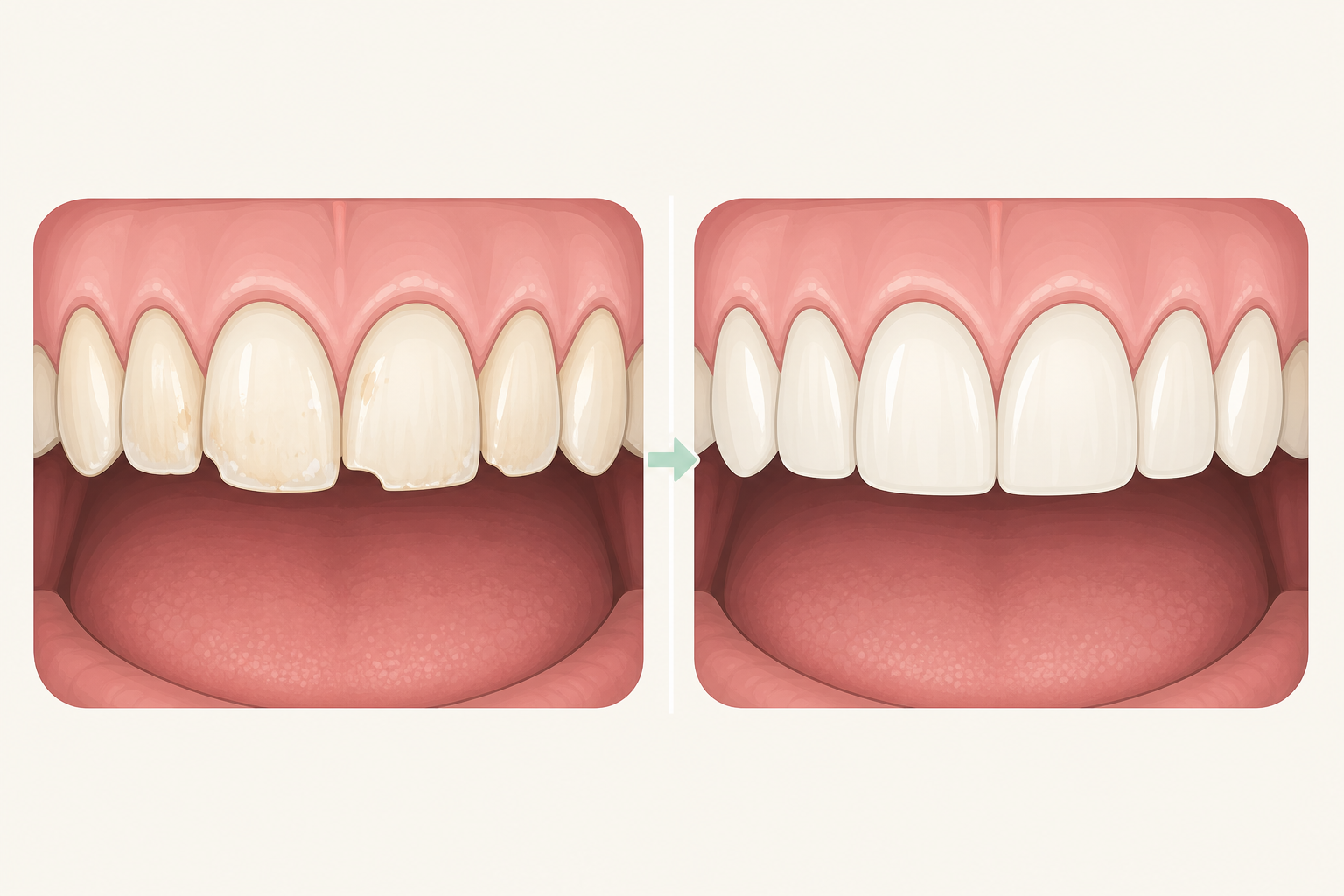
What the change looks like
What does it cost?
What is dental bonding?
Dental bonding uses tooth-coloured composite resin on a tooth to change its shape, size, or colour.
[1]Who might need it?
Bonding can make small cosmetic changes by concealing a chip or minor crack, closing a gap, hiding discolouration, or making a tooth look longer.
[1]Does it hurt?
Dental bonding is painless, although a treated tooth may have short-term sensitivity afterwards; over-the-counter pain relievers can ease that discomfort.
[1]Is it safe?
Bonding does not generally pose a risk to oral health when teeth and gums are healthy, but tooth decay may need treatment before bonding.
[1]How long does it last?
Bonding material typically lasts three to 10 years before it needs touching up or replacement; oral habits and the number of treated teeth affect that span.
[1]How is it done?
A curing light hardens the composite resin on the tooth, then the tooth is adjusted and polished; treatment takes about 30 to 60 minutes per tooth.
[1]What is recovery like?
Bonding usually needs no downtime, so normal activities can resume after leaving the appointment, apart from any brief tooth sensitivity.
[1]What are the alternatives?
Porcelain veneers and crowns last longer and resist stains better than bonding, but they require significant enamel removal; porcelain veneers are not reversible.
[1]What should I expect?
Composite bonding is somewhat stain-resistant but less stain-resistant than porcelain, and it can chip over time, particularly when used for small cosmetic changes.
[1]How should I ask about insurance and financing in the UAE?
Dental bonding is a cosmetic procedure that can repair chips, fill gaps, or change a tooth's shape or colour, and it is among the least expensive cosmetic options.
[1]Frequently asked questions
Can dental bonding be reversed?
Bonding is reversible because it may not require major enamel removal, unlike porcelain veneers, which are not reversible once placed.
[1]