
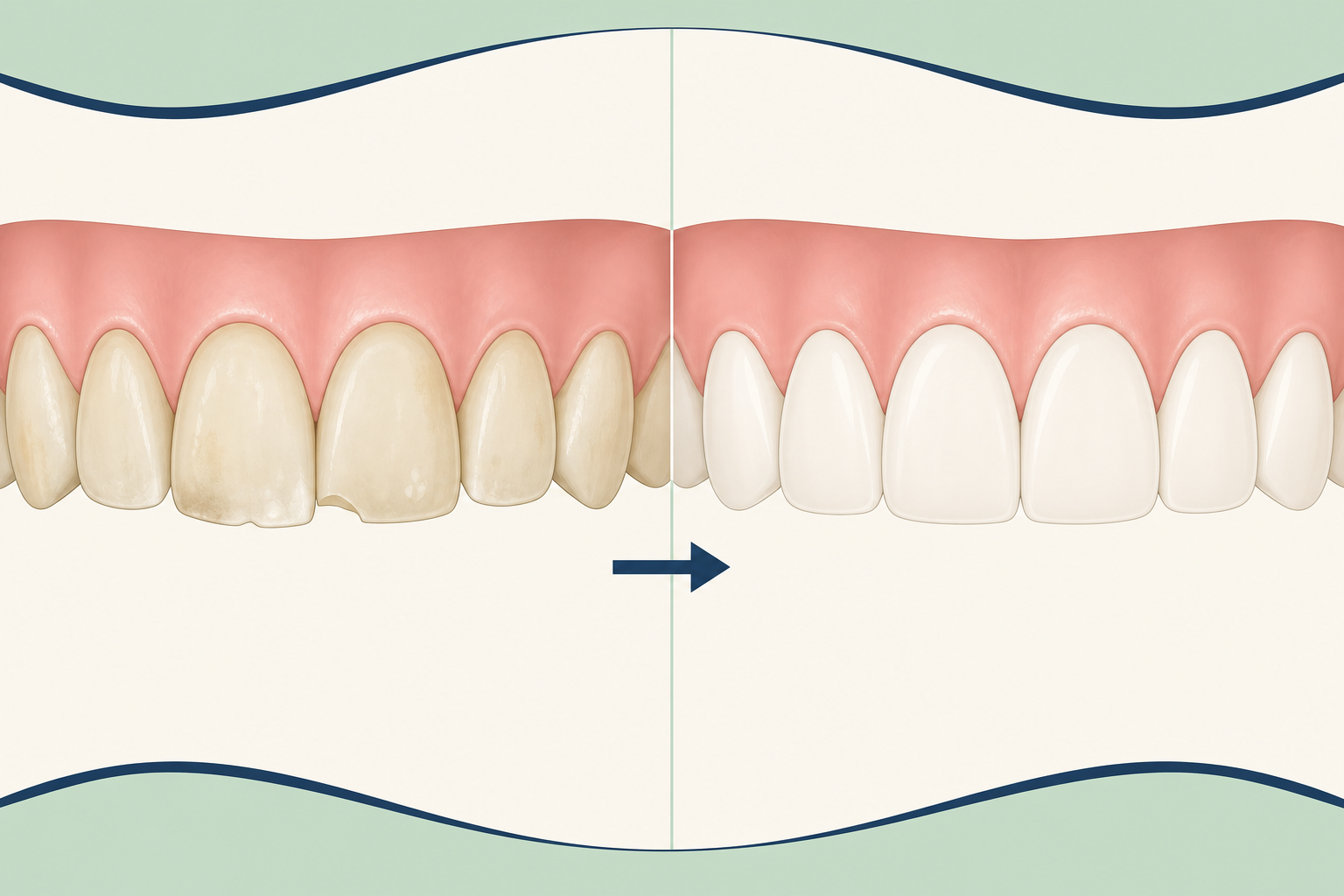
What the change looks like
How much do composite veneers cost?
What are composite veneers?
Who may consider composite veneers?
Does it hurt?
Composite veneers may require less tooth enamel removal than porcelain veneers. This is a difference in preparation, not a promise that no enamel will be removed.
[1]Is it safe?
How long do composite veneers last?
Composite is less resistant to staining and wear than porcelain. If it is damaged, it is easier to fix than porcelain, which is a practical maintenance difference.
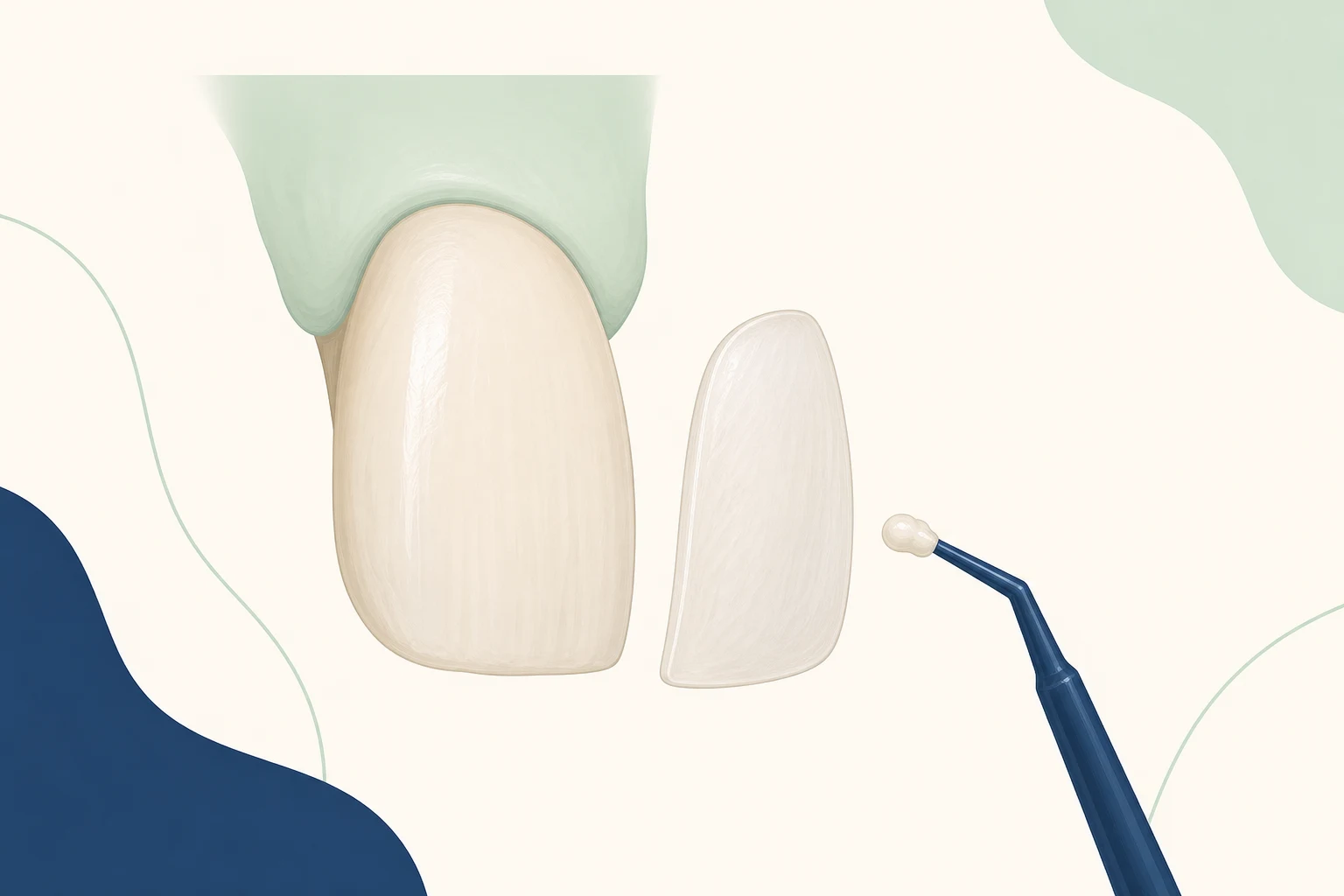
[1]How are composite veneers placed?
What is recovery like?
Composite may take fewer dental visits than porcelain because it is bonded filling material rather than a laboratory-made shell. Damage is also easier to fix than damage to porcelain.
[1]Porcelain veneer treatment can involve a temporary veneer while a laboratory makes the final shell.
[1]What is the alternative to composite veneers?
Porcelain is the other main veneer type. It is strong, long-lasting and natural-looking, and it tends to cost more; composite trades some stain and wear resistance for easier repair and potentially less tooth preparation.
[1]What should I expect?
Will insurance cover composite veneers?
Frequently asked questions
Why do composite veneers sometimes take fewer visits?
Composite is bonded filling material, whereas porcelain shells are custom-made in a laboratory after an impression or scan.
[1]