
White Spots on Teeth
White spots can be an early sign of mineral loss from tooth decay, which may be stopped before a cavity forms.
[2]The short answer
White spots from early decay may have no symptoms. As decay advances, the tooth can become sensitive to sweets, hot or cold drinks, or develop toothache.
[2]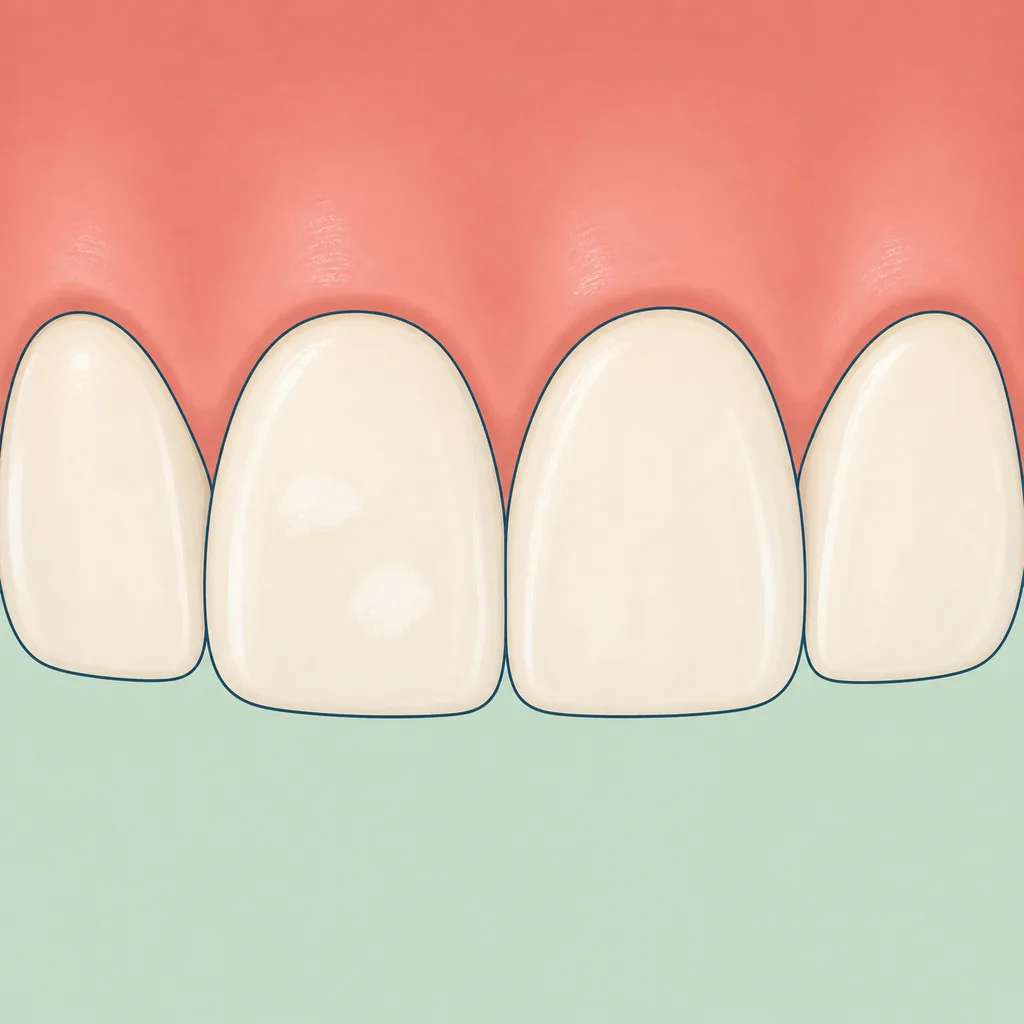
What do white spots on teeth feel like?
What causes white spots?
Bacteria use sugars and starches from food and drinks to make acids. Repeated acid exposure removes minerals from enamel; a white spot can appear at that early stage.
[2]What relief is safe tonight?
Use fluoride toothpaste and clean between the teeth. Limiting sugary drinks and foods high in sugars or starches reduces repeated acid exposure while the spot is being assessed.
[2]How are white spots checked?
A check may look for white, brown, or black staining, soft or sticky areas, and a cavity. An X-ray can show decay that is not visible on the surface.
[2]How are white spots treated?
When decay is still before a cavity, fluoride can reverse it. Once a cavity has formed, the decayed tissue is removed and the tooth is restored with filling material.
[2]How can you prevent more spots?
When does it need prompt attention?
Untreated decay can progress to a cavity, pain, infection, and tooth loss. Facial swelling or fever can accompany an infected tooth and needs prompt dental attention.
[1]Frequently asked questions
Can a white spot turn into a cavity?
Yes. Continued mineral loss weakens enamel and can form a cavity; early decay may be stopped or reversed with fluoride.
[2]