
Tongue-Tie in a Child
Tongue-tie is a condition in which the band of tissue under the tongue restricts tongue movement.
[2][1]The short answer
Tongue-tie is a condition in which the band of tissue under the tongue restricts tongue movement, and its effect is assessed rather than assumed from appearance alone.
[2][1]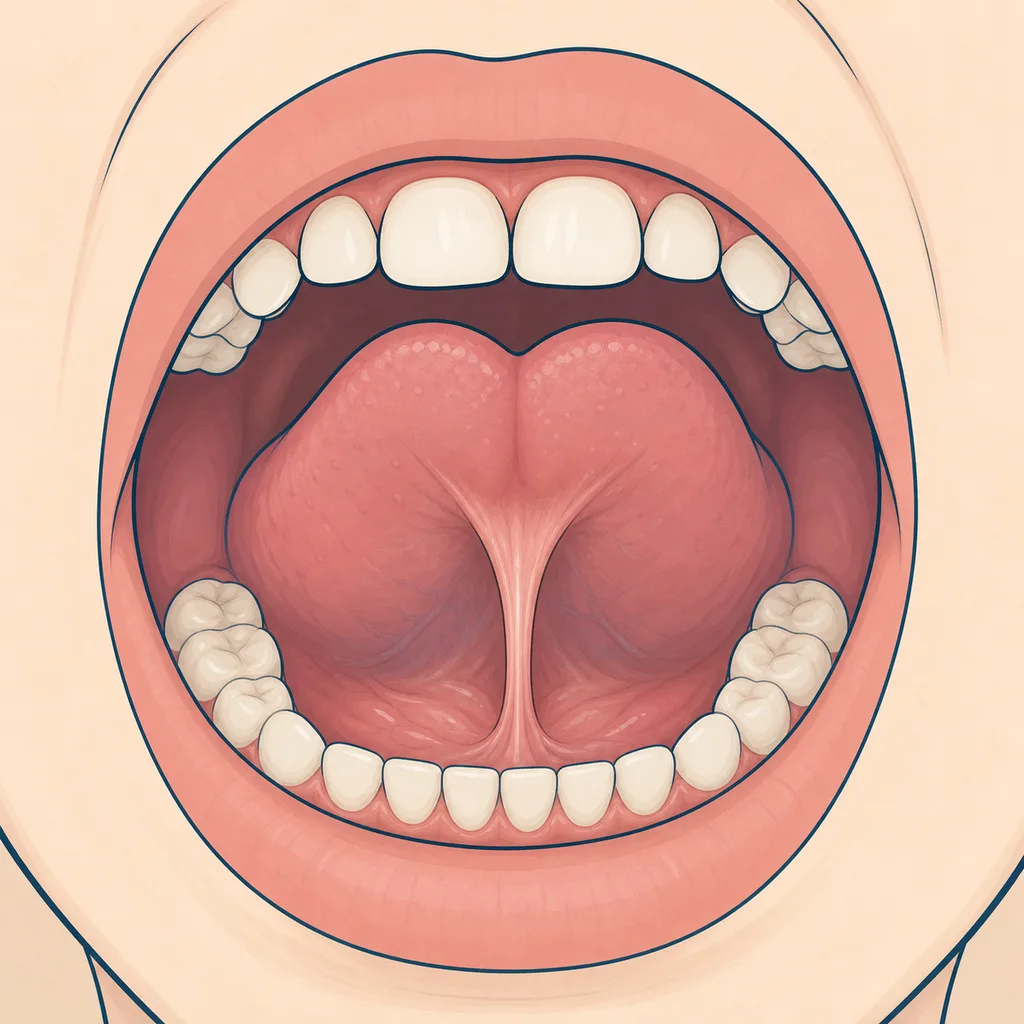
What does this symptom feel like?
| Pattern | What to record | Why it helps |
|---|---|---|
| A new or changing symptom | Timing, location, and associated changes | The history gives the clinician a clearer pattern[2][1] |
| A persistent or repeated symptom | What triggers it and what relieves it | The examination can guide the next step[2][1] |
What can cause this symptom?
Several causes can produce a similar complaint. A clinician uses the history and examination to distinguish the possibilities instead of treating the symptom as a diagnosis.
[2]What relief is safe tonight?
Keep the affected area comfortable and avoid actions that clearly worsen the symptom while arranging appropriate advice. Seek urgent help for severe or rapidly worsening symptoms.
[1]How will a dentist or doctor check it?
How is treatment chosen?
How can you reduce repeat irritation?
When should this lead to an assessment?
Arrange dental or medical advice when the symptom persists, returns, or affects eating, speaking, sleep, or mouth opening. Sudden serious symptoms need urgent help.
[1]Frequently asked questions
When should this symptom be assessed?
Arrange dental or medical advice when the symptom persists, returns, or affects eating, speaking, sleep, or mouth opening. Sudden serious symptoms need urgent help.
[1]