
Dental Nation
Symptom guide

Lump on the Tongue

A lump on the tongue is a tongue change that should be examined, especially when it persists or occurs with other mouth symptoms.

[5]

The short answer

A lump on the tongue needs an examination, particularly if it persists, changes, or occurs with pain, swallowing difficulty, or a mouth sore that does not heal.

[5]
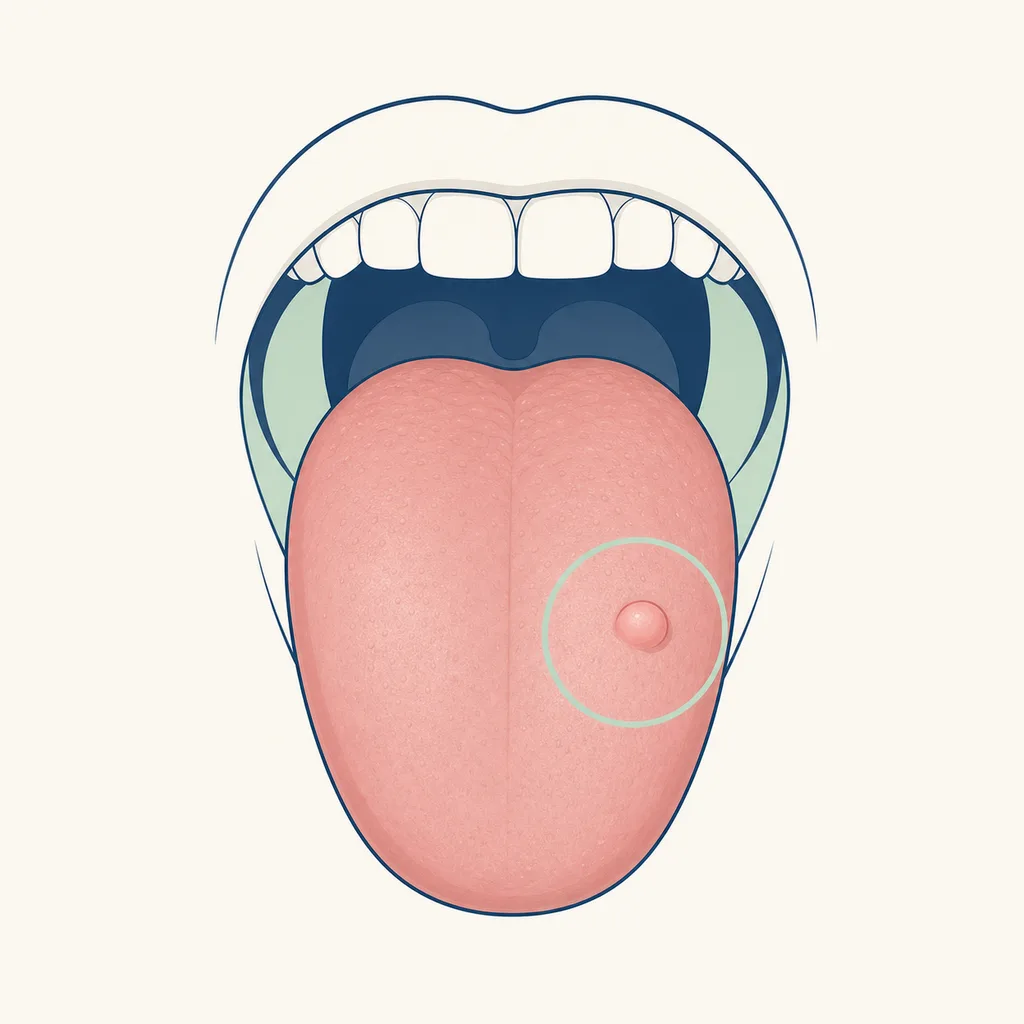
Lump on the Tongue dental educational illustration

What might a lump on the tongue feel like?

Make a note of where the lump is, whether it is painful, whether it has changed, and whether eating, speaking, or swallowing feels different. A clear description helps the clinician assess a tongue problem without relying on a photograph alone.

[5]
Useful details to record before a tongue examination
DetailWhat to note
LocationWhere on the tongue the lump is located[5]
Change over timeWhether the lump persists, grows, hurts, or affects swallowing[5]

[5]

What can cause a lump on the tongue?

Tongue lumps and other tongue changes can have different causes. Some oral cancer symptoms can appear in the mouth or on the tongue, so a lump that remains or changes should not be self-diagnosed from its appearance alone.

[5]
Changes that belong in a clinician's assessment
ChangeWhy to mention it
A lump that remainsPersistent tongue changes need assessment rather than self-diagnosis[5]
A sore or colour changeOral changes can add useful information to the examination[5]

[5]

What relief is safe tonight?

Avoid picking, cutting, or repeatedly pressing the lump. Keep a note of pain, bleeding, swallowing difficulty, and any change in size or surface. If the lump is painful or is affecting eating or swallowing, seek clinical advice rather than trying to treat the cause at home.

[3][5]

How is a tongue lump assessed?

A clinician examines the tongue and the rest of the mouth, then asks when the lump appeared and what else has changed. When an oral cancer concern is present, assessment may include tests that establish the diagnosis instead of relying on symptoms alone.

[3][5]

What happens after the cause is found?

Treatment follows the diagnosis. If testing identifies oral cancer, the care team discusses treatment based on the cancer and the person's needs. Other tongue problems are managed according to their cause, which is why examination comes before choosing treatment.

[3][5]

Can you lower the risk of oral cancer?

NIDCR describes risk factors for oral cancer and advises people to discuss persistent mouth changes with a health professional. Prevention advice is most useful when it addresses the risks that apply to you and is paired with attention to a new or lasting tongue change.

[5]

When should you seek an urgent assessment?

Arrange an assessment promptly for a lump that persists or changes, and seek urgent advice if swallowing or breathing is difficult. Do not wait for severe pain before seeking help, because tongue and mouth problems need an examination to establish their cause.

[2][3][4][5]

Frequently asked questions

Should a lump on the tongue be checked if it does not hurt?

Yes. A lump that persists or changes needs an examination even when pain is absent, because symptoms alone cannot establish its cause.

[2][3][4][5]