
Burning Tongue at Night
Burning tongue at night is a burning, scalding or tingling mouth sensation that needs its pattern and possible causes assessed.
[2]The short answer
The sensation may feel like burning, scalding, tingling or numbness on the tongue or other parts of the mouth. Some people notice it more later in the day, while others wake with discomfort. Record where it starts, whether the tongue looks changed, and whether dryness or altered taste occurs with it.
[2]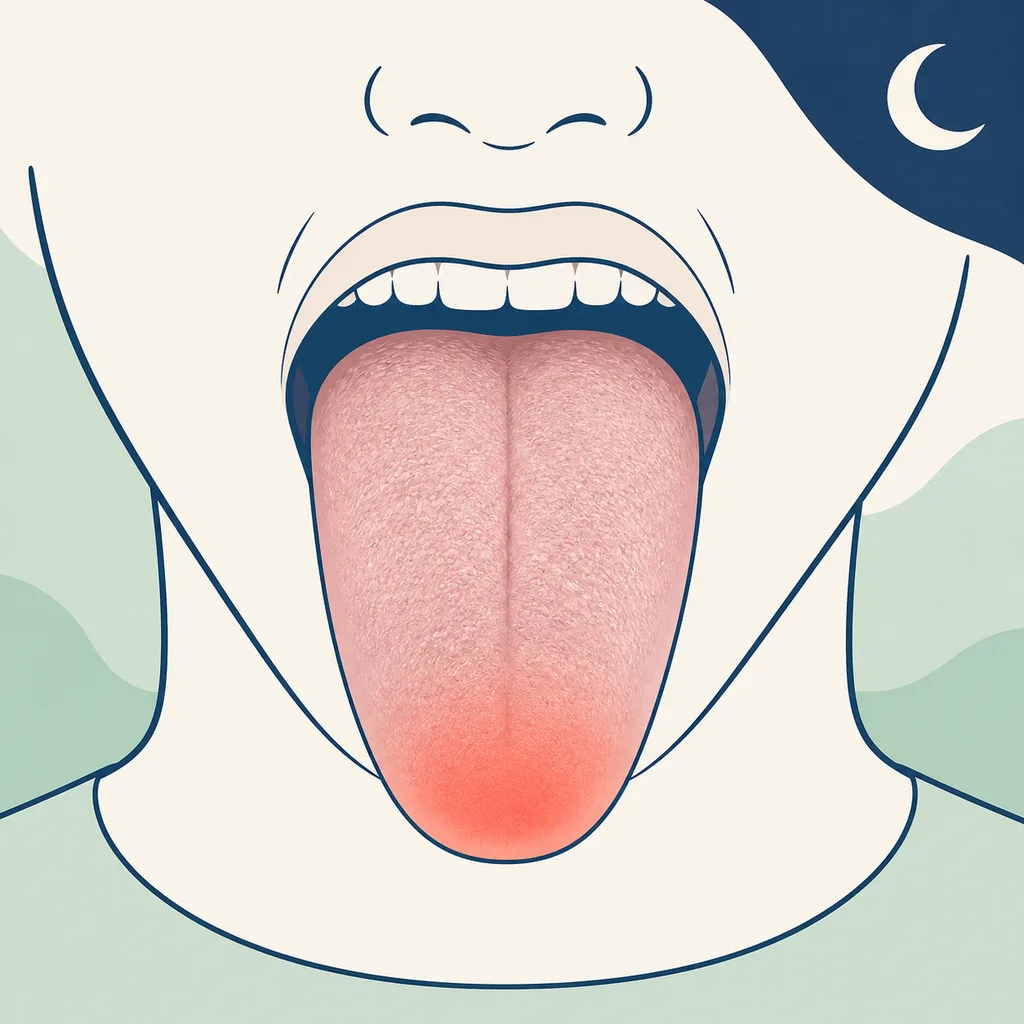
What does burning tongue at night feel like?
What can cause a burning tongue at night?
What relief is safe tonight?
Avoid foods, drinks or mouth products that clearly irritate the tongue, and keep a note of what makes the sensation better or worse. Do not scrape or rub the tongue aggressively. If the symptom is persistent, arrange an assessment instead of repeatedly changing products without knowing the cause.
[2]How is the cause checked?
A clinician asks about onset, timing, medicines, oral habits, dryness, taste and other symptoms, then examines the tongue and mouth. The pattern can guide further questions. Bring a list of medicines and a description of the night-time change so the consultation starts with useful detail.
[2]How is burning tongue treated?
Treatment follows the cause found at assessment. Management may focus on reducing irritation, addressing mouth symptoms or treating an identified underlying problem. A persistent burning sensation deserves follow-up because symptom relief alone does not explain why it started.
[2]How can irritation be reduced?
Use gentle oral care and avoid products or foods that reliably worsen the sensation. Note changes in dryness, taste or tongue appearance. Prevention advice should be individual because the same night-time symptom can arise in different contexts.
[2]When should you arrange an assessment?
Arrange an assessment when burning continues, repeatedly disrupts sleep, or comes with a visible tongue change. Seek advice promptly for swelling, difficulty swallowing or other symptoms that feel urgent. A clinician can decide whether the symptom needs examination, treatment or further investigation.
[1][2]