
Teeth Not Meeting Properly
Teeth that no longer meet as they did can occur with jaw symptoms and deserve an assessment when the change persists or affects function.
[2]The short answer
Teeth Not Meeting Properly can occur with temporomandibular disorder symptoms, and an examination can identify the pattern behind the change.
[2]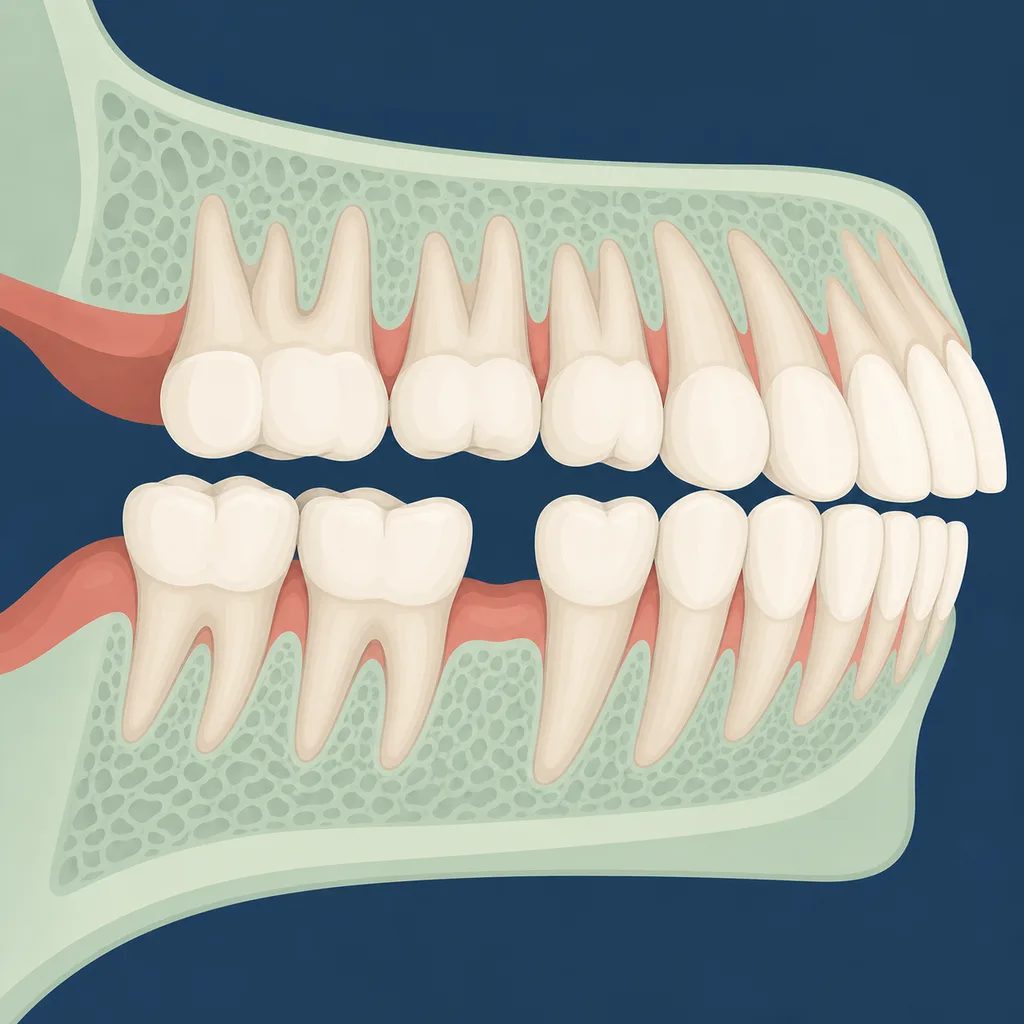
What does it feel like?
What can cause it?
Temporomandibular disorders can involve the jaw joint, the chewing muscles, or both. Symptoms can include jaw pain, stiffness, painful clicking, limited opening, locking, and a change in how the teeth fit together.
[2]What relief is safe tonight?
How is it checked?
A clinician asks about symptoms and examines jaw movement, tenderness, sounds, opening, the teeth, and the jaw together. Further investigation may be considered when the examination indicates that it would help.
[2]What treatment may help?
Can it be prevented?
There is no single prevention step for every jaw symptom. Avoiding activities that worsen discomfort and following an agreed care plan can help manage symptoms. Ask before starting a device or jaw exercise programme.
[2]When should you arrange a check?
Frequently asked questions
Can this change be related to jaw symptoms?
Teeth Not Meeting Properly can occur with temporomandibular disorder symptoms, and an examination can identify the pattern behind the change.
[2]