
Tartar Buildup
Tartar is hardened plaque, and professional cleaning is needed when brushing and flossing can no longer remove it.
[2]The short answer
Tartar may feel rough or hard on the tooth. When gum disease is present, the gums may become red, swollen, sore, or bleed during brushing.
[1][2]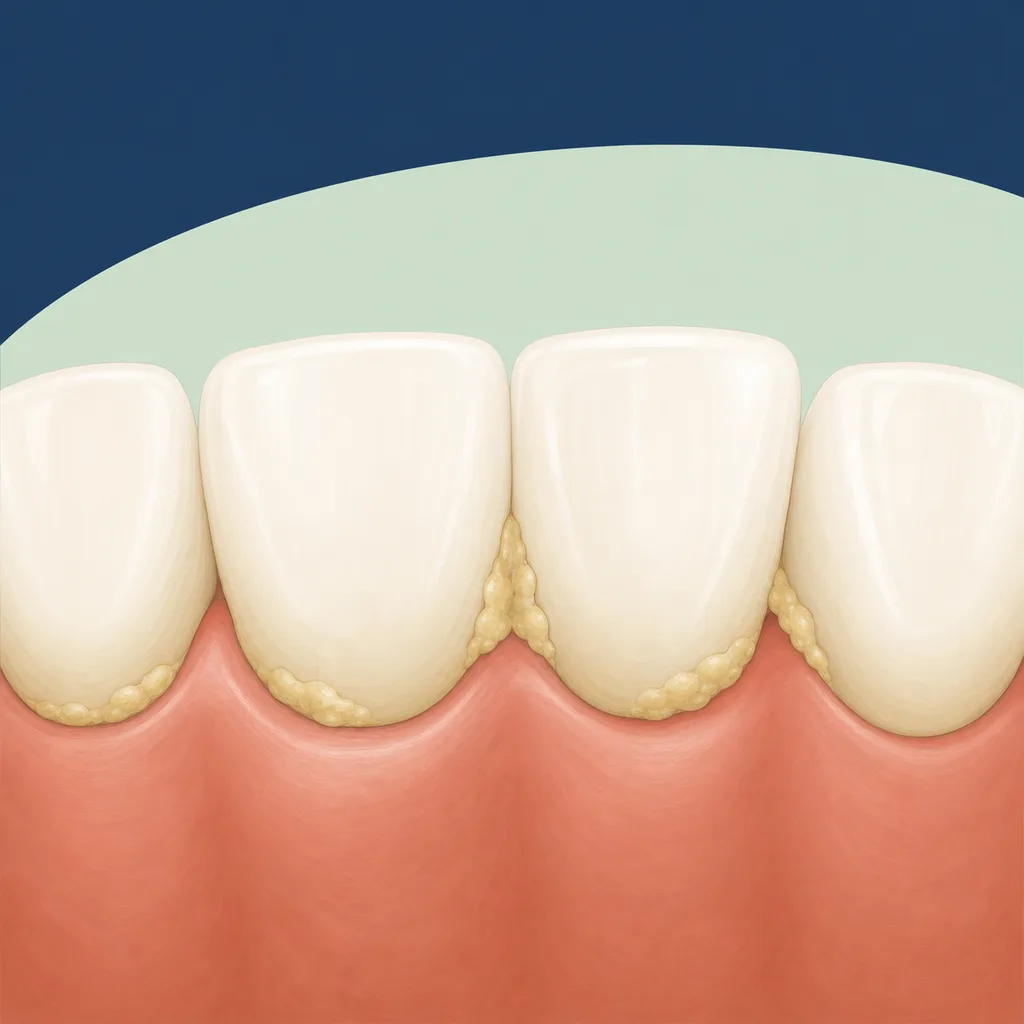
What does tartar buildup feel like?
How does tartar form?
What can you do tonight?
Brush for at least two minutes with fluoride toothpaste and clean gently between teeth. Floss or interdental brushes reach spaces a toothbrush cannot clean well.
[3]How is tartar identified?
A dental examination can identify hardened deposits, plaque, and gum changes. Plaque-disclosing solutions or tablets can show areas where buildup remains.
[2]How is tartar removed?
Tartar is removed during professional teeth cleaning. Brushing and flossing remove plaque and debris, but they do not remove deposits that have already hardened.
[3]How can tartar be prevented?
What happens if tartar stays?
Persistent plaque and tartar can contribute to gum disease. Some people with periodontal disease need cleanings more often than every six months.
[3]Frequently asked questions
Can brushing remove tartar?
Brushing and interdental cleaning remove plaque and debris, but hardened tartar is removed through professional cleaning.
[3]Who wrote this page
This library is published by Dental Nation, a licensed dental group practising in the United Arab Emirates. Pages are written and overseen by the same clinical team that treats patients in our clinics, and are held to a fixed editorial standard for safety and accuracy.
This page is patient education, not medical advice, and cannot replace an examination. Anything urgent — facial swelling, trauma, uncontrolled bleeding or severe pain — needs a dentist or emergency care now.