
Sticky Dry Mouth
A sticky dry mouth is a reduced-saliva symptom that can affect comfort and the mouth's normal protective functions.
[1]The short answer
Sticky dry mouth can feel tacky, thick, or difficult to clear with ordinary swallowing. Some people notice thirst, a dry tongue, or trouble speaking comfortably. The symptom may be present all day or appear at particular times. Note whether water changes it, whether saliva feels stringy, and whether the mouth is also sore. A clear description helps separate reduced saliva from another mouth sensation.
[1]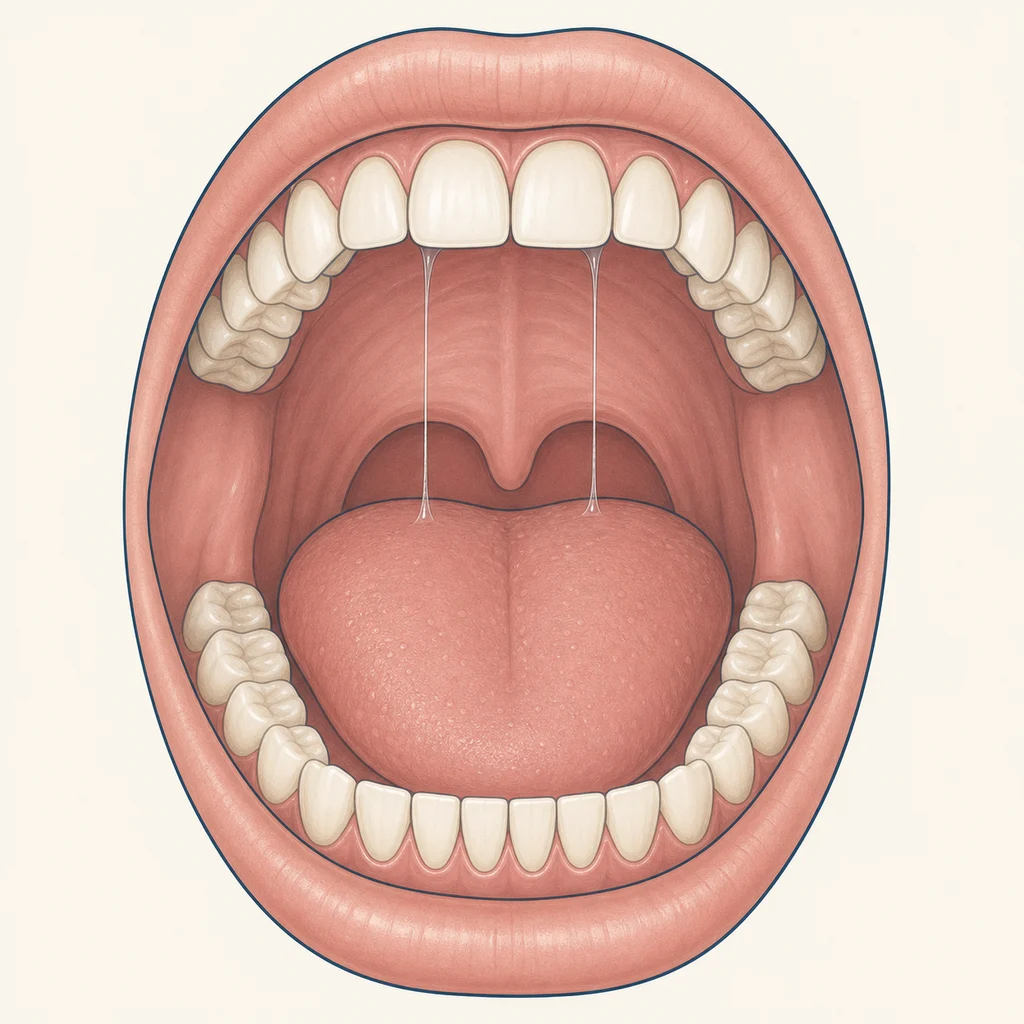
What does a sticky dry mouth feel like?
What can cause sticky saliva?
Reduced saliva can have more than one contributor. The ADA describes xerostomia as a dry-mouth condition that may be associated with medicines, systemic conditions, or other factors. The symptom does not identify its cause by itself. Bring a current medicine list and explain when the stickiness began. A clinician can then consider the history and examine the mouth before suggesting a response.
[2][1]What relief is safe tonight?
Sip water when the mouth feels sticky. Sugar-free gum or sweets may stimulate saliva for some people. Avoid changing a prescription without advice. If the dryness is severe, persistent, or accompanied by a worrying new symptom, contact a clinician for guidance rather than relying on temporary measures alone.
[2][1]How will a dentist assess it?
A clinician will ask about timing, medicines, health conditions, fluid intake, and related mouth symptoms. The mouth can be examined for signs of reduced saliva and its effects. The result helps decide whether saliva care, dental treatment, or medical review is appropriate. Use the words sticky, thick, dry, or sore only as a description, not as a diagnosis.
[1]How is sticky dry mouth treated?
Care depends on the contributor and the amount of saliva reduction. Moisture and comfort measures may be recommended, while a prescriber may review a possible medicine effect. Persistent dry mouth needs attention because saliva supports normal oral protection. Follow the treatment plan given for your health history and ask before adding products or stopping medicines.
[2][1]How can you reduce repeat stickiness?
Track the times when the mouth becomes sticky and note medicines, illness, fluid intake, and other changes. Keep water accessible and use saliva-supporting measures recommended for you. Maintain dental care when dryness persists. Sharing a pattern with a clinician is more useful than masking each episode without checking whether a continuing contributor is present.
[2][1]When should you arrange an assessment?
Arrange an assessment when sticky dryness is persistent, worsening, or interfering with eating, speaking, or sleep. Seek prompt advice for a serious new symptom or difficulty swallowing. Bring medicine details and a brief symptom record. The clinician can decide whether the next step belongs with dental care, medical care, or a medicine review.
[2]Frequently asked questions
What should I record before a dry-mouth appointment?
Record when the stickiness occurs, how it feels, related symptoms, fluid intake, and your current medicines.
[1]